Yue2 Music Generation Model: Editable Scores Make AI Composition Transparent and Controllable
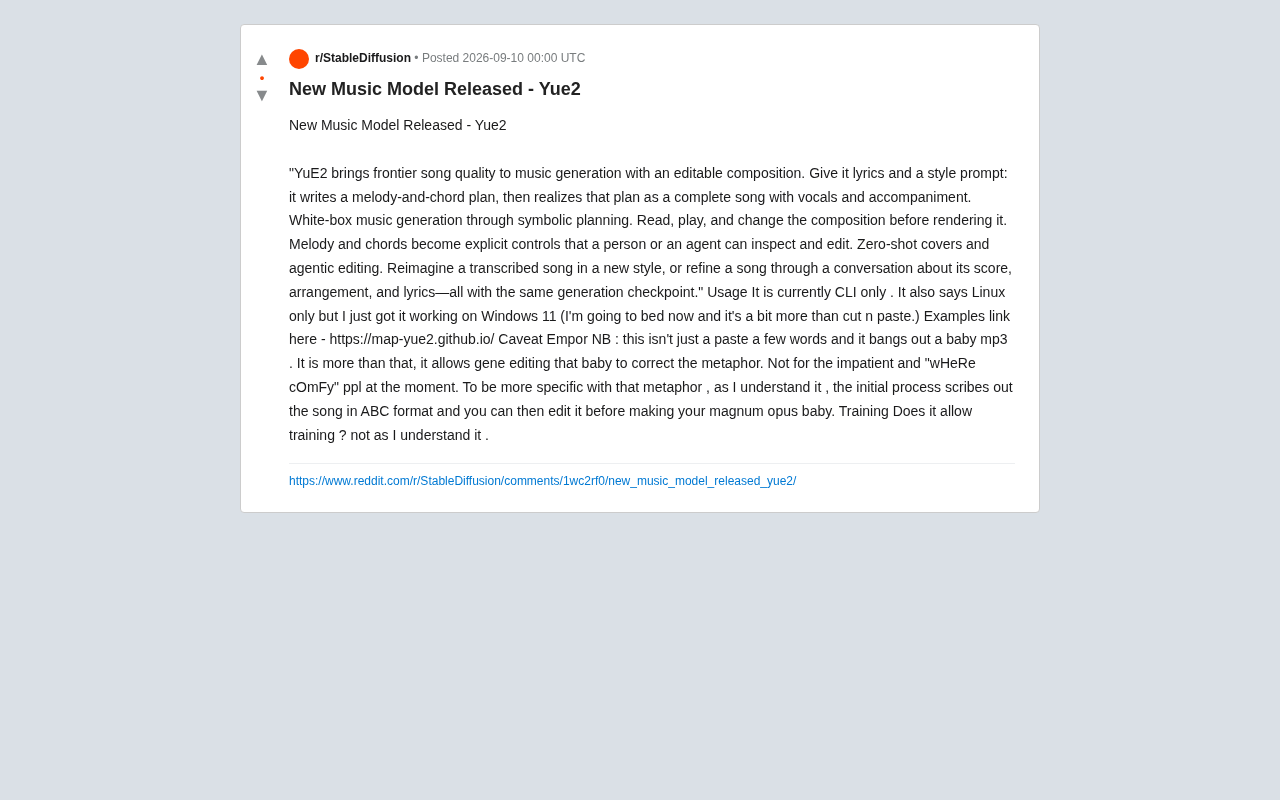
Yue2 uses editable ABC notation scores to make AI music generation transparent and controllable.
Yue2 is a new AI music generation model that replaces the traditional black-box approach with a white-box symbolic planning method. It decomposes music creation into two stages: generating an editable score in ABC notation, then rendering it into full audio with vocals and accompaniment. Key features include zero-shot cover song generation, conversational score editing, and full user control over melodies and chords before final rendering.
Yue2 Music Generation Model: Editable Scores Make AI Composition Transparent and Controllable
A new music generation model called Yue2 was recently released. Unlike traditional end-to-end music generation approaches, it adopts a "white-box" symbolic planning method that makes the music creation process visual and controllable.
Yue2's Core Innovation: From Black-Box to White-Box Music Generation
In the field of machine learning, "black-box" and "white-box" are two core concepts describing model interpretability. A black-box model is a system whose internal decision-making process is completely opaque to users — typical end-to-end music generation models (such as early Jukebox or Google's MusicLM) map directly from text prompts to audio waveforms, leaving users with no insight into why the model generated a particular melodic direction or chord progression. White-box models are the exact opposite: their reasoning processes are observable and intervenable, which is precisely the direction that the field of Explainable AI (XAI) research has been actively promoting in recent years.
Yue2's most notable feature is that it decomposes the music generation process into two stages:
- Symbolic Plan Generation: The model generates a symbolic plan for melody and chords (presented in ABC notation format) based on user-provided lyrics and style prompts
- Audio Rendering: The symbolic plan is rendered into a complete song with vocals and accompaniment
ABC notation is a text-based music notation system originally developed by Chris Walshaw in the 1990s, primarily used for recording folk and traditional music. Unlike traditional staff notation, ABC format uses the letters A through G to directly represent notes, numbers to indicate duration, and vertical bars to separate measures — for example, C2 D2 E2 F2 | G4 G4 represents a simple ascending scale melody. This format is both human-readable and machine-parsable, making it an excellent intermediate representation layer between AI models and humans. Yue2 chose ABC format over more complex alternatives like MIDI or MusicXML precisely because of its lightweight and intuitive nature, allowing even users without deep music theory knowledge to understand and adjust the generated musical structure to some extent.
This design philosophy breaks the "black-box" nature of traditional AI music generation. Users can directly view, read, and modify the generated score before the song is finally rendered. Melodies and chords are no longer abstract parameters hidden deep within neural networks — they become control variables that humans or AI agents can explicitly inspect and edit.
Audio Rendering: The Technical Challenges of Going from Symbols to Sound
Yue2's second stage, "audio rendering," essentially involves multiple complex audio synthesis techniques. Transforming a symbolic score into realistic song audio requires solving several sub-problems including Singing Voice Synthesis, instrument timbre modeling, and mixing arrangement. Modern singing voice synthesis techniques are typically based on Neural Vocoder architectures, such as HiFi-GAN or BigVGAN, which can convert acoustic features (like mel spectrograms) into high-fidelity waveforms. Accompaniment generation involves multi-track audio synthesis, requiring the model to understand the timbral characteristics of different instruments and their spatial relationships in the mix. Yue2 encapsulates all this complex audio processing within the rendering stage, so users only need to focus on creative decisions at the symbolic level without diving into the technical details of audio signal processing.
Yue2's Practical Feature Highlights
Zero-Shot Cover Song Capability
Yue2 supports style reconstruction of transcribed songs, allowing users to reinterpret a song in an entirely new musical style without additional training or fine-tuning the model.
The term "zero-shot" here refers to an important paradigm in deep learning where a model can complete a task without having seen specific training samples for that task. In the context of music generation, traditional style transfer or cover creation typically requires fine-tuning for a specific singer's timbre or a particular style, which not only demands additional computational resources but may also involve copyright data collection issues. Yue2's zero-shot cover capability means that users only need to provide a transcribed score of a song and a new style description, and the model can generate a completely new stylistic rendition without any additional training. This capability typically relies on the model having learned sufficiently rich musical style representations during pretraining, enabling it to flexibly combine different style features at inference time.
For creators looking to quickly produce cover versions, this capability significantly lowers the technical barrier to music adaptation.
Conversational Score Editing
Yue2 allows users to refine songs through natural language conversation. Users can discuss and adjust the score, arrangement, and lyrics, with all operations performed from the same generation checkpoint — no need to switch tools or retrain. This interaction method dramatically lowers the professional barrier to music editing.
Usage Requirements and Known Limitations
Currently, Yue2 only provides a command-line interface (CLI) and is officially labeled for Linux systems only, although some users have successfully run it on Windows 11. This tool is not a plug-and-play application where you "type a few words and quickly get audio" — it's designed for professional users willing to deeply engage in the creative process.
From a workflow perspective, Yue2 is more like providing an editable "genome" for music creation — the initially generated ABC format score can be manually modified and then rendered into the final work. This design philosophy emphasizes control over the creative process rather than the convenience of one-click generation.
Several limitations to keep in mind:
- No support for custom training or fine-tuning — users can only use the officially provided pretrained checkpoints
- Requires command-line proficiency — not user-friendly for non-technical users
- Limited system compatibility — officially supports Linux environments only
Yue2's Technical Significance and Future Outlook
Yue2 represents an important direction in the field of AI music generation: rather than pursuing full automation, it establishes a more transparent collaborative interface between AI capabilities and human creativity.
From an academic perspective, Symbolic Planning methods have a long history in AI, dating back to classic AI planning systems like STRIPS in the 1960s. In music generation, symbolic methods were once mainstream — early computer composition systems (such as David Cope's EMI system) operated entirely on symbolic rules. However, with the rise of deep learning, end-to-end neural network methods gradually took the dominant position, and symbolic representations were considered insufficient to express the full nuances of music. Yue2's innovation lies not in simply returning to traditional symbolic methods, but in cleverly combining the generative power of large language models with the controllability of symbolic representations, forming a hybrid pipeline of "neural network generates symbols → symbols are editable → symbols are rendered into audio." This methodological compromise attempts to simultaneously capture the creativity of deep learning and the interpretability of symbolic systems.
By symbolizing the generation process, Yue2 provides music producers, composers, and AI researchers with a new experimental space. Although the current user experience isn't particularly friendly for non-technical users, this "interpretable and editable" generation paradigm may influence the design philosophy of future music AI tools. As community participation grows and the toolchain matures, symbolic planning-based music generation is poised to reach broader application scenarios.
Related articles
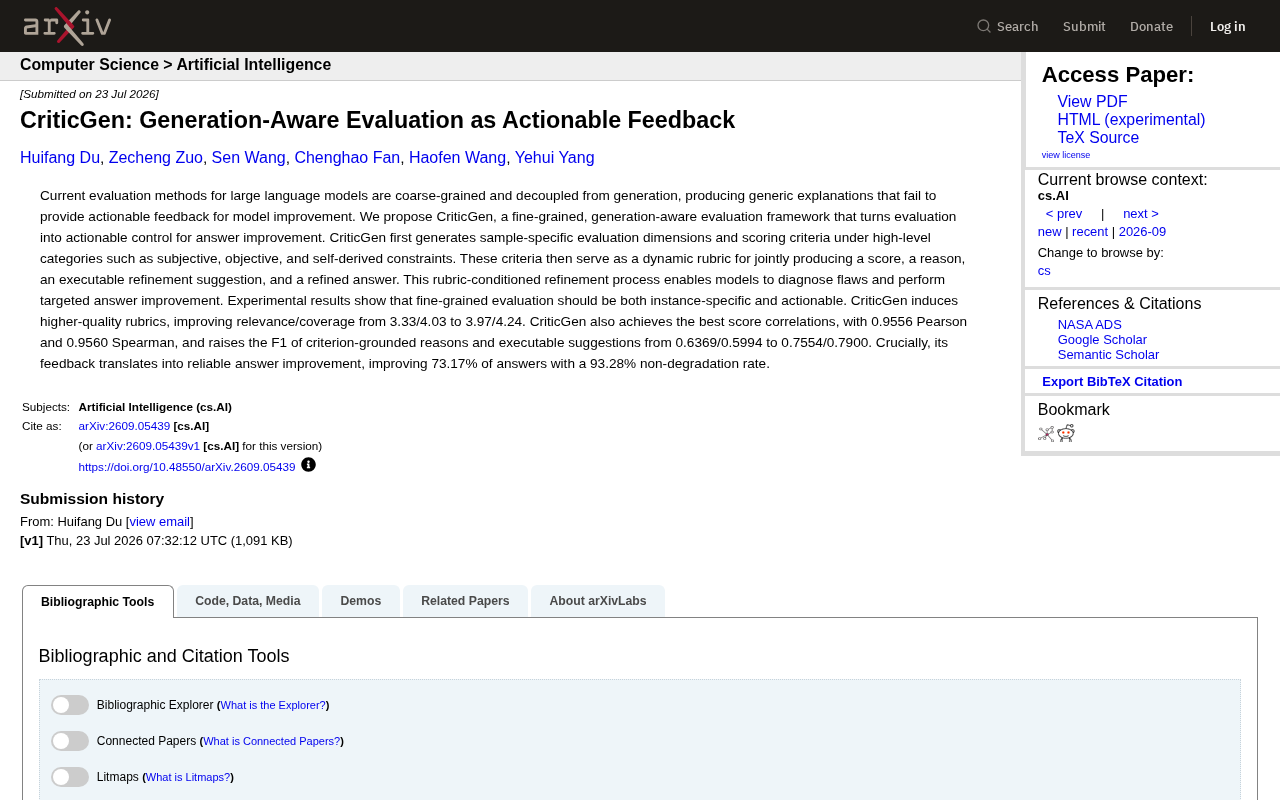
CriticGen: A New Framework That Transforms AI Evaluation into Actionable Improvement Feedback
CriticGen proposes a generation-aware evaluation framework that transforms AI assessment from passive scoring to an active optimization loop, achieving 73.17% answer improvement and 93.28% non-degradation rate.

Vercel AI SDK workflow-harness Update Analysis
Deep analysis of Vercel AI SDK workflow-harness 1.0.107 update: architecture design, engineering practices, and developer value for building reliable AI apps.
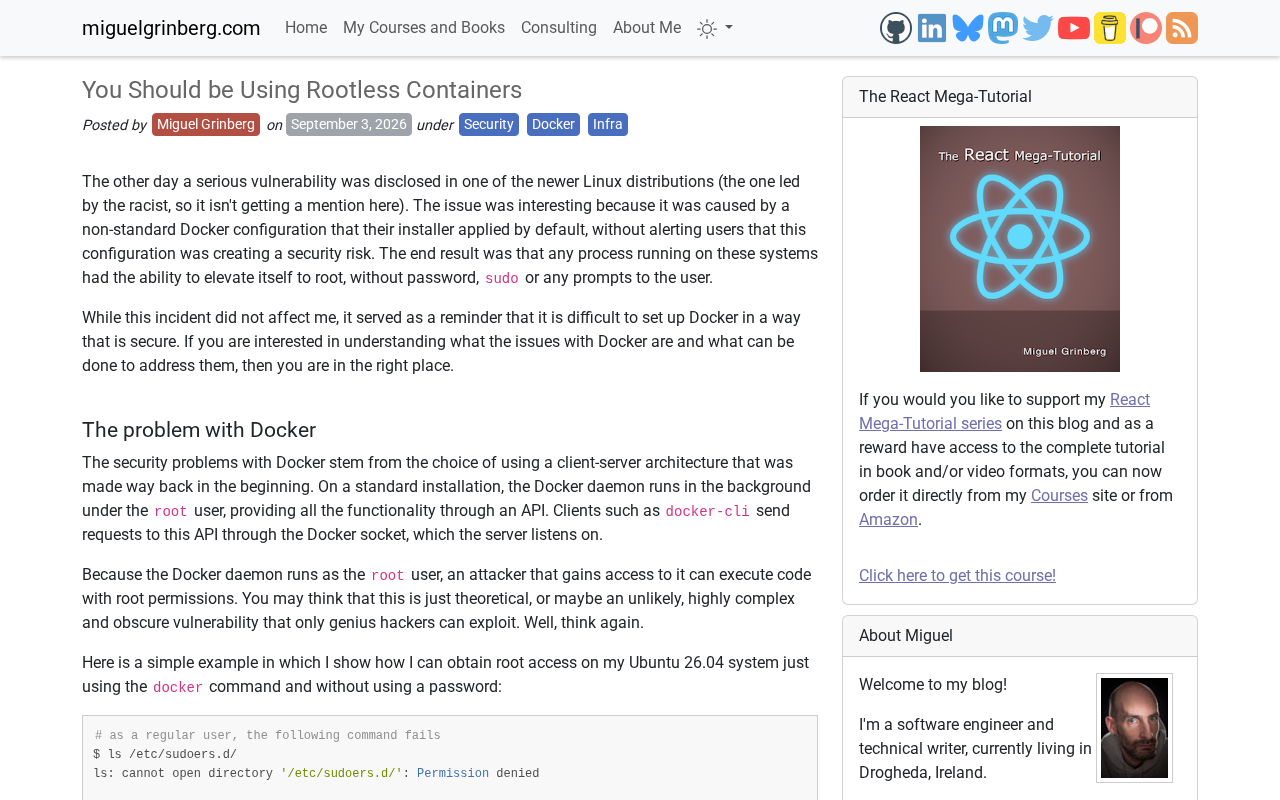
Rootless Containers Explained: Principles, Benefits, and Leading Implementation Approaches
A deep dive into rootless container principles and security benefits, comparing Podman, Docker Rootless mode, and Kubernetes integration with practical migration advice.