Zero-Code AI Financial Mini Program: A Complete Non-Programmer's Guide

A non-programmer builds a full WeChat Mini Program finance tool using Codex — zero code required.
This guide follows a non-technical creator who used OpenAI's Codex to build a custom WeChat Mini Program for team financial management — with no coding skills whatsoever. The process covers tool selection, plain-language requirement prompting, OCR invoice scanning, iterative feature development, and publishing via the free trial version. It's a practical blueprint for small teams who want a custom, low-cost internal tool built entirely through AI.
Why Small Teams Need Their Own Financial Tools
For many small teams and startups, financial management is a problem that's easy to overlook but endlessly frustrating. Someone files an invoice and never gets around to claiming reimbursement. End-of-month profit calculations mean scrolling through chat histories. Year-end reconciliation is done with manually-written Excel formulas. Off-the-shelf financial software, meanwhile, is either too expensive or bloated with features that don't fit how small teams actually work.
The approach taken by this Bilibili creator is refreshingly practical: if existing solutions don't fit, just use AI to build something custom — no coding knowledge required. After weighing cost and portability (a decision also made with AI's help), she chose a WeChat Mini Program as her platform — no download needed, open instantly, and virtually free for internal use.
Since launching in 2017, WeChat Mini Programs have become one of the most important lightweight application platforms in China's mobile internet ecosystem. Their core architecture is built on WeChat's proprietary dual-thread model: the logic layer runs JavaScript, while the rendering layer uses WXML (similar to HTML) and WXSS (similar to CSS), with the two layers communicating through the WeChat client. For non-technical users, Mini Programs offer three key advantages: users don't need to download anything — scan a code and you're in, making them ideal for quickly distributing internal tools; the developer toolset includes a full local simulator with real-time preview after code changes, making debugging extremely accessible; and the "trial version" mechanism lets teams distribute beta builds to up to 50 members without completing enterprise certification, perfect for internal use. This "good enough to ship" release strategy is exactly how small teams keep costs under control.
The real value of this case isn't the complexity of the software itself — it's the clear, end-to-end path it demonstrates for how a non-programmer can turn an idea into a usable product using AI coding tools.
Choosing an AI Coding Tool: Why Codex
Before diving in, the creator compared several popular AI coding tools, including DeepSeekAd, Claude Code, and Codex.
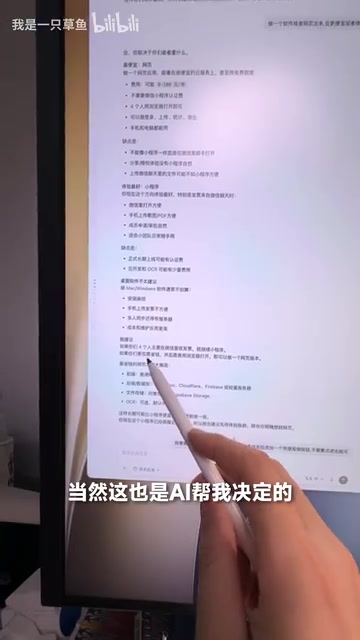
DeepSeek, Claude Code, and Codex each represent a distinct approach to AI-assisted coding. DeepSeek is a large language model developed by DeepSeek, known for its strong code generation capabilities and open-source strategy, with a strong following in the Chinese developer community. Claude Code is Anthropic's command-line coding assistant, deeply integrated into the terminal environment and aimed at developers with some technical background. Codex is OpenAI's code generation system built on the GPT model family — it later evolved into the code interpreter in ChatGPT and the underlying capability powering tools like Cursor. Its latest agent form supports end-to-end task execution including planning, file operations, and automated debugging, making it closer to an "AI programmer" than a "code completion tool."
Her conclusion was straightforward: if you're like her and can't read code at all, Codex is the easier choice. The process felt smoother, and the experience was more like "someone walking you through it step by step" rather than dumping a pile of technical details on you to figure out yourself.
This observation highlights a key divide in today's AI coding tools — tools built for developers prioritize efficiency and control, while tools built for everyday users need a more guided, hand-holding experience. For beginners, whether the tool can "take over" the steps you don't understand often matters more than raw capability.
From Zero to Version One: Three Steps to Launch a WeChat Mini Program
The entire setup process was stripped down to its essentials, making it easy for complete beginners to get started.
Step 1: Create a Folder
Create an empty folder, open Codex, and select that folder as the working directory.
Step 2: Describe What You Want in Plain Language
This is the most important — and most counterintuitive — step. The creator emphasized: no technical jargon required, plain language is fine. She just typed out every requirement she could think of: auto-scan invoices on upload, alert for duplicate uploads, easy reimbursement, and so on. No coding knowledge, no finance background — just a brain dump of what she wanted.
Step 3: Let AI Generate the Code and Run It
Codex immediately produced a first version of the Mini Program.

Following the AI's instructions, she downloaded WeChat DevTools and opened the folder — and what had been an incomprehensible pile of code turned into a real, clickable, previewable Mini Program interface.
For a complete beginner, this moment is significant: it's the first time abstract "code" becomes something tangible and real.
What to Do When You Hit a Step You Don't Understand
As she went deeper, the creator admitted the content started getting "dense" — the steps AI gave her began to go over her head, and she wasn't sure what to click. This is the wall that almost every beginner hits.
Her solution: grant Codex permission to operate her computer directly, and let AI handle it. With that enabled, Codex would directly modify the files in the folder, and she could click to see exactly what had changed.
This touches on one of the most important paradigm shifts in AI coding today — the move from Copilot mode to Agent mode. Traditional AI coding assistants (like early GitHub Copilot) were essentially "code completion" tools: users needed to understand the code structure, manually paste AI-generated snippets into the right places, and run everything themselves. In Agent mode, AI gains the ability to read and write files, execute terminal commands, capture errors, and automatically retry — completing a full loop of "read the project → analyze the problem → modify files → run and verify → report results." The technical foundation for this shift is the maturation of Function Calling/Tool Use capabilities and the dramatic expansion of AI model context windows (which now allow reading entire codebases).
This is the underlying logic of "zero-code development" — users don't need to write code, they just need to describe what they want based on what they see. The specifics of how to change things, which file to edit, and how to run the result are entirely handled by AI. This division of labor — where humans express intent and AI handles technical execution — fundamentally redefines how non-technical people can participate in software development.
Feature Iteration: Adding Requirements Like Talking to a Colleague
With version one in place, the rest was about refinement. The creator gradually added a range of practical features:
- OCR invoice scanning: AI automatically reads invoice contents and fills in the fields; up to 1,000 free scans per month — more than enough for a small team;
- Cost entry: Manually add expenses like salaries and social insurance;
- Reimbursement button: One-tap quick reimbursement;
- Real-time profit calculation and one-click monthly spreadsheet export.
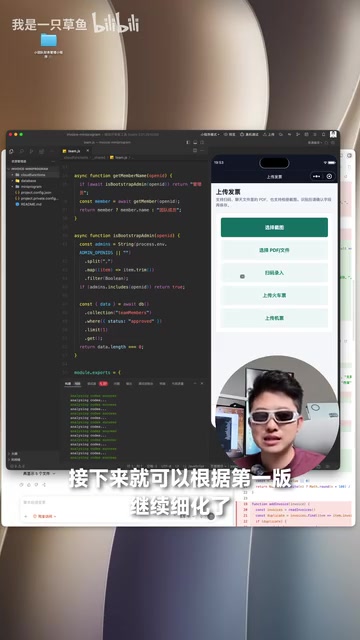
OCR (Optical Character Recognition) is the technology that converts text in images into editable text, and it's highly specialized for invoice use cases. Major Chinese cloud providers — including Tencent Cloud, Alibaba Cloud, and Baidu AI Cloud — all offer dedicated "VAT invoice recognition" APIs that can precisely extract fields like invoice code, invoice number, issue date, tax-inclusive amount, and seller name, typically with accuracy rates above 98%. These APIs are usually priced per call, with some platforms offering 1,000 free calls per month. When Codex integrated the OCR feature, it handled the entire engineering workflow: guiding through API registration, configuring credentials, writing the API call code, and parsing the returned data — all steps that would be nearly impossible for a beginner to complete independently.
Throughout the entire iteration process, she still didn't use any technical terminology. "It's just like talking to a colleague — you say what you want changed, and that's it."
Also worth noting: when bugs appeared — pages throwing errors, buttons not responding — the fix was simple: just send Codex a screenshot, and it would continue fixing based on the error information. Codex would even proactively suggest improvements based on the current version — fields to add, member permissions, data export features — and she could just say yes to anything that made sense. This ability for AI to proactively spot gaps is exactly what fills in the blind spots that non-experts don't even know to look for.
Publishing: Choose the Trial Version to Skip the Certification Fee

A fully functional team financial Mini Program — complete with invoice scanning, data analytics, one-tap reimbursement, profit calculation, and monthly export — was now essentially complete.
One critical detail when it came time to publish: always choose the trial version. WeChat Mini Program's "trial version" lets developers distribute test builds to up to 50 designated members after basic registration, without paying the 300 RMB/year enterprise certification fee. For apps that are only used internally and won't be released publicly, the trial version is the cheapest and most convenient option. Codex proactively flagged this — and that kind of platform-rule awareness is exactly what sets Agent tools apart from pure code generation, representing an evolution toward full-journey support.
From "Replacement" to "Empowerment": The Real Value of AI Coding
The creator ended with a genuinely insightful observation: a lot of people assume AI is here to replace humans, but she's increasingly convinced that AI is more like "a force that pulls ideas that once seemed impractical into reality."
In the past, the first reaction to wanting to build a tool was "I don't know how to code, I can't design, I don't understand development" — and the idea died right there. Now, all you need is to know what problem you want to solve and be able to articulate it clearly — and AI can walk you through making it happen.
Her framing of the role is particularly sharp: you don't need to become a programmer. You should think of yourself as "the AI's boss" — tell it what you want, keep reviewing the results, keep making requests, keep asking it to refine the details.
This may be the biggest transformation that the democratization of AI coding brings: technical barriers are no longer obstacles to creation. The ability to express requirements clearly and judge results accurately is becoming the most important new skill for non-technical people. As the full shift from Copilot mode to Agent mode plays out, the traditional barrier of "can you write code" is rapidly dissolving — replaced by a new kind of human-AI collaboration literacy: knowing what you want, and being able to communicate that clearly and consistently to AI.
Key Takeaways
Related articles
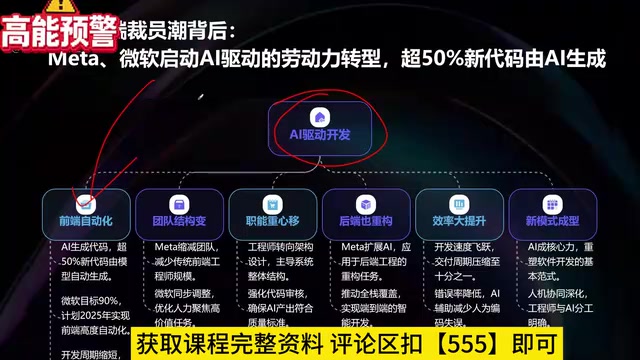
What Is Vibe Coding? The AI Programming Skill Every Developer Needs
What is Vibe Coding? Learn how AI programming is reshaping dev teams, why traditional programmers face displacement, and why Cursor & Claude Code matter.
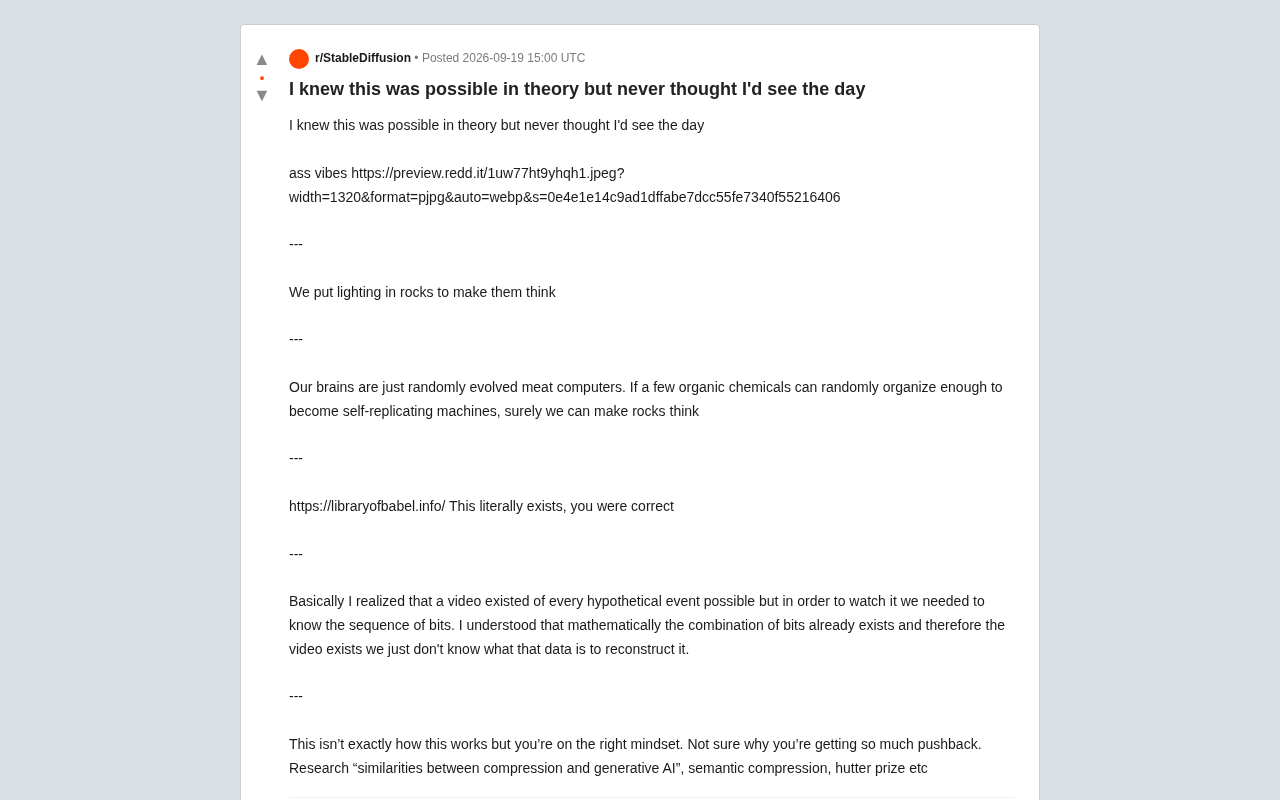
Making Rocks Think: A Philosophical Exploration of Generative AI and Information Compression
From a viral Reddit post to deep AI theory: why compression equals understanding, the Library of Babel thought experiment, semantic compression, and the Hutter Prize.

Irregular Warns: Four AI Lab Security Breaches Traced to the Same Root Cause
Irregular reveals four AI lab security breaches share a single root cause, exposing systemic risks from technology stack homogeneity across the AI industry.