Zhipu GLM-5.2 Released: China's First Open-Source Model to Cross the 'Primary Model' Threshold

Zhipu's GLM-5.2 becomes China's first open-source LLM to match GPT-5.x and Claude flagship performance.
Zhipu has released GLM-5.2, a domestic open-source LLM with a 1-million-token context window that benchmarks against GPT-5.x and Claude flagship models — the first Chinese open-source model to cross this capability threshold. Alongside it, Zcode 3.0 offers 3 million free daily API calls and one-click migration from tools like Claude Code and Codex via MCP protocol support.
Zhipu GLM-5.2 Released: A Statement About Openness
Zhipu has officially released its next-generation large language model, GLM-5.2. Even before discussing the model's technical specs, a particular passage in its launch announcement sparked widespread discussion across the industry.
Zhipu wrote: "The sudden bans on some frontier models today are deeply regrettable. At a moment when frontier models are abruptly cut off for non-technical reasons, we are more convinced than ever that science should be global — the road to AGI must never be blocked by walls."
This statement has a clear real-world context. As geopolitical tensions rise and export control policies tighten, some overseas top-tier AI services have recently restricted or entirely cut off access for users in China. These incidents expose the fragility of API-dependent development models: when a team's core workflow is deeply integrated with a closed-source API, a service outage doesn't just mean feature failure — it can ripple across ongoing projects, client commitments, and entire product delivery pipelines.
This concept of "Platform Risk" isn't new to the AI era. Developers experienced this acutely during the mobile internet boom — Apple's 2020 App Store policy changes forced countless apps offline, and Twitter/X's 2021 restriction of third-party API access instantly killed many utility apps. In the LLM era, platform risk carries even deeper integration depth: traditional APIs typically handle data input/output, whereas LLM APIs participate directly in core reasoning and decision-making. Cut that off, and you haven't just disabled a feature — you've removed the product's "brain."
This depth of integration also shows up in how technical debt accumulates. When a development team deeply optimizes around a specific model's output style, context window size, and tool-calling format, migrating to a different model requires more than rewriting the integration layer — it often means rethinking prompt engineering strategies and rebuilding an understanding of the new model's behavioral boundaries. These hidden costs far exceed the visible work of swapping out an API. This is why the industry has started emphasizing Model Sovereignty — treating control over AI capabilities like critical infrastructure, where access rights, terms of service, and continuity of service should not be entirely subject to the commercial decisions of a single foreign provider.
This statement reflects a genuine pain point in today's LLM ecosystem: frontier models can be cut off without warning, causing real harm to developers with deep API dependencies. When a team's core workflow is tightly coupled to a closed-source service, losing access can bring the entire development pipeline to a halt. Zhipu's choice to emphasize "radical openness" at this moment is both a values statement and a precise market positioning move.


GLM-5.2's Core Capabilities: Crossing the "Primary Model" Threshold
One-Million Context Window and Long-Horizon Task Leadership
On the technical front, Zhipu positions GLM-5.2 as the most capable domestic open-source LLM to date. Its headline features include:
- 1 million Token context length, enabling processing of extremely long documents and complex task chains;
- Consistently leading performance on long-horizon task completion, with stable results in multi-step, continuous reasoning scenarios.
A 1-million-token context window is one of the most important technical benchmarks in today's LLM competition. A token is the basic unit of text processing; one Chinese character corresponds to roughly 1.5–2 tokens, meaning 1 million tokens can accommodate approximately 500,000–600,000 Chinese characters — roughly the length of a mid-sized novel. Achieving this is far from a simple capacity increase. Expanding the context window requires overcoming a series of fundamental engineering challenges: early GPT-3's 4,096-token limit stemmed from the Transformer architecture's computational complexity — the attention mechanism's computation scales quadratically with sequence length, meaning doubling the context quadruples the compute. Breaking through this bottleneck relies on several key technical innovations:
- Sparse Attention: Instead of computing attention between all token pairs, the model only attends to tokens within a local window or a selected set of key tokens, reducing complexity from O(n²) to O(n log n) or even O(n);
- Sliding Window Attention: Divides ultra-long sequences into overlapping windows processed in segments, maintaining local semantic coherence while controlling single-pass computation;
- Enhanced RoPE Extrapolation: Traditional positional encodings degrade sharply when sequence length exceeds the training length. RoPE encodes relative positions through rotation in complex space, and combined with extrapolation techniques like YaRN and LongRoPE, can significantly extend effective context beyond the training length;
- KV Cache Optimization: Key-Value caches store intermediate results for historical tokens. At 1 million tokens, KV Cache memory usage can reach tens of gigabytes; techniques like chunked storage, quantization compression, and memory offloading reduce VRAM pressure.
Early mainstream models like GPT-3.5 had context windows of only 4K tokens, which gradually expanded to 32K and 128K. Surpassing one million tokens is not just a quantitative leap — it's a qualitative one. Developers can feed complete project documentation, conversation history, and tool-call logs into a single inference call, dramatically reducing the logical gaps caused by "forgetting." This is especially critical for tasks like full-text review of lengthy legal documents, holistic understanding of large codebases, and multi-turn complex reasoning.
It's worth noting that there remains a gap between "supporting" 1 million tokens and "effectively utilizing" 1 million tokens. Research has documented the "Lost in the Middle" phenomenon — models often retrieve information from the middle of ultra-long contexts with significantly lower accuracy than from the beginning or end. Therefore, maintaining consistent information retrieval across ultra-long contexts is a more critical metric for evaluating long-context capability, and is the deeper proposition behind GLM-5.2's claim of "leading long-horizon task completion."
But what matters more than parameter scale is the capability tier the model reaches. Based on hands-on evaluations, GLM-5.2's overall performance has reached the level of GPT-5.x and the Claude flagship series.
There's a widely accepted benchmark in the industry: reaching this tier is what it means to cross the "primary model" threshold. This threshold is essentially a composite capability bar covering code generation accuracy, multi-step reasoning stability, instruction-following fidelity, and contextual coherence. For a long time, domestic models performed well on individual benchmarks but consistently fell short in real-world workflow experience — manifesting as misinterpretations of complex instructions, logical drift in long conversations, and higher code completion error rates. This gap led developers to adopt fixed habits: use GPT-5.x as the primary model, and domestic models only as supplementary tools. Not because they didn't want to switch, but because domestic models always fell just short.
China's First Open-Source Model That Can Genuinely Be a Primary Model
Based on real-world testing, GLM-5.2 has been evaluated as the first domestic LLM that can genuinely be used as a primary model — not a supporting role. This marks domestic models entering the competitive tier of GPT-4o and Claude 3.5 Sonnet on overall capability, not just on price. That is a significant boost to confidence in the entire domestic LLM ecosystem.
Real-world metrics such as cache hit rates and follow-up query handling are solid, with well-balanced capabilities across the board. The significance of this shift is substantial: for domestic developers, migrating their primary model from a closed-source overseas product to an open-source domestic one means lower migration risk and more controllable access rights, along with more options in areas like data compliance and cost structure.
The open-source vs. closed-source choice carries deeper meaning here. This debate is one of the central narratives of the LLM ecosystem. Meta's open-source strategy with the LLaMA series has built a vast global research and application ecosystem — the logic being that widely circulating model weights creates network effects, attracting more developers to contribute improvements. The closed-source camp (led by OpenAI and Anthropic) generates revenue at scale through API services, using data flywheels for continuous iteration.
The fundamental difference between the two approaches comes down to differing views on where the moat lies: the closed-source camp believes model weights themselves are the core asset — open-sourcing them means giving away competitive advantage; the open-source camp believes that in a rapidly evolving AI landscape, ecosystem scale and developer trust are more durable barriers, and relying purely on keeping weights secret can't build long-term competitive advantage. Users of closed-source models have no control over model weights; access is entirely at the discretion of the provider. As an open-source model, GLM-5.2 allows developers to download weights, deploy locally, or fine-tune independently — fundamentally eliminating the risk of being "cut off." Zhipu's open-source strategy means forgoing some commercial moat from model parameters, in exchange for rapid developer ecosystem growth and the trust of "can't be shut down" — a long-term strategy trading moat for security.
Zhipu also provides cloud-based API access alongside the open-source release, effectively offering a two-track approach — cloud API access when convenient, with the option to migrate to local deployment when necessary. This "cloud-or-local" flexible architecture allows developers to choose their deployment mode based on data sensitivity, compliance requirements, and compute costs, rather than being forced into a binary trade-off between performance and security.
Zcode 3.0: Solving Compute Anxiety and Lowering the Adoption Barrier
Any model's real-world adoption runs into a practical question: is there enough compute, and can you even get quota? This is a common concern about domestic LLM services.
To address this pain point, Zhipu simultaneously launched Zcode 3.0, offering up to 3 million free GLM-5.2 API calls per day — dramatically lowering the cost barrier for trying it out and for everyday use.
What Is Zcode 3.0
Zcode 3.0 can be understood as an AI coding assistant powered by GLM, with the following core features:
- Interface design close to mainstream coding tools, with minimal onboarding friction;
- Supports integration with mobile and Feishu (Lark), covering multi-device collaboration scenarios;
- One-click migration: Move your entire configuration from Claude Code, Codex, GCA, and similar tools — including canvases, Skills, MCP resources, and more — directly to Zcode 3.0.
Behind the "one-click migration" design is an important technical standard: MCP (Model Context Protocol).
MCP is an open protocol standard proposed and open-sourced by Anthropic in late 2024, designed to standardize the interaction between AI models and external tools and data sources — essentially a "USB port" for the AI tool world. Before MCP, every AI client (Claude Desktop, Cursor, ChatGPT plugins, etc.) had its own proprietary tool integration method, meaning plugins developed for one platform couldn't be directly reused on another, creating severe ecosystem fragmentation.
Understanding MCP's design from a technical architecture perspective: MCP draws on the core idea of Interface Standardization from mature software engineering, defining a unified communication protocol between AI models and external tools (file systems, databases, API services, code execution environments, etc.). Its architecture follows a client-server model:
- MCP Server: Implemented by tool developers, exposing specific tool capabilities (e.g., reading/writing files, querying databases, executing code);
- MCP Client: Embedded in AI applications (like Zcode 3.0 or Claude Desktop), responsible for discovering and invoking capabilities provided by MCP Servers;
- Communication Protocol: The two communicate via standardized JSON-RPC, supporting both local inter-process communication (stdio) and remote HTTP/SSE transport modes.
The elegance of this architecture lies in decoupling tool capabilities from AI clients: tool developers only need to implement an MCP Server once, and it can be called by any MCP-compatible AI client; AI client developers no longer need to maintain separate adapter code for each tool. Since Anthropic open-sourced the MCP specification, Microsoft (GitHub Copilot), Google (Gemini ecosystem), and other major vendors have expressed support, and a growing number of independent tool developers are treating MCP support as a standard feature. MCP is on track to become the de facto standard for the AI tooling layer — similar to HTTP's role in web development or NFC's role in mobile payments.
Zcode 3.0's MCP compatibility means developers can directly port their tool-chain configurations accumulated on Claude Code and similar platforms (custom file operation tools, database query plugins, code execution sandboxes, etc.) without needing to redevelop adapter layers. This is the key technical design choice for reducing ecosystem migration friction, and reflects Zhipu's pragmatic decision to integrate into the existing developer ecosystem rather than build a parallel one from scratch.
This aligns with Zhipu's overall "openness" strategy: not only is the model itself open, but tool-chain migration is designed to be as painless as possible.
Conclusion: A Substantive Leap for China's LLM Ecosystem
Taken together, the release of GLM-5.2 is more than a routine version update. Its value manifests on two levels:
First, at the capability level: GLM-5.2 has crossed the primary model capability threshold, making a domestic open-source LLM genuinely capable of replacing overseas closed-source flagships for the first time. Second, at the adoption level: The combination of Zcode 3.0 and the generous free API quota means developers can actually put it to use in production — not just keep it in the benchmark tier.
Against a backdrop of increasingly uncertain access to frontier model APIs, a domestically developed option that matches tier-one capability while remaining open carries strategic significance that is hard to ignore. For the domestic developer community, this may be a switch worth seriously evaluating.
Note: This article is based on first-hand trial experience from a Bilibili content creator. Some model benchmarking data reflects the creator's personal evaluation conclusions. For definitive performance assessments, refer to official benchmarks and your own testing.
Related articles
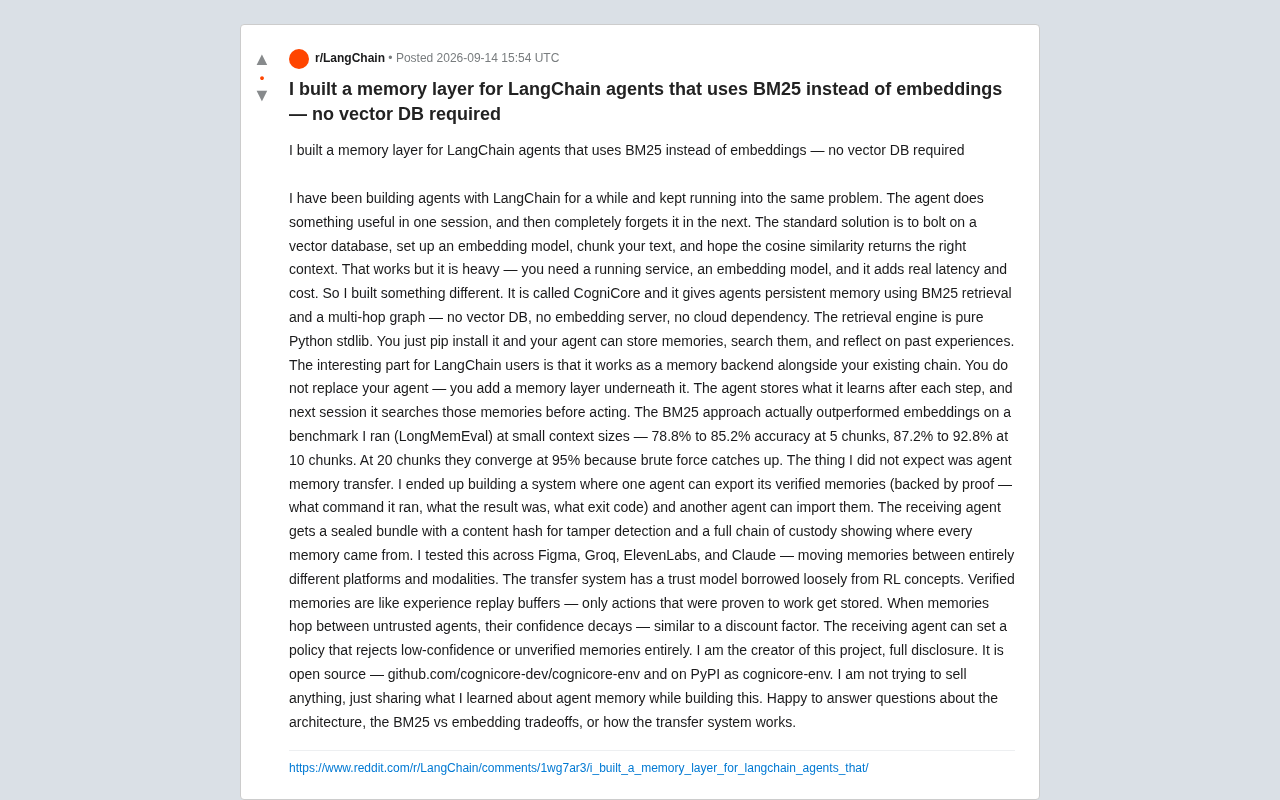
Ditch the Vector Database: Building a Memory Layer for LangChain Agents with BM25
CogniCore replaces vector databases with BM25 retrieval for LangChain agent memory, outperforming embeddings in small-context benchmarks with zero external dependencies.
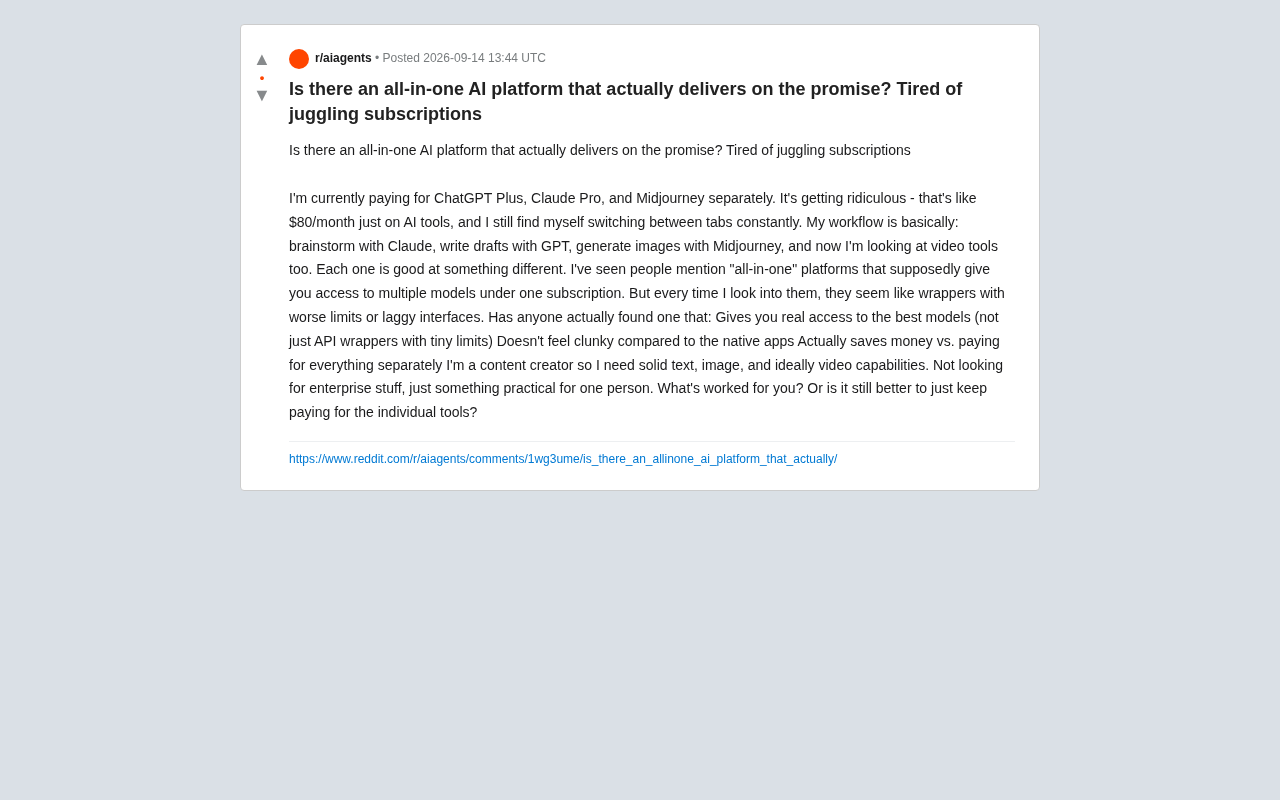
Are All-in-One AI Platforms Actually Worth It? A Practical Guide to Escaping Subscription Overload
Tired of paying for ChatGPT, Claude, and Midjourney separately? We break down whether all-in-one AI platforms are actually worth it — and what a smarter subscription stack looks like.
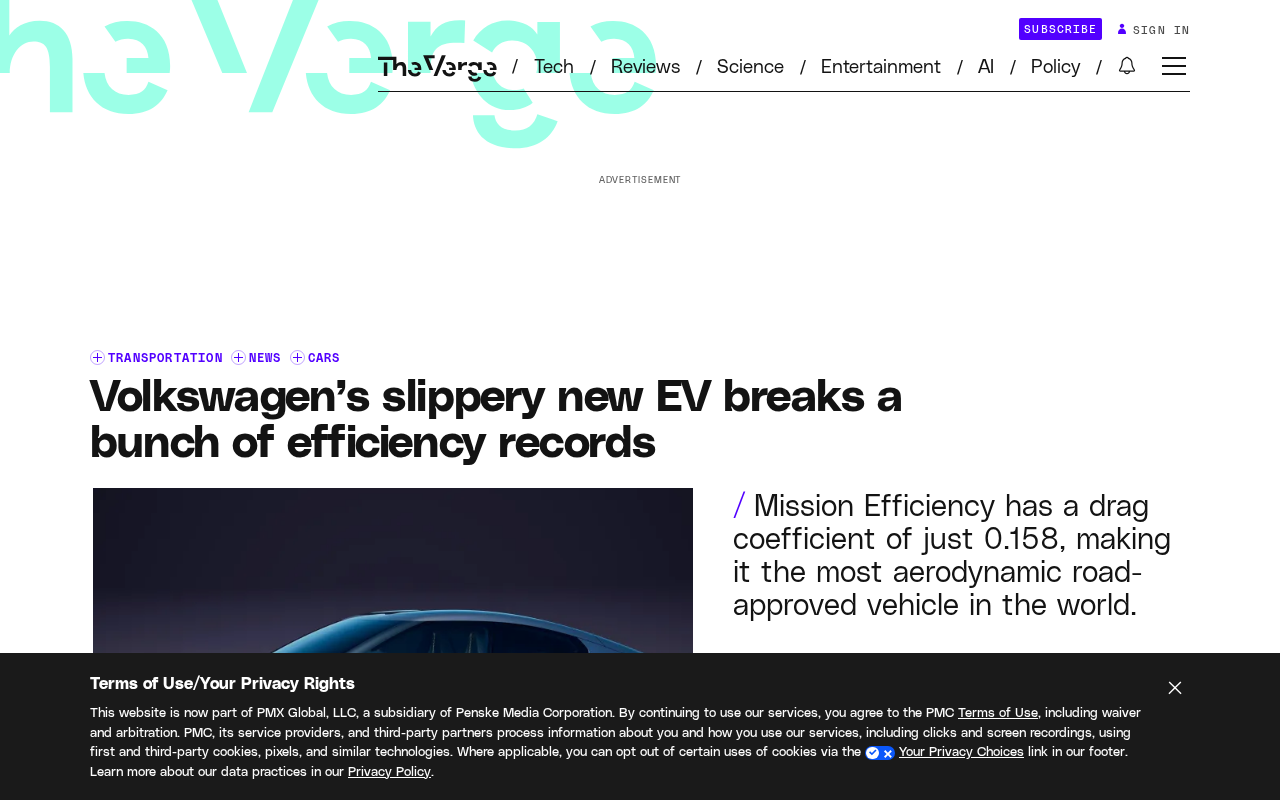
Volkswagen Mission Efficiency: The World's Lowest-Drag EV Breaks Multiple Efficiency Records
Volkswagen's Mission Efficiency prototype claims the world's lowest drag coefficient, built on MEB+ platform with ID. Polo and ID. Cross components. Here's what it means for EV efficiency.