#Apple developer tools
630 related articles
 Tech Frontiers
·3 min
OpenAI Codex Adds Computer Use: AI Agents Autonomously Control Mac in the Background
OpenAI adds Computer Use to Codex, enabling AI agents to autonomously click, type, and operate across Mac apps in the background without taking user control.
Read more →
 Tech Frontiers
·3 min
Gemini Takes Full Control of Android Phones: A Deep Dive into Google's New AI Phone Control Features
Google unveils new Gemini features at Google I/O, deeply integrating AI into Chrome, smart autofill, and in-app controls — evolving from passive assistant to active AI Agent that controls your Android phone.
Read more →
 Tech Frontiers
·2 min
Android 17 Officially Released: A Deep Dive into Nine New Features and How It Balances AI with Practicality
Google officially releases Android 17 with nine new features including AI voice input, vibe-coded widgets, Emoji overhaul, and screen time management tools.
Read more →
 Tech Frontiers
·3 min
Google Aluminium OS Leaked: Full Demo of Android Desktop PC System Exposed
Google's new Aluminium OS leaked in a 16-minute video, revealing a full Android-based desktop OS for PC. It could challenge Windows, Chrome OS, and macOS.
Read more →
 Deep Dives
·3 min
AI-Assistant Open Source Project Analysis: Building a Local AI Agent with the Anthropic API
Deep analysis of the open-source AI-Assistant project built on Anthropic Claude API for local AI Agents, covering architecture, use cases, security, and agentic AI trends.
Read more →
 Deep Dives
·2 min
application-use: A Native macOS Desktop Automation CLI Tool Rivaling Anthropic Computer Use
application-use is a Go-based macOS desktop automation CLI tool designed for AI Agents. It rivals Anthropic Computer Use with a native API approach for faster, more precise app control.
Read more →
 Product Reviews
·3 min
The Complete Guide to AnythingLLM: A Privacy-First AI Assistant for Local Deployment
Deep dive into AnythingLLM: a privacy-first, zero-config open-source local AI tool. Supports RAG, multi-model switching, and document chat. Nearly 60K GitHub Stars, ideal for enterprise and personal local deployment.
Read more →
 Tutorials
·2 min
Ollama Tutorial: One-Click Local Deployment of DeepSeek, Qwen, and Other LLMs
Complete guide to running LLMs locally with Ollama. Supports DeepSeek, Qwen, Kimi-K2.5 & more. Covers installation, model ecosystem, privacy benefits & enterprise deployment. 170K+ GitHub Stars.
Read more →
 Product Reviews
·2 min
Three.js Particle Wave Background Component: A Ready-to-Use Dynamic Visual Effect Solution
monochrome-particle is a configurable monochrome particle wave background component built with Three.js and TypeScript, packaged as an Agent Skill for easy integration into landing pages and AI product interfaces.
Read more →
 Tutorials
·3 min
Ollama Tutorial: The Complete Guide to Running Large Models Locally (2025 Updated)
Complete guide to deploying LLMs locally with Ollama. Supports DeepSeek, Qwen, Kimi-K2.5 and more. 170K GitHub Stars, one-click install, full data privacy, zero API costs.
Read more →
 Tutorials
·2 min
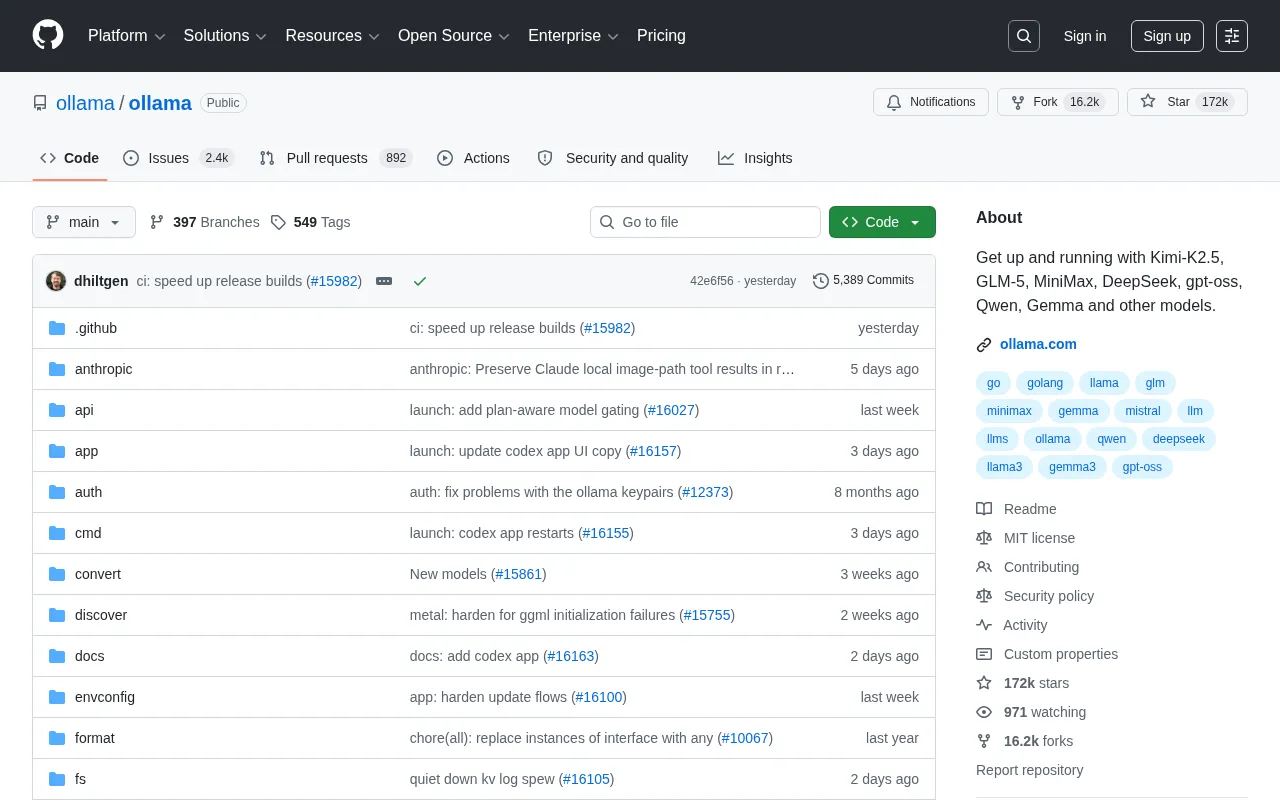
Ollama Tutorial: Complete Guide to Running DeepSeek, Qwen, and Other LLMs Locally with One Click
Complete guide to Ollama: install and run DeepSeek, Qwen, Kimi-K2.5, GLM-5 and more LLMs locally. 170K+ GitHub Stars, the most popular local LLM framework for offline AI inference and privacy.
Read more →
 Tech Frontiers
·3 min
Osaurus: A Native macOS Offline AI Agent Framework — 5,000+ Star Open Source Project Deep Dive
Deep dive into Osaurus — a native macOS AI agent framework supporting fully offline operation, persistent memory, cryptographic identity, and arbitrary model integration. Built with Swift and C for Apple Silicon. 5,100+ GitHub stars.
Read more →
 Tech Frontiers
·2 min
JetBrains Open-Sources Koog Framework: Building Enterprise-Grade AI Agents with Kotlin
JetBrains open-sources Koog AI Agent framework built on Kotlin Multiplatform for full JVM deployment. Explore Koog's core features, fault-tolerant design, and advantages over Python frameworks.
Read more →
 Tutorials
·2 min
Save to Spotify: The Complete Guide to Publishing AI-Generated Podcasts on Spotify with One Click
Save to Spotify is a CLI tool for AI agents like OpenClaw, Claude Code, and OpenAI Codex to publish AI-generated audio directly to Spotify. Full guide on setup, use cases, and podcast ecosystem impact.
Read more →
 Expert Opinions
·2 min
The Vibe Coding Era: Why We Need RSS to Distribute Personal Apps
As vibe coding makes app development as easy as blogging, personalized micro-tools are proliferating. This article explores why RSS/Atom is the ideal solution for app discovery and distribution in the AI-assisted programming era.
Read more →
 Product Reviews
·2 min
The Complete Guide to AnythingLLM: A Privacy-First AI Productivity Tool for Local Deployment
Deep dive into AnythingLLM, a privacy-first open-source AI tool for local deployment. Covers RAG document chat, multi-model support, AI Agents, and more — zero config, nearly 60K GitHub Stars.
Read more →
 Product Reviews
·3 min
awesome-LLM-resources: Deep Dive into a GitHub 8000+ Star LLM Resource Collection
Deep dive into GitHub's 8000+ star project awesome-LLM-resources, covering AI Agents, model training, MCP protocol, multimodal generation and more across 10 core LLM directions.
Read more →
 Expert Opinions
·2 min
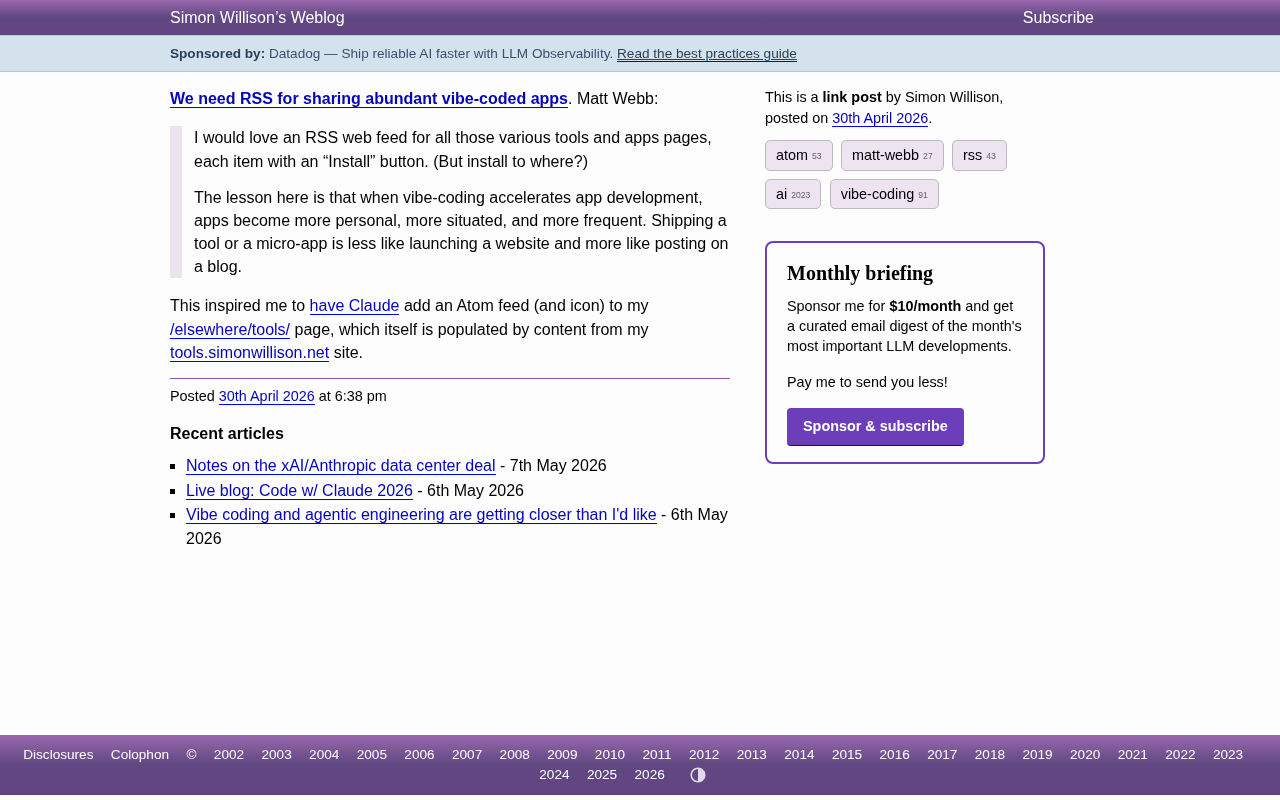
The Vibe Coding Era: Why We Need RSS to Distribute Personal AI Apps
As vibe coding makes app development as frequent as blogging, we need lightweight mechanisms like RSS to discover and share personal AI tools. Exploring the future infrastructure of AI app distribution.
Read more →
 Product Reviews
·2 min
Safari MCP: The Most Resource-Efficient AI Browser Automation Solution on Mac
Safari MCP natively drives Safari via AppleScript, providing AI agents with 80 automation tools. Compared to Chrome DevTools, it reduces CPU usage by 40-60% on Apple Silicon, preserves login state, and runs silently in the background.
Read more →
 Expert Opinions
·2 min
In the Vibe Coding Era, Why RSS Is the Best Solution for Sharing Personal Apps
Vibe Coding makes building apps as easy as blogging, but how are these personal micro-apps discovered? Matt Webb proposes RSS for distributing vibe-coded apps, and Simon Willison has already implemented it.
Read more →