#Claude memory
1363 related articles

·3 min
Building an Automated Penetration Testing System with Claude: A Deep Dive into Memory, Skills, and Agent Architecture
A security researcher demonstrates how to customize Claude into an automated penetration testing system with memory, skills, and a knowledge base — successfully compromising CTF targets and finding real Bug Bounty vulnerabilities.
Read more →

·4 min
Claude Code New Features Deep Dive: Remote Control, Multi-Agent Parallelism, and Auto Memory
Deep dive into Claude Code's major new updates: Remote Control for session takeover, Auto Mode to reduce interruptions, multi-agent code review, Auto Memory, and Routines for cloud automation workflows.
Read more →
 Tech Frontiers
·4 min
Claude Slack Agent Upgrade: Multiplayer Collaboration, Proactive Responses, and Persistent Memory Explained
Anthropic upgrades Claude's Slack integration with multiplayer collaboration, proactive responses, and persistent memory — transforming AI from a passive tool into a true team partner.
Read more →

·2 min
Three Essential Claude Code Configuration Techniques: A Practical Guide to CLAUDE.md, Memory & MCP
Master three Claude Code configuration techniques: use CLAUDE.md for project rules, Memory for auto-learning preferences, and MCP for connecting GitHub and external tools.
Read more →
·3 min
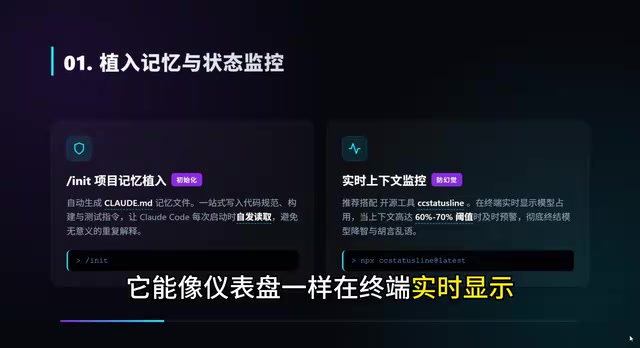
9 Advanced Claude Code Tips: From Memory Injection to Context Management — A Complete Guide
9 advanced Claude Code tips covering /init memory injection, Token context monitoring, Plan mode, collaboration strategies, and /undo safe rollback to build a complete AI coding workflow.
Read more →

·3 min
Claude-mem: The Open-Source Memory System That Stops AI from Forgetting
Claude-mem is an open-source AI memory tool that gives Claude Code, Codex, and other AI coding assistants cross-session memory via semantic compression and vector retrieval — just 50 tokens of overhead, fully local storage.
Read more →
·3 min
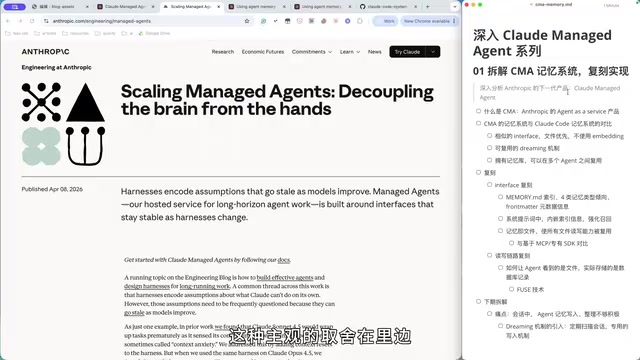
Deep Dive into Claude Cloud Agent Memory System Architecture: CMA Design Philosophy and Technical Choices
Deep analysis of Anthropic's Cloud Managed Agents memory architecture, covering file-first strategy, memory store reuse, Dreaming async consolidation, and key differences from Claude Code's memory system.
Read more →
 Tutorials
·2 min
Two MCP Plugins Combined: Solving Claude Code's Memory Loss Problem in Large Projects
Claude Code loses memory on large projects? Learn how Cloud Context and Context Mode MCP plugins combine vector-indexed retrieval with 98% compression to solve context window overflow.
Read more →
 Tutorials
·2 min
The Complete Guide to CLAUDE.md Configuration: Give Claude Code Memory of Your Project
Complete guide to Claude Code's CLAUDE.md memory file: creation methods, content structure, hierarchy system, and practical tips to boost AI coding efficiency.
Read more →
 Tutorials
·3 min
Claude Code Hooks Configuration & Plugin Recommendations: Cross-Session Memory and Automation in Practice
In-depth guide to Claude Code Hooks event-driven mechanism and configuration, featuring CloudMemory, Everything Claude Code, and other popular plugins for automated dev workflows.
Read more →
·4 min
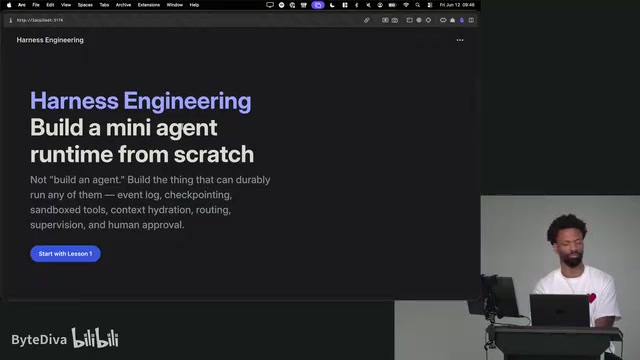
Harness Engineering: The Core Infrastructure for Taking AI Agents from Demo to Production
Deep dive into Harness Engineering: why AI Agents need memory management, durable execution, guardrails & approvals to go from demo to production.
Read more →

·4 min
Harness Engineering: The Core Infrastructure for Taking AI Agents from Demo to Production
Deep dive into Harness Engineering: why AI Agents need memory management, durable execution, guardrails & approvals to reach production. Based on Scott Moss's workshop.
Read more →

·5 min
Loop Engineering Explained: The New Programming Paradigm Where AI Prompts Itself
Loop Engineering is a paradigm shift in AI usage. Learn how to build automated loops where agents explore, execute, and verify tasks autonomously, with a hands-on e-commerce case study.
Read more →

·6 min
Harness Engineering: From Context Engineering to the Third Phase of AI Programming
Explore Harness Engineering: the next evolution beyond context engineering for AI programming. Learn how to build enterprise-grade Skill systems and deliver real projects with mid-tier models.
Read more →

·3 min
Learning AI Large Language Models: A Complete Roadmap from Beginner to Practitioner
A systematic breakdown of the AI LLM learning roadmap covering prompt engineering, AI Agent development, RAG knowledge bases, model fine-tuning, and hands-on projects for beginners.
Read more →
·3 min
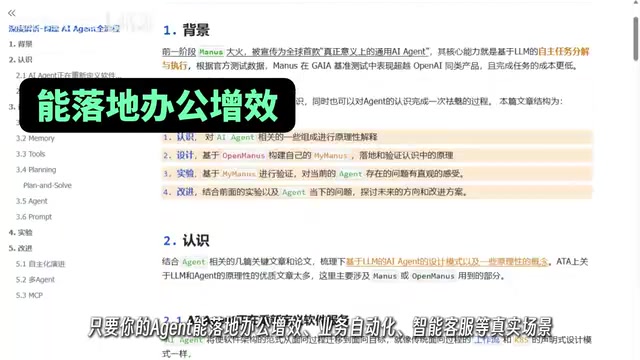
Practical Guide to Agent Development: The Complete Path from Zero to Commercial Deployment
A systematic guide to AI Agent development from beginner to deployment, covering task planning, tool calling, memory management, learning paths, and realistic commercial monetization considerations.
Read more →

·5 min
Learn AI Agent Development from Scratch: A 3-Step Practical Path to Get Started Quickly
How to learn AI Agent development from scratch? This article outlines a clear 3-step path: Python crash course, LLM theory & practice, and LangChain framework project implementation.
Read more →

·3 min
Backend Developer Transition to AI/LLM: 4 Core Skills and a Practical Learning Roadmap
Complete guide for backend developers transitioning to AI/LLM engineering. Covers the 4 core skills—Python, RAG, Fine-tuning, and Agents—with a phased learning roadmap and practical project advice.
Read more →

·4 min
Spring AI 2.0 in Practice: Building an Enterprise RAG Knowledge Base Q&A System with Cursor
Build an enterprise RAG knowledge base Q&A system using Spring AI 2.0, Cursor AI programming, Ollama local deployment, and Redis vector storage. Runs on just 4GB VRAM.
Read more →

·2 min
A Beginner's Guide to Vibe Coding: Building Your Career Moat with AI Programming
A detailed guide to Vibe Coding with AI programming tools like Claude Code, Cursor, and Codex. Learn how to leverage AI-driven development to ship products independently and build lasting career value.
Read more →