#Cursor 1.0
54 related articles
 产品体验
产品体验·3 分钟
Cursor 1.0 Major Update: Background Agent, BugBot, and Memory System Fully Explained
Deep dive into Cursor 1.0's major updates including Background Agent for async programming, BugBot automated code review, Memory System, and one-click MCP installation with setup tutorials.
阅读全文 →
 产品体验
产品体验·3 分钟
Cursor 1.0 Officially Released: A Complete Breakdown of Five Core Features
Cursor 1.0 officially released, jumping from 0.50 to 1.0. Detailed analysis of BugBot code review, Background Agent, preference memory, one-click MCP install, and Jupyter Notebook enhancement.
阅读全文 →
 产品体验
产品体验·3 分钟
Cursor 1.0 Officially Released: Deep Dive into Six Core Features with Hands-On Testing
Deep dive into Cursor 1.0's six core features: Backboard PR review, Background Agent, Memories, One-Click MCP, Jupyter Support, and Rich Chat Response with hands-on testing results.
阅读全文 →
 教程攻略
教程攻略·3 分钟
Cursor 1.0 Getting Started Guide: Complete Workflow from Installation to MCP Setup
Complete guide to Cursor 1.0: installation, Chinese setup, MCP configuration, and AI Agent tips. From download to folder management, model selection, and file referencing for beginners.
阅读全文 →

·3 分钟
MiniMax Code vs Cursor: Analyzing the Design Advantage of Side-by-Side Code and Agent Layout
In-depth comparison of MiniMax Code and Cursor UI layouts. MiniMax Code's side-by-side code and Agent design reduces view switching and boosts code review efficiency. Choose the right AI coding tool.
阅读全文 →

·3 分钟
MiniMax Code vs Cursor: Analyzing the Design Advantages of Side-by-Side Code and Agent Layout
In-depth comparison of MiniMax Code and Cursor's UI layouts. MiniMax Code's side-by-side code and Agent design reduces view switching for better code review efficiency, while Cursor's editor-centered approach suits deep coding.
阅读全文 →

·3 分钟
Building a Custom Switch Management Interface with Gemini: AI-Powered Network Operations in Practice
A Homelab user leveraged Gemini AI to build a custom web management interface for an HP switch via REST API, enabling port control, PoE management, and connection visualization.
阅读全文 →

·4 分钟
GPT-6 Reportedly Completed, Claude Opus 5 Leaked: The AI Model Race Accelerates
GPT-6 may be completed, Anthropic's Claude Honeycomb appears to be an early Opus 5 version, Kimi K3 is imminent, and Google Gemini faces further delays. Deep analysis of the latest AI model competition.
阅读全文 →

·4 分钟
GPT-6 Reportedly Completed, Claude Opus 5 Leaked: The AI Model Race Accelerates
GPT-6 may be complete, Anthropic's mysterious Claude Honeycomb appears to be an early Opus 5 version, Kimi K3 is imminent, and Google Gemini continues to delay. Deep analysis of the latest AI model competition.
阅读全文 →

·3 分钟
The Software 3.0 Era: An AI Programming Evolution Guide for Frontend Engineers
Natural language programming is reshaping frontend development. This article explains AI code generation, Prompt formulas, pitfall avoidance, RAG, Agent orchestration, and skill maintenance.
阅读全文 →
·3 分钟
Claude Sonnet 5 Deep Dive: Impressive Benchmarks, Questionable Value — Just Use Opus 4.8?
Claude Sonnet 5 review: 63.2% SWE-bench, near Opus 4.8 performance, but new tokenizer hides real costs. Ranks 13th on CursorBench. Most tasks: stick with Opus 4.8.
阅读全文 →

·6 分钟
Claude Sonnet 5 In-Depth Testing: 8 Real-World Tasks Reveal Its True Capability Boundaries
Bilibili creator KaterSony tests Claude Sonnet 5 across 8 real-world tasks—image recognition, 3D modeling, web generation—comparing it against GPT-5.5, Gemini 3.1 Pro, and revealing its true capability limits and cost traps.
阅读全文 →
·3 分钟
Claude Sonnet 5 Deep Dive: Impressive Benchmarks, Disappointing Reality — Stick with OPUS 4.8
Anthropic's Claude Sonnet 5 claims near-OPUS 4.8 performance at lower cost. Real-world tests reveal hidden tokenizer costs, weak creative output, and only 13th place on Cursor rankings.
阅读全文 →
DCG: A Rust-Powered Safety Guard That …
·2 分钟
DCG: A Rust-Powered Safety Guard That Intercepts Dangerous AI Agent Commands
DCG is an open-source Rust tool that intercepts dangerous shell and git commands for AI agents like Claude Code and Cursor, enabling zero-trust execution environments.
阅读全文 →
·2 分钟
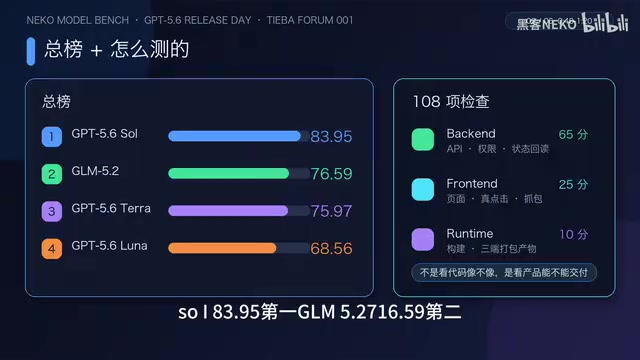
GPT 5.6 Three-Version Benchmark: What Makes Sol, Terra, and Luna Worth the Price Difference?
GPT 5.6's Sol, Terra, and Luna tested across 108 engineering checks. Backend scores tie between Sol and Terra — the real gap is in frontend and packaging delivery.
阅读全文 →

·4 分钟
Learn ML Free at Public Libraries: A Complete Guide to O'Reilly Tech Book Resources
Getting O'Reilly machine learning books free at public libraries? It's no myth. This article reveals hidden tech learning resources at libraries, including online platform subscriptions and digital database access, helping self-learners build AI knowledge at zero cost.
阅读全文 →

·2 分钟
Microsoft Open-Sources .NET Skills: Making AI Coding Agents Master C# Development
Microsoft open-sources dotnet/skills, packaging .NET/C# best practices as structured skills for AI coding agents. Bridges domain knowledge gaps in general LLMs, improving code quality for GitHub Copilot and other tools.
阅读全文 →

·6 分钟
Grok 4.5 Coding Benchmark: A Deep Dive into Performance, Speed, and Cost
xAI releases Grok 4.5, purpose-built for coding agents. 80 TPS speed, $2/M input tokens, SWE Bench Pro score of 64.7, and 4.2x better token efficiency than Opus 4.8. A deep hands-on review.
阅读全文 →

·6 分钟
Grok 4.5 Hands-On: A Faster, Cheaper Coding Dark Horse — Can It Replace Opus and GPT?
In-depth Grok 4.5 hands-on review: priced at a fraction of Opus 4.8, twice the token efficiency of peers, and coding ability in the top tier. A real-project breakdown of its strengths, highlights, and shortcomings.
阅读全文 →

·6 分钟
GPT Live Full-Duplex, Grok 4.5 Coding, Seedream 5.0 Images: AI Accelerates Across Three Tracks Simultaneously
OpenAI's GPT Live full-duplex voice model, Grok 4.5 coding model with Cursor, and ByteDance's Seedream 5.0 Pro image generation launched together. A deep dive into three AI releases.
阅读全文 →