#GLM 4.6
36 related articles
 教程攻略
教程攻略·3 分钟
Claude Code with GLM 4.6: A Guide to Deploying a Programming Agent with Chinese Domestic Models
A detailed guide on deploying Claude Code programming Agent with Zhipu GLM 4.6, covering installation, model replacement, commands, thinking modes, and SubAgent parallel development.
阅读全文 →
 科技前沿
科技前沿·4 分钟
Claude's Quota Slashed by 20x — Can GLM 4.6 Be the Best Alternative?
Anthropic slashes Claude Max Opus quotas by 20x, driving developer exodus. GLM 4.6 enters with 1/10th API pricing, 200K context window & open weights. Full comparison inside.
阅读全文 →
 产品体验
产品体验·3 分钟
Haiku 4.5 vs GPT-5 Mini vs GLM-4.6: Real-World Benchmark of Budget Coding Models
In-depth comparison of Claude Haiku 4.5, GPT-5 Mini, and GLM-4.6 across speed, cost, code quality, concurrency safety, and tool calling to help developers choose the right budget AI coding model.
阅读全文 →

·3 分钟
Ollama Prepares for Trillion-Parameter Open-Source Models as the Open-Source Ecosystem Heats Up
Ollama scales up for trillion-parameter open-source models like Kimi K3 and Qwen 3.8. Hugging Face demands $100M from OpenAI, Alibaba Coder goes mobile, and DeepSeek pauses fundraising.
阅读全文 →

·3 分钟
GLM 5.2 Hands-On: An Open-Source, Low-Cost Model That Rivals Opus
In-depth hands-on review of GLM 5.2: a 753B-parameter open-source model with a 1M-token context, rivaling Opus 4.8 at about one-tenth the price. Full setup guide for Claude Code and Cursor.
阅读全文 →
·3 分钟
Claude Sonnet 5 Deep Dive: Impressive Benchmarks, Questionable Value — Just Use Opus 4.8?
Claude Sonnet 5 review: 63.2% SWE-bench, near Opus 4.8 performance, but new tokenizer hides real costs. Ranks 13th on CursorBench. Most tasks: stick with Opus 4.8.
阅读全文 →

·6 分钟
Claude Sonnet 5 In-Depth Testing: 8 Real-World Tasks Reveal Its True Capability Boundaries
Bilibili creator KaterSony tests Claude Sonnet 5 across 8 real-world tasks—image recognition, 3D modeling, web generation—comparing it against GPT-5.5, Gemini 3.1 Pro, and revealing its true capability limits and cost traps.
阅读全文 →

·2 分钟
Claude Sonnet 5 Leaked: Near-Opus Performance at a Fraction of the Price
Claude Sonnet 5 leak: rumored input price of just $2/million tokens with near-Opus 4.8 performance. We break down the evidence, pricing, and what it means for developers.
阅读全文 →
·3 分钟
Claude Sonnet 5 Deep Dive: Impressive Benchmarks, Disappointing Reality — Stick with OPUS 4.8
Anthropic's Claude Sonnet 5 claims near-OPUS 4.8 performance at lower cost. Real-world tests reveal hidden tokenizer costs, weak creative output, and only 13th place on Cursor rankings.
阅读全文 →

·2 分钟
Claude Sonnet 5 Deep Dive: Near-Opus Performance but Higher Costs — Is It Worth the Upgrade?
Claude Sonnet 5 benchmarked: near-Opus 4.8 performance but poor token efficiency makes it pricier than the flagship. Full analysis of pricing, safety tradeoffs, and real-world results.
阅读全文 →

·4 分钟
The Local AI Inflection Point: Edge Deployment, Multi-Model Collaboration, and the Open-Source Ecosystem
AI Engineer Summit deep dive: Local AI hits a real inflection point, driven by privacy and cost. Multi-model collaboration goes mainstream, NVIDIA + ExoLabs achieve 10x gains, open-source ecosystem accelerates.
阅读全文 →

·3 分钟
OpenCode In-Depth Review: Can This Open-Source Coding Agent Replace Claude Code?
OpenCode is an open-source terminal coding agent with 180K+ GitHub stars, supporting hundreds of models and a dual-layer agent architecture — completely free. See how it compares to Claude Code.
阅读全文 →

·5 分钟
The Complete Guide to Building an AI-Powered Second Brain with Obsidian + Hermes Agent
An in-depth guide to building an AI-driven second brain with Obsidian + Hermes Agent. Covers living files, VPS deployment, core memory mechanisms, and skill visualization.
阅读全文 →

·4 分钟
AMD Ryzen AI Halo Hands-On: Can x86 Architecture Challenge NVIDIA's DGX Spark?
In-depth review of the AMD Ryzen AI Halo mini AI box: powered by the Ryzen AI Max Plus 395 (Strix Halo) chip with 128GB unified memory, priced at $4,000. Compared against NVIDIA's DGX Spark across token generation, prefill speed, and x86 advantages.
阅读全文 →

·4 分钟
Claude Sonnet 5 In-Depth Review: Impressive Performance, but Hidden Traps in the Pricing Strategy
A full review of Claude Sonnet 5: major agentic gains, benchmarks near Opus 4.8, but a Tokenizer switch inflates real costs, nearly erasing the price gap with Opus. We break down the pricing traps.
阅读全文 →

·4 分钟
DeepSeek-V4 Deep Dive: Million-Token Context Architecture Breakthrough and Core Innovations
Deep dive into DeepSeek-V4: 1.6T-parameter MoE, CSA+HCA hybrid attention, MHC & MUON optimizer. Inference FLOPs drop to 27% of V3.2, redefining open-source LLM SOTA.
阅读全文 →
·7 分钟
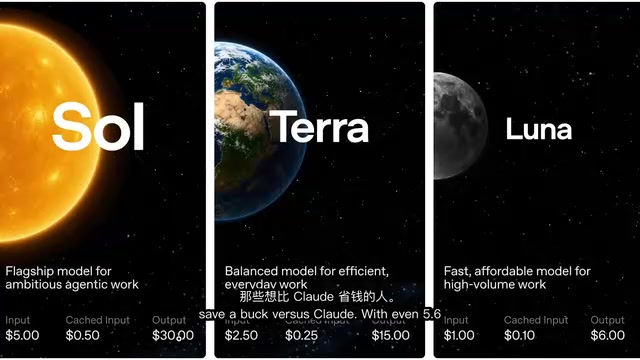
GPT-5.6 Sol vs. Fable 5: Can Half the Price Match the Flagship?
OpenAI launches GPT-5.6 Sol at half the price of Anthropic's Fable 5. We compare both models on HealthBench, cybersecurity and more using hard system-card data, analyzing Sol's cost-effectiveness and shifts in AI power.
阅读全文 →

·6 分钟
Fable 5 vs. GPT-5.6 Sol: Benchmarks, Pricing, and the AI Power Struggle Explained
An in-depth comparison of Fable 5 and GPT-5.6 Sol: benchmarks across Terminal Bench, HealthBench, and ExploitBench, plus pricing strategy, OpenAI's government equity controversy, and shifting AI power dynamics.
阅读全文 →

·3 分钟
Is Claude Sonnet 5 Really Cheap? A Cost Breakdown by Task
Claude Sonnet 5 markets itself on agentic capabilities and low price, but real costs are far more complex. We break down token explosion, tokenizer inflation, and Opus 4.8 comparisons to reveal the true cost-performance picture.
阅读全文 →

·3 分钟
Claude Says It's DeepSeek? Unraveling the Truth Behind LLM Identity Confusion
Why does Claude claim to be DeepSeek? This article analyzes LLM identity confusion from three angles: training data contamination, context memory residue, and lack of self-awareness, plus practical verification methods.
阅读全文 →