#LangGraph deployment
347 related articles
 Product Reviews
·3 min
Claude Code with MiniMax M2: Testing a Low-Cost AI Coding Solution Across Three Real Projects
Real-world testing of MiniMax M2 as Claude Code's backend model across three projects: framework migration, iOS development, and full-stack MVP — at just 8% of Claude's price.
Read more →
 Industry Insights
·3 min
Deep Dive into Three Major LLM Career Paths: Requirements, Tech Stacks, and Career Prospects
Deep analysis of three core LLM roles—Application Engineer, Development Engineer, and Algorithm Engineer—covering technical requirements, salary thresholds, and career prospects including RAG, fine-tuning, and inference deployment.
Read more →
 Tutorials
·3 min
Practical Guide to Building Multi-Agent Collaborative Applications with CrewAI + FastAPI
Learn how to build a multi-Agent collaborative system with CrewAI and FastAPI. Covers Agent, Task, Crew concepts, GPT/Tongyi Qianwen/Ollama integration, with complete code examples and model comparisons.
Read more →
 Tutorials
·2 min
WenzAgent Open-Source Framework: A Practical Tutorial for Multi-Agent Collaborative Management on LAN
A detailed guide on deploying WenzAgent, an open-source multi-Agent management framework under Apache License, supporting LAN-based multi-device AI agent collaboration with Server-Client architecture.
Read more →
 Tutorials
·3 min
AI Agent Learning Roadmap: From Beginner to Enterprise-Level Development in Three Months
A detailed three-month AI Agent learning roadmap covering LLM basics, ReAct paradigm, LangChain, memory mechanisms, tool calling, and multi-agent collaboration with practical project suggestions.
Read more →
 Tutorials
·3 min
LangGraph Multi-Agent Architecture: Graph Structure Principles and Enterprise-Level Implementation Guide
Deep dive into LangGraph's core graph structure design, single and multi-agent collaboration patterns, MCP protocol integration, and Time Travel fault-tolerance, with enterprise-level hybrid multi-agent architecture implementation.
Read more →
 Product Reviews
·3 min
Warp 2.0 Deep Dive: An AI Development Environment with Multi-Agent Parallelism
Deep dive into Warp 2.0's Agent Development Environment (ADE): multi-agent parallel orchestration, terminal editor, AI coding platform, hands-on SaaS app building, and comparison with Cursor and Claude Code.
Read more →
 Deep Dives
·2 min
AI Agent Development Methodology: A Complete Guide from ReAct to Enterprise-Grade Tech Stack
A deep dive into AI Agent development methodology, from the ReAct theoretical framework to a four-layer enterprise tech stack covering model services, Agent types, LangChain, and production deployment.
Read more →
 Tutorials
·3 min
LangGraph + MCP: A Practical Guide to Building Enterprise-Grade ChatBI Data Analysis Agents
Learn how to build a ChatBI data analysis Agent from scratch using LangGraph + multi-MCP architecture, covering centralized-to-decentralized evolution, NL2SQL, agent orchestration, and enterprise deployment.
Read more →
 Tutorials
·3 min
MCP Protocol Explained: The New Agent Communication Standard Replacing Function Calling
Deep dive into MCP (Model Context Protocol): its core concepts, three communication mechanisms, and ecosystem. Learn how MCP replaces Function Calling with Streamable HTTP and SDK 2.0.
Read more →
 Tutorials
·2 min
LangGraph vs LangChain: How to Choose Your Agent Development Framework
In-depth comparison of LangGraph vs LangChain: controllability, extensibility, and FastAPI-powered performance. Covers storage, enterprise private deployment, and migration guidance for agent developers.
Read more →
 Tutorials
·3 min
From Programmer to Agent Developer: A Detailed Four-Stage Learning Roadmap
A systematic four-stage learning roadmap for programmers transitioning to AI Agent development, covering core theory, ReAct and classic paradigms, Prompt engineering, and hands-on projects.
Read more →
 Tutorials
·3 min
Complete Breakdown of Andrew Ng's Agent Course: A Practical Guide to the Five Core Modules of AI Agent Development
Deep dive into Andrew Ng's viral AI Agent course covering five core modules: Reflection, Planning, Tool Use, Multi-Agent Collaboration, and Memory, with practical learning paths for LLM agent development.
Read more →
 Tutorials
·3 min
From Traditional RAG to Agentic RAG: Principles Compared and Enterprise-Grade Implementation Guide
Deep dive into traditional RAG limitations and Agentic RAG upgrades, with ChatBox source code analysis covering core tool design, intelligent decision flows, and LangGraph implementation for enterprise deployment.
Read more →
 Tutorials
·3 min
Frontend Engineers Leveling Up to AI Agents: LangGraph.js Architecture Design & Practical Guide
How can frontend engineers advance into AI Agent development? This guide covers LangGraph.js core architecture (state, nodes, edges), LangChain comparison, and workflow agent design with practical examples.
Read more →
 Tech Frontiers
·3 min
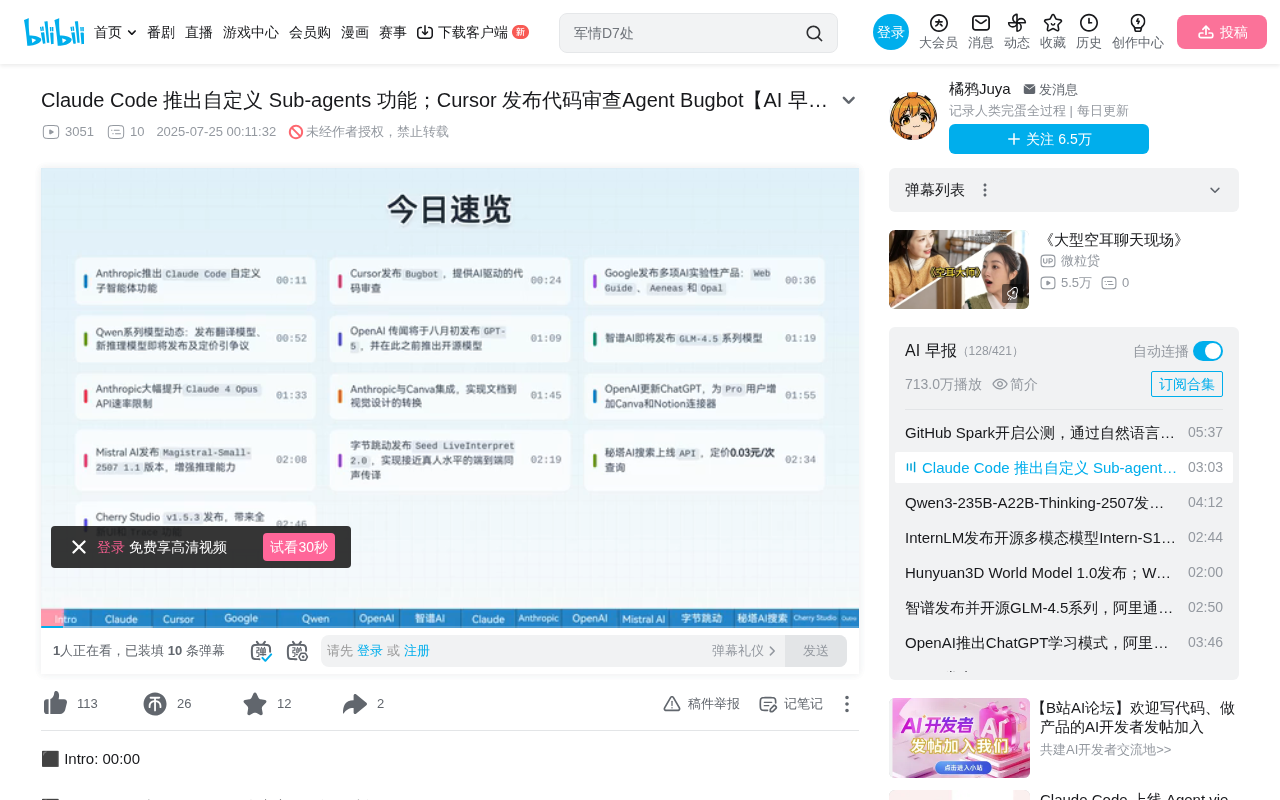
Claude Code Sub-Agents and Cursor BugBot Launch: AI Programming Tools Get Major Upgrades
Anthropic adds custom sub-agents to Claude Code, Cursor launches code review Agent BugBot, Qwen releases 92-language translation model, and Google unveils three experimental AI products.
Read more →
 Tutorials
·2 min
The Three-Layer Pyramid Model for Agent Development: From Beginner to Industrial-Grade Deployment
Deep dive into the Three-Layer Pyramid Model for Agent development, covering autonomous agents, collaborative multi-agent systems, and universal orchestration agents with a complete learning path from beginner to industrial-grade deployment.
Read more →
 Tutorials
·3 min
Enterprise Multi-Agent Development: Low-Code Platforms vs. Hand-Written Code — An In-Depth Comparison
In-depth comparison of two enterprise multi-agent development approaches: low-code platforms like Dify vs. hand-written code with LangGraph. Covers efficiency, flexibility, security, and prompt injection defense strategies.
Read more →
 Tutorials
·3 min
Deep Agents: Enterprise-Grade Agent Engineering and Deep Research Implementation Guide
Learn how the Deep Agents framework solves enterprise AI Agent challenges like tool sprawl and context pollution, with a complete Deep Research implementation guide covering task decomposition, multi-source integration, and structured report generation.
Read more →
 Tutorials
·3 min
Enterprise AI Agent Four-Layer Architecture Design and PDCA Continuous Optimization Practical Guide
Deep dive into enterprise AI Agent four-layer architecture design (User, Gateway, Agent Service, Capability layers) with PDCA optimization methodology and dual manual+automated evaluation for production-grade Agent systems.
Read more →