#MoRI optimization
275 related articles
 Tutorials
·2 min
Beyond Vibe Coding: A Practical Guide to Systematic AI Programming Workflows
A deep dive into systematic AI programming workflows covering context management, custom commands, and code review. Move beyond Vibe Coding with a Plan-Prompt-Generate-Review-Iterate process.
Read more →
 Tutorials
·3 min
Beginner's Guide to Skills: Packaging Repetitive Workflows as AI Skill Packs
Learn AI Skill packs: how to install and create them. Encapsulate repetitive workflows into reusable Skills and trigger complete AI workflows with one sentence.
Read more →
 Tutorials
·4 min
SwiftUI in Practice: A Complete Tutorial on Building an Item Management App with AI Collaboration
A complete hands-on tutorial on building a SwiftUI item management app through AI collaboration, covering Prompt design techniques, code generation debugging, and state management comparisons.
Read more →
 Industry Insights
·2 min
Claude Code Source Leak Reveals the Core Paradigm of Harness Engineering
Deep analysis of the Claude Code source leak, comparing OpenCode architecture differences, revealing how Harness Engineering determines the floor of Agent capabilities.
Read more →
 Research
·4 min
Deep Dive into Claude Code's Open-Source Architecture: The Design Philosophy Behind 510,000 Lines of Code
Deep analysis of Claude Code's open-source architecture: dual-loop design, 7-step tool pipeline, 4-layer token compression, memory systems, and multi-agent collaboration patterns.
Read more →
 Industry Insights
·4 min
Deep Dive into Claude Code's Open-Source Architecture: Six Core Design Principles and Engineering Practices Revealed
Deep analysis of Claude Code's open-source architecture: six core design principles including dual-loop mechanism, seven-step tool pipeline, four-layer token compression, multi-agent collaboration, and memory systems.
Read more →
 Tutorials
·3 min
Java Developers Transitioning to AI Engineers: New Interview Trends and Learning Roadmap
Deep analysis of interview trends for Java developers transitioning to AI engineers, covering LLM integration, RAG, Spring AI framework practice, with a complete learning roadmap.
Read more →
 Tutorials
·3 min
Batch AI Image Generation on Mac: Lessons Learned from Generating 10,000+ Illustrations
Practical guide to batch AI image generation on Mac using Draw Things, covering prompt iteration strategies, negative prompt pitfalls, performance tips, and the decision to switch to Replicate cloud platform.
Read more →
 Research
·3 min
MementoGUI: A Multimodal Memory Management Framework for Solving Long-Horizon GUI Agent Amnesia
MementoGUI is a plugin-style multimodal memory management framework that solves GUI agent forgetting in long-horizon tasks through dual time-scale memory and four memory control operators, boosting long-task completion without fine-tuning.
Read more →
 Tutorials
·3 min
Complete Learning Roadmap for Java Developers Transitioning to AI Engineering
A detailed five-phase learning roadmap for Java developers transitioning to AI engineering, covering Spring AI, LangChain4j, RAG core technology, and Agent development.
Read more →
 Tutorials
·3 min
Claude Code Plugin System Explained: Four Core Components Building an Extensible Development Platform
Deep dive into Claude Code 2.0.14's plugin system covering Slash Commands, Sub-agents, MCP integration, and Hooks—with demos on one-click plugin installation and custom code review plugin creation.
Read more →
 Product Reviews
·4 min
OpenHuman Deep Dive: A Context-First Open-Source Personal AI Agent
Deep dive into OpenHuman open-source AI Agent: context-first architecture, Rust+React hybrid, Memory Tree system, Token Juice compression, and multi-model routing.
Read more →
 Tutorials
·3 min
OpenClaw Advanced Guide: Model Selection, Memory Restructuring & Gateway Auto-Repair
Deep dive into OpenClaw advanced techniques: Claude Opus 4.6 vs GPT-5.2 model selection, topic-based memory splitting with LanceDB vectorization, Codex deep search integration, and systemd + Claude Code Gateway auto-repair.
Read more →
 Industry Insights
·4 min
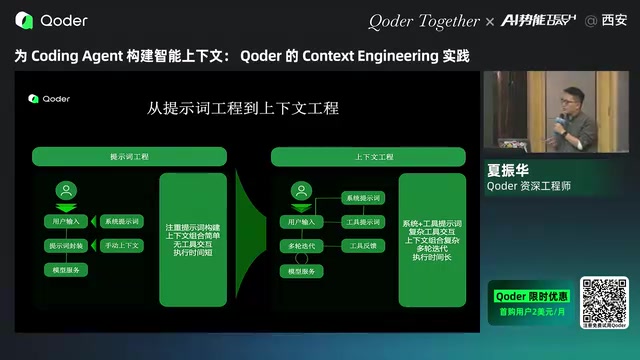
Qoder's Context Engineering in Practice: Four-Layer Retrieval Engine and Memory System Architecture
Deep analysis of Qoder's (Tongyi Lingma international edition) context engineering architecture, including its four-layer retrieval engine, memory engine, context caching, and core product design.
Read more →
 Product Reviews
·2 min
Agent Memory: Giving AI Coding Agents Persistent Memory Across Sessions
Agent Memory is an open-source local memory layer providing persistent, cross-session, cross-tool long-term memory for AI coding agents like Claude Code, Cursor, and Codex.
Read more →
 Tutorials
·3 min
35 Lines of Prompts Let Codex Auto-Optimize Your Workflow — Reposted by OpenAI's President
An OpenAI employee used just 35 lines of prompts to have Codex analyze 30 days of work history, identify repetitive tasks, and generate reusable automated Skills. Combined with screen reading and long-term memory, Codex is becoming a proactive workflow optimization agent.
Read more →
 Industry Insights
·2 min
AMD MI355X Beats B200: Full-Stack Optimization Breakdown for 5% Lower TCO on DeepSeek-R1 Inference
AMD Instinct MI355X achieves 5% lower TCO than NVIDIA B200 on DeepSeek-R1 disaggregated inference via SGLang+MoRI full-stack optimization with 1.25x per-GPU throughput.
Read more →
 Product Reviews
·3 min
Context Mode: How One MCP Plugin Cured AI Coding Assistants' Amnesia
Context Mode solves AI coding assistants' context amnesia via sandbox isolation, session continuity tracking, and code-thinking philosophy—compressing context consumption by 99% and earning 9,700 Stars in two months.
Read more →
 Product Reviews
·3 min
Warp 2.0 Deep Dive: An AI Development Environment with Multi-Agent Parallelism
Deep dive into Warp 2.0's Agent Development Environment (ADE): multi-agent parallel orchestration, terminal editor, AI coding platform, hands-on SaaS app building, and comparison with Cursor and Claude Code.
Read more →
 Product Reviews
·3 min
Cursor 3.0 Deep Dive: From Code Editor to AI Agent Command Center
Deep dive into Cursor 3.0's major upgrades: proprietary Composer 2 coding model, multi-agent parallel workflows, built-in browser and design mode. Exploring the shift from VS Code fork to Rust rewrite and the AI agent programming paradigm.
Read more →