#MoRI optimization
325 related articles
Stronger Models, Worse Tools? The Hidd…
·4 min
Stronger Models, Worse Tools? The Hidden Pitfalls of Tool Calling in Claude's New Models
Developers found Claude's flagship models Opus and Sonnet perform worse with third-party editing tools than older versions — likely due to RL over-optimization on built-in tools degrading generalization.
Read more →

·7 min
OpenAI Codex Shortcuts Getting an Upgrade — How Will the AI Programming Experience Evolve?
OpenAI announces Codex shortcut upgrades focused on developer workflow optimization. Analysis of upgrade directions, industry competition, and expected improvements to code completion and natural language triggers.
Read more →
Three Role Shifts for Engineers in the…
·4 min
Three Role Shifts for Engineers in the AI Agent Era: From Coders to System Designers
As AI Agents handle long-horizon autonomous tasks, engineers are shifting from writing code to setting direction, reviewing output, and designing systems around models.
Read more →

·5 min
Building RAG from Scratch: Creating a Domain Expert System with Local Small Models
Step-by-step guide to building a complete RAG pipeline with Ollama + LangChain + FAISS + Qwen 1.5B. Run document retrieval and intelligent Q&A locally without a GPU.
Read more →

·6 min
Codex Beginner's Guide: Four Product Forms Explained, Plus Comparison with Claude Code and Cursor
In-depth analysis of OpenAI Codex's four usage forms, comparing Codex, Claude Code, and Cursor across price, stability, and frontend/backend fit to help developers choose the right AI programming tool.
Read more →

·4 min
Frontend to Full-Stack AI: A Complete NestJS + LangChain Roadmap
Pure frontend roles are shrinking fast. Learn how mastering NestJS and LangChain AI agent development can unlock a 20–30% salary boost on your full-stack AI transition path.
Read more →

·2 min
Immich: Open-Source Self-Hosted Photo Management — The Best Google Photos Alternative
Immich is a high-performance open-source self-hosted photo manager with 100k+ GitHub Stars. Features auto backup, AI search, face recognition, and Docker deployment.
Read more →
The Diffusion Model Revolution: The Ne…
·2 min
The Diffusion Model Revolution: The Next Frontier in AI Drug Discovery
Former Meta Llama lead Sergey Edunov joins Genesis Molecular AI, betting on diffusion models for drug discovery. PEARL achieves zero-shot top results on OpenBind.
Read more →
Binary Coverage Analysis Without Sourc…
·2 min
Binary Coverage Analysis Without Source Code: INT3 Breakpoint Traps and Hardware Tracing in Practice
A deep dive into binary coverage collection without source code, covering INT3 breakpoint traps, page protection tricks, Intel PT hardware tracing, and AFL bitmaps for reverse engineering and fuzzing.
Read more →

·8 min
The Codex Orange Book: An Open-Source Full-Stack Practical Guide for AI Programming Beginners
The Codex Orange Book is an open-source unofficial guide with 2.5K+ GitHub Stars, covering installation, plugins, MCP extensions, and hands-on projects to help beginners master AI programming tools.
Read more →

·7 min
Linked Context: How AI Agent Skills Can Point to the Entire Open Web
Deep dive into Skill Studio's "Linked Context" mechanism—skill files become real-time URL fetches instead of pre-loaded copies, extending AI Agent progressive disclosure to the entire open web.
Read more →

·6 min
The New Normal of AI Programming: How Autonomous Agent Development Is Reshaping Software Engineering
AI Agent autonomous programming is evolving from niche experiments to the industry default. This article analyzes the three stages of AI-assisted programming, its impact on developer skills, process restructuring, and key challenges.
Read more →

·4 min
AI Agent Memory System Architecture Breakdown: A Practical Selection Guide from 16 Open-Source Projects
Deep analysis of memory system architectures across 16 open-source AI Agent projects including Hermes, Goose, NanoClaw, and Deerflow, covering FTS5 vs vector search, multi-tenant isolation, and LLM auto-extraction.
Read more →

·3 min
VibeFlow: A Practical Deep Dive into Natural Language-Driven CFD/CAE Post-Processing Automation
Explore how VibeFlow uses natural language and AI Agents to automate CFD/CAE post-processing, with demos of velocity contours, pressure isolines, and bending moment calculations.
Read more →

·3 min
Ideogram 4 Fully Automated Workflow: Run Locally with Just 8GB VRAM, No Complex Prompts Needed
Ideogram 4 automated ComfyUI workflow using Qwen2.5 VL-8B: run locally with 8GB VRAM, auto-generate structured JSON prompts from simple descriptions, with image reverse-engineering support.
Read more →

·3 min
Hermes Agent: How a Self-Evolving AI Framework Earned 120K Stars in Two Months
Deep dive into Hermes Agent, the open-source AI Agent framework with lower Token costs, persistent long-term memory, and self-learning evolution that earned 120K GitHub stars in two months.
Read more →
·3 min
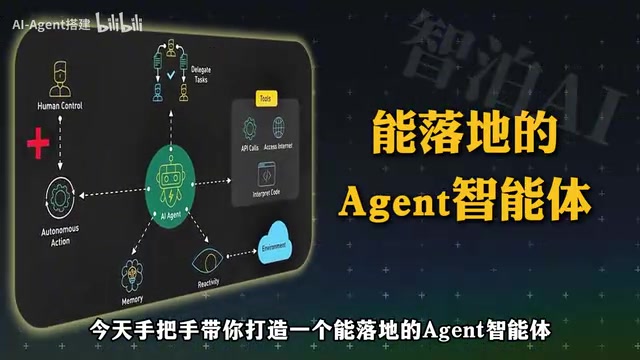
AI Agent Beginner's Guide: A Complete Four-Stage Learning Path
A complete learning path for AI Agent development from scratch, covering core theory, ReAct paradigm, multi-agent collaboration, Prompt optimization, and hands-on projects across four stages.
Read more →

·4 min
AI Large Language Model Career Transition Roadmap: A Three-Phase Learning Guide from Zero to Enterprise-Ready
A systematic three-phase AI LLM career transition roadmap: from Transformer fundamentals to RAG, Agent & LangChain development, to LoRA fine-tuning. Build enterprise-ready skills in two months.
Read more →

·4 min
Codex Hands-On Tutorial: A Complete Guide from Installation to Enterprise-Level AI Programming
A complete hands-on guide to OpenAI Codex covering installation, CLI interaction, agents.md setup, MCP protocol integration, Rules governance, and building a RAG intelligent customer service system.
Read more →

·2 min
Deep Dive into Devin's Background Agent Architecture: Behind the 80% AI-Committed Code
Deep analysis of Devin's background agent architecture: brain-sandbox separation, environment setup, MCP integration, memory systems, and multi-agent collaboration challenges.
Read more →