#Playwright automation testing
131 related articles

·4 min
Agent Beginner's Guide: Architecture Principles and Practical Efficiency Tips
A deep dive into AI Agent principles, core architecture, and practical applications. Learn how Agents differ from LLMs and how to leverage Agent Skills to boost productivity.
Read more →

·4 min
MCP Hands-On Tutorial: Using AI to Automate Reverse Engineering of JS Encryption Algorithms
A detailed guide on MCP protocol setup and hands-on workflow showing how AI can automatically locate encrypted APIs, analyze obfuscated JS, set breakpoints, and restore sign algorithms to generate Python scraper code.
Read more →

·3 min
Complete Guide to Connecting OpenAI Codex with MCP Servers: Configuration & Hands-On Practice
Learn how to configure MCP servers for OpenAI Codex. Step-by-step TOML setup with Context7, hands-on verification, and best practices for extending Codex capabilities.
Read more →

·1 min
Claude Code for Test Development in Practice: An AI Programming Workflow That Doubles Your Efficiency
A practical guide to Claude Code for test development: auto-generating test scripts, Plan Mode workflows, MCP + Playwright integration, and Subagent parallel tasks to build systematic AI-assisted workflows.
Read more →
 Tutorials
·2 min
Claude Code in Action: Building a Movie Data Scraping & Display System from Scratch in 30 Minutes
A Bilibili creator used Claude Code to build a complete movie data system in 30 minutes, covering scraping, database, Spring Boot backend, and Vue frontend with practical insights on anti-scraping and model selection.
Read more →
 Tutorials
·1 min
CloakBrowser: A Third-Generation Anti-Detection Browser Built from Source-Level Modifications
CloakBrowser is an open-source anti-detection browser built from Chromium source-level modifications, using 50+ patches to eliminate automation fingerprints and pass Cloudflare, reCAPTCHA, and more.
Read more →
 Product Reviews
·2 min
JCode: Deep Dive into a Multi-AI Agent Collaborative Programming Framework
Deep dive into JCode, an open-source Coding Agent Harness designed for multi-Agent collaboration. Features Agent Memory, Swarm collaboration, multi-Provider access, and self-evolution with just 14ms first-frame latency and 117MB for 10 sessions.
Read more →
 Tutorials
·3 min
Claude Code in Practice: Plan Mode and MCP Automated Development Tips Explained
A deep dive into advanced Claude Code techniques: precise file referencing, Plan Mode for plan-first development, screenshot-driven UI iteration, project memory rules, and Playwright MCP server integration for fully automated testing.
Read more →
 Tutorials
·3 min
Building a Fully Automated Marketing System with AI: A Monetization Guide for Indie Developers
A detailed guide on how indie developers can use AI tools to build fully automated marketing systems—from MCP research to Skills systems to automated content production and traffic engines.
Read more →
 Tutorials
·3 min
Cursor 2.0 in Practice: Building a Complete App with Parallel Agent Development
Deep dive into Cursor 2.0's new features including Agent view, built-in browser debugging, parallel Agent development, and Composer 1 model through building a complete habit tracker app.
Read more →
 Tutorials
·3 min
Claude Code Hooks Explained: Build Your Own Automated Development Inspector
Deep dive into Claude Code Hooks' four core use cases: intercepting dangerous operations, auto change logging, code review, and automated testing. Learn Command, Prompt, and Agent Hook types.
Read more →
 Tutorials
·4 min
Getting Started with Codex from Scratch: Why It's a Better Fit Than Claude Code for Most People
In-depth comparison of OpenAI Codex vs Claude Code covering account stability, usage quotas, browser control, and automation — helping you get started with this all-in-one AI Agent desktop tool.
Read more →
 Deep Dives
·4 min
Can AI Agents Replace a Development Team? A Practical Guide for Non-Technical People
Can non-technical people use AI Agents to build virtual dev teams? From CEO Agent to Developer Agent, we analyze the theory vs. reality and offer a practical implementation guide.
Read more →
 Product Reviews
·3 min
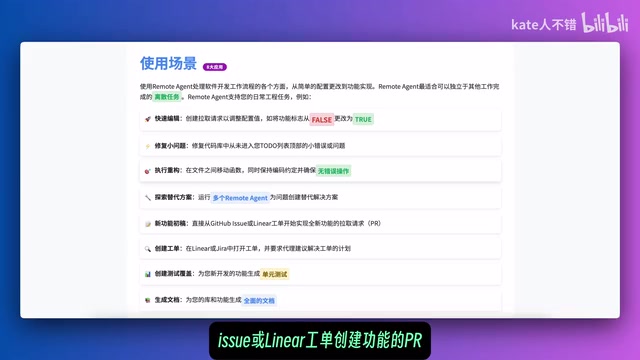
Augment Remote Agent Hands-On: Running 10 Cloud AI Agents in Parallel for Programming
Hands-on review of Augment Remote Agent: 10 cloud AI Agents coding in parallel, covering bug fixes, PR generation, documentation, and more with detailed workflows and real-world examples.
Read more →
 Tutorials
·2 min
Complete Guide to Building Claude MCP Services: From Local Development to Remote Deployment
Complete guide to MCP server setup: FastMCP local development, Claude CLI registration, STDIO vs HTTP communication modes, and Docker containerized remote deployment for AI-callable tool services.
Read more →
 Product Reviews
·3 min
Zenflow Hands-On Review: Spec-Driven AI Coding vs. Pure Prompt-Based Development
In-depth review of Zenflow's spec-driven AI coding vs Google AI Studio's prompt-based approach. Covers multi-agent execution, automated validation, version rollback, and the paradigm shift in AI programming.
Read more →
 Tutorials
·3 min
6 Must-Have MCP Plugins to Supercharge Your Claude Code Productivity
6 must-have Claude Code MCP plugins: File System, Structured Thinking, GitHub, Chrome DevTools, Context7, and Memos—build a complete AI programming workflow.
Read more →
 Tutorials
·2 min
Cursor AI Programming in Practice: A Complete Guide to Using Coding Agents Efficiently
A deep dive into Cursor's coding agent architecture and practical techniques, covering code search, feature development, debugging, code review, and custom configuration for efficient AI programming.
Read more →
 Tutorials
·3 min
Hermes Agent + Playwright: A Practical Guide to AI-Driven Browser Automation
A complete guide to AI-driven browser automation with Hermes Agent and Playwright, covering setup, three AI modes (snapshot decisions, multi-turn dialogue, autonomous exploration), retry mechanisms, and optimization tips.
Read more →
 Product Reviews
·3 min
OpenCLI: Wrapping Websites and Desktop Apps into Reusable CLI Commands for AI
OpenCLI is an open-source tool that wraps websites and desktop apps into reusable CLI commands for AI Agents. With 90+ built-in adapters, browser login state reuse, and auto-generated adapters.
Read more →