#Runbook
20 related articles
 Product Reviews
·1 min
Runbook: A CLI Detection Tool for AI Agent Development Environments — Stop Guessing, Start Coding Efficiently
Runbook is a Rust-based CLI detection tool that scans local CLI tools and sets preferences, helping AI Agents like Claude Code accurately identify dev environments and avoid common mistakes.
Read more →

·3 min
Orca-Bench: Evaluating Whether AI Agents Can Handle Production Oncall Duties
Orca-Bench is a benchmark for evaluating AI agents' operational capabilities, testing LLMs on fault diagnosis, multi-tool orchestration, and risk decisions in simulated Oncall scenarios.
Read more →

·3 min
Production-Grade LLM Inference Deployment: A Practical K8s Handbook
Complete guide to deploying production-grade LLM inference on Kubernetes, covering GPU scheduling, vLLM engine selection, autoscaling, observability, and cost optimization.
Read more →

·5 min
The Five Stages of AI Agent Architecture Evolution: The Real Path from Model Calls to Production Runtime
Deep dive into the five evolution stages of AI Agent architecture: model calls, tool calls, workflows, Agent loops, and production runtime. Learn the responsibility boundaries and design principles.
Read more →

·3 min
Pinterest Medic: Engineering an AI Agent for Automated Spark Failure Diagnosis
How Pinterest engineers built Medic for Apache Spark — a multi-agent auto-diagnosis tool — covering the evolution from a single ReAct agent, observability, log denoising, and end-to-end testing.
Read more →
·5 min
Advanced Claude Code in Practice: Building a Top-Tier AI Development Workflow
In-depth analysis of Claude Code customization methodology: from access, knowledge injection to tooling. Master context window management, zero-overhead Hooks, and MCP & Skills plugin primitives to build a scalable AI software engineering workflow.
Read more →

·3 min
AI Code Getting Worse with Every Fix? A Three-Layer Closed-Loop Engineering Methodology to Break the Cycle
AI code spiraling out of control? This article breaks down a three-layer engineering system — Prompt rules, Skill workflows, and Harness feedback loops — with real-world results showing pass rates rising from 70% to 98%.
Read more →

·4 min
Agent Loop in Practice: A Guide to Building Self-Improving Automation with Guardrails
A deep dive into building verifiable, self-evolving Agent automation loops with Claude Code and Codex — covering Loop Contracts, four trigger types, three-phase execution architecture, and Evolve Loops.
Read more →
Deep Dives
Deep Dive into AI Agent Skill Design: …
·3 min
Deep Dive into AI Agent Skill Design: Engineering Practices from Anthropic and Perplexity
A deep dive into Skill design philosophy from Anthropic's Claude Code team and Perplexity's Agent team, covering the Tax Test, Gotchas Flywheel, progressive disclosure, and Eval-First practices for building high-quality AI Agent skill systems.
Read more →
The CISA Credential Leak: A Wake-Up Ca…
·2 min
The CISA Credential Leak: A Wake-Up Call About Writing the Playbook During the Incident
CISA contractor leaked credentials to a public GitHub repo — and the agency was building its incident response playbook mid-incident. Key lessons on supply chain security and credential management.
Read more →

·5 min
5 Things You Must Do Before Deploying AI Agents to Production (With a Banking POC Case Study)
Over 60% of AI Agent projects die between demo and production. This article breaks down Databricks lead Sandy's five-pillar methodology and a bank POC case study to help you avoid the most common deployment pitfalls.
Read more →

·7 min
LangSmith Engine: An Intelligent Operations Tool That Automatically Diagnoses and Fixes Agent Failures
LangChain's LangSmith Engine is an intelligent agent tool for tracking Agent failures, prioritizing issues, and auto-drafting fixes. Deep dive into its core capabilities, sandbox isolation, sub-Agent architecture, and continuous evaluation challenges.
Read more →

·2 min
AI-Generated Deployment Docs + Cloudflare in Practice: The Full MokerSaaS Launch Workflow
How MokerSaaS used AI tool Cosmo to auto-generate Cloudflare deployment docs, then followed the document-driven workflow to bundle, deploy, and launch.
Read more →
·2 min
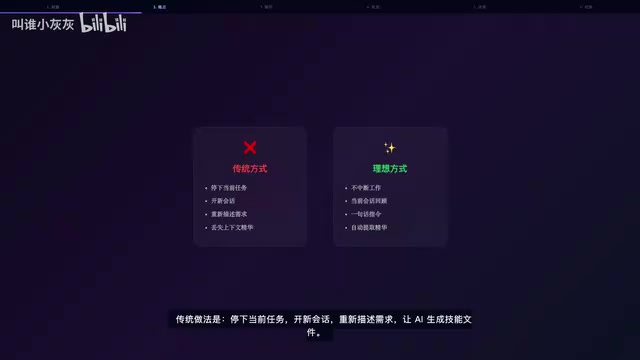
Extract Skills in One Click During a Claude Code Session: Turn Inspiration into Reusable Skills Instantly
Learn how to extract reusable Skill files in Claude Code without leaving your session. One command preserves full context, turning 20 minutes of work into seconds.
Read more →

·4 min
OpenAI Engineer's Practice: Agent-Driven Development Methodology in the Era of Free Code
OpenAI engineer Ryan Lopopolo shares 9 months of pure AI agent coding practice, revealing core methodologies including prompt engineering, automated code review, and skill design in the new paradigm where code is free.
Read more →

·4 min
Harness Engineering: A New Software Development Paradigm Where Humans Steer and AI Agents Execute
OpenAI engineer Ryan Lopopolo introduces Harness Engineering — a methodology where humans build constraint systems and AI agents handle all code implementation.
Read more →
 Tutorials
·4 min
Four Core Rules Anthropic Engineers Use to Prompt Claude Code
Anthropic engineers share how to properly use Claude Code at AI Code Summit: build composable Skills systems instead of one-off prompts. Master four core rules for skills that get smarter over time.
Read more →
 Product Reviews
·3 min
Multica Open-Source Platform: A Self-Hosted Solution for Unified Management of Multiple AI Coding Agents
Deep dive into Multica, an open-source Agent management platform for coordinating Claude Code, Codex, and other AI coding assistants as unified team members with self-hosted deployment.
Read more →
 Product Reviews
·2 min
Warp Terminal Deep Dive: A Smart Command-Line Tool with Built-in AI Agent
Deep dive into Warp intelligent terminal, a high-performance CLI tool built with Rust. Explore Agent Mode for natural language commands, smart debugging, Warp Drive team collaboration, and how it differs from Cursor and other AI coding tools.
Read more →
 Tutorials
·2 min
Using AI to Debug AI: Three Battle-Tested Patterns from Incident.io
Incident.io shares three battle-tested patterns for using AI to debug AI: Agent-driven Eval workflows, debug UI as file systems, and AI analysis pipelines for complex system debugging.
Read more →