#Unicode steganography
7 related articles

·3 min
The Claude Code Covert Marking Controversy: How AI Coding Tools Are Reshaping Enterprise Security Boundaries
Claude Code was revealed to steganographically mark system prompts under specific conditions, triggering a developer trust crisis. This article analyzes the steganography, Anthropic's tightening China access, and how AI coding tools became a core enterprise security issue.
Read more →

·4 min
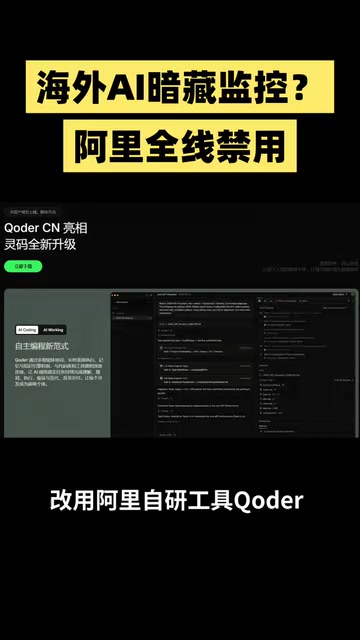
The Claude Code Covert Tagging Scandal: The AI Trust Crisis Behind Alibaba's Ban
Anthropic's Claude Code is accused of covert tagging via Unicode punctuation encoding, prompting Alibaba to ban its use. A deep dive into the reverse-engineering findings, distillation allegations, and the AI-era battle over compute monopoly and developers' right to know.
Read more →
·5 min
Deep Analysis of the Alibaba-Claude Ban: The Battle for Autonomous Control of AI Coding Tools
Alibaba bans all Anthropic products including Claude Code, while ByteDance and Tencent switch to in-house tools. A deep dive into the security logic and industry trends behind China's push for autonomous AI coding tools.
Read more →

·5 min
Alibaba Bans Claude Code: Invisible Fingerprints and the AI Tool Trust Crisis
Alibaba has banned Claude Code as high-risk software. Reverse engineering revealed a covert environment-identification mechanism hiding user fingerprints in punctuation via prompt steganography. A deep dive into the incident and AI tool trust.
Read more →

·3 min
Alibaba's Claude Ban Explained: The Truth Behind Three Converging Timelines
Alibaba banned Claude company-wide, flagging Claude Code as high-risk. Three converging timelines — Anthropic's distillation attack allegations, the 1260H list, and Claude Code's hidden detection system — reveal the geopolitical logic behind the ban.
Read more →

·3 min
How Alibaba Banned Claude: A Complete Breakdown of the Three Hidden Detection Layers
Claude Code was found to contain three covert detection layers: Chinese timezone checks, steganographic prompt marking, and identity fingerprints sent with every request. Alibaba banned all Claude products, forcing ~20,000 engineers to switch tools.
Read more →
