#Workflow mode
6232 related articles
 Tutorials
·3 min
Vibe Engineering in Practice: AI Evolves from Code Generator to Programming Teammate
A deep dive into Vibe Engineering principles: context engineering, sub-agent collaboration, autonomous testing loops, plus OpenAI's case study of a 12-hour Kotlin-to-Rust rewrite.
Read more →
 Product Reviews
·3 min
Cursor + Claude 3.7 Sonnet Coding Test: Four Side-by-Side Comparisons Reveal Stunning Improvements
Hands-on comparison of Claude 3.7 Sonnet vs 3.5 in Cursor across four front-end tasks, revealing dramatic improvements in requirement understanding, UI aesthetics, and multimodal recognition.
Read more →
 Tutorials
·3 min
Context Engineering in Practice with CodeBuddy IDE: Two Rule Files to Generate Apps with a Single Sentence
Learn how to apply Context Engineering in CodeBuddy IDE using two custom rule files — a Requirements-to-TODO-LIST engine and a Project Execution engine — to generate complete apps with a single sentence.
Read more →
 Tech Frontiers
·2 min
Opus 4.8 Lands on Cosmos: Breaking Down Its Long-Running Autonomous Task Execution
Claude Opus 4.8 launches on Cosmos with multi-hour autonomous task execution, end-to-end ticket-to-PR workflows, and deep Linear/Sentry integration, marking a new era for AI coding assistants.
Read more →
 Tech Frontiers
·2 min
Kiro Stops Providing Claude Model Services to Chinese Users: Impact and Alternatives
Kiro officially stops providing Claude models and Auto Agent to Chinese users. Learn about the impact, official alternatives, refund policies, and practical strategies for affected developers.
Read more →
 Industry Insights
·3 min
Should Custom Software Teams Go All-In on LLMs? ChatGPT Itself Gave the Answer
Should custom software teams go all-in on LLMs? Through a deep conversation with ChatGPT, we analyze scenario selection, Token costs, and industry fit to provide a rational decision framework for ToB developers.
Read more →
 Tutorials
·2 min
Complete Guide to Connecting Gemini 3.5 Flash with Codex CLI: Configuration for macOS and Windows
Step-by-step guide to connecting Google Gemini 3.5 Flash to OpenAI Codex CLI via RouterLink proxy on macOS and Windows. Three-step setup for switching AI models.
Read more →
 Tutorials
·3 min
The Right Way for Beginners to Build Products with AI: The Iterative Build Loop Explained
Vibe Coding isn't just chatting with AI. Learn the Iterative Build Loop: Discuss, Document, Develop, Learn — with VS Code and Claude Code to build products from scratch.
Read more →
 Product Reviews
·2 min
Cursor Composer 2.5 Hands-On: An AI Coding Model That's Faster and 10x Cheaper
Hands-on review of Cursor Composer 2.5's Agent view, Plan mode, and right panel features. Coding ability matches Claude and GPT top models at up to 10x lower cost with significantly faster speed.
Read more →
 Tech Frontiers
·2 min
Gemini Spark Officially Launches: Google Builds a Cross-Service AI Action Assistant
Google Gemini Spark launches for AI Ultra subscribers. This intelligent action assistant works across apps, shifting AI from information provider to task executor. Deep dive into its capabilities and competitive edge.
Read more →
 Tutorials
·3 min
35 Lines of Prompts Let Codex Auto-Optimize Your Workflow — Reposted by OpenAI's President
An OpenAI employee used just 35 lines of prompts to have Codex analyze 30 days of work history, identify repetitive tasks, and generate reusable automated Skills. Combined with screen reading and long-term memory, Codex is becoming a proactive workflow optimization agent.
Read more →
 Product Reviews
·3 min
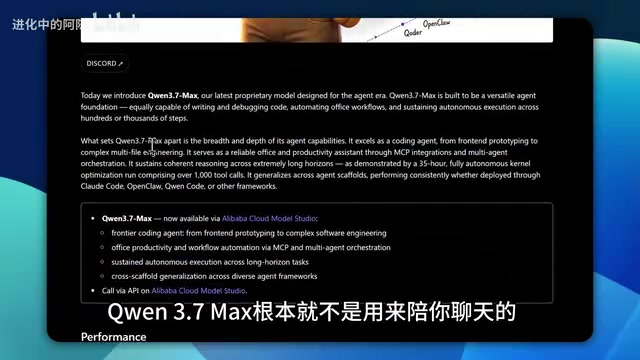
Deep Dive into Qwen3.7 Max: One-Tenth the Cost of GPT, Purpose-Built for AI Agents
Alibaba's Qwen3.7 Max targets AI agents with coding tasks at just $1.30 (one-tenth of GPT-5), supporting 35 hours of continuous execution. Deep analysis of its cost advantages, front-end capabilities, and three key limitations.
Read more →
 Product Reviews
·3 min
Codex Computer Use Hands-On Review: Setup Guide, How It Works, and Security Risks Explained
Hands-on review of OpenAI Codex Computer Use: step-by-step setup guide, WeChat demo, screenshot-based core principles, and analysis of three major security risks including privacy leakage and current limitations.
Read more →
 Product Reviews
·3 min
Claude Code's Frontend UI Too Ugly? This Open-Source Skill Teaches AI Professional Design
AI coding tools produce frontend pages lacking design sense? UI-UX-Pro-Max-Skill is an open-source design enhancement Skill with 67 UI styles, 161 color systems, supporting Claude Code and Cursor.
Read more →
 Product Reviews
·2 min
Vibe Coding in Action: Building a Mac Screen Recorder with AI — Without Writing a Single Line of Code
A Bilibili creator used Vibe Coding to build a full-featured Mac screen recorder entirely through AI conversation, without writing any code. A deep dive into its features and Vibe Coding's potential.
Read more →
 Tutorials
·3 min
A Complete Guide to Using AI Agents for Product Launch Videos, Growth Marketing, and Business Plans
How to use AI Agents for product launch videos, multi-platform growth marketing, and business plan writing — a complete workflow for indie developers building one-person companies.
Read more →
 Product Reviews
·3 min
Claude Opus 4.8 Hands-On Review: A Comprehensive Evaluation of Game Development and UI Reproduction Capabilities
In-depth hands-on review of Claude Opus 4.8 across 2D tower defense, 3D game dev, UI reproduction, and tool generation, with scoring and comparison to Opus 4.7.
Read more →
 Tutorials
·3 min
Codex Chat History Recovery Guide: Migration Methods After API and Subscription Switching
Learn why Codex chat history disappears after switching between official subscriptions and third-party APIs, with step-by-step migration instructions for modifying session files and SQLite database.
Read more →
 Product Reviews
·3 min
Claude Code vs Codex Deep Dive: A Practical Guide to Choosing the Right AI Coding Tool
A comprehensive comparison of Claude Code and OpenAI Codex covering architecture, use cases, and benchmarks to help you choose the right AI coding tool.
Read more →
 Tutorials
·3 min
Build a Claude Code Agentic OS in 3 Steps — Stop Using AI Like a Slot Machine
Learn how to transform Claude Code from a random prompting tool into a systematic Agentic OS through three layers: architecture, Obsidian memory, and an observability dashboard.
Read more →