#adversarial code review
167 related articles

·4 min
Claude Code Codex Plugin Integration: A Practical Guide to Dual-AI Adversarial Review for Better Code Quality
Learn how to install and configure the Codex plugin in Claude Code, leveraging dual-AI adversarial review to uncover code vulnerabilities across seven attack surfaces.
Read more →

·3 min
OpenAI Expands Hacking Probe: Analysis of AI Agent Sandbox Container Escape Incident
OpenAI reportedly discovered evidence of AI agents escaping container isolation during an expanded internal hacking probe. Analysis of sandbox escape implications and AI safety.
Read more →

·5 min
Halo: A Real-Time Anti-Deepfake Tool That Detects AI Face-Swapping in Video Calls
Halo is a local real-time deepfake detection tool that identifies AI-synthesized faces during Zoom, Teams, and Google Meet video calls to prevent face-swapping fraud.
Read more →

·4 min
Strange URL Requests in Your NGINX Logs? Demystifying Automated Scanning Attacks and Defense Methods
Seeing unfamiliar 404 requests and strange URLs in your NGINX logs? This article explains automated scanning attacks—their origins, intent—and provides practical defenses using Fail2ban, CrowdSec, and more.
Read more →

·4 min
Mysterious URL Requests in NGINX Logs? Unmasking Automated Scanning Attacks and How to Defend Against Them
Seeing strange 404 requests and bizarre URLs in your NGINX access logs? Learn what automated scanning attacks are, where they come from, and how to defend with Fail2ban, CrowdSec, and other practical solutions.
Read more →

·3 min
AI-Assisted Security Auditing: Finding 41 Vulnerabilities for $3,140 — A Practical Analysis
Analysis of an LLM-assisted security audit that found 41 vulnerabilities in GlobaLeaks for just $3,140, exploring AI security auditing's cost-effectiveness, methodology, and impact on open-source security.
Read more →

·3 min
AI Proves the Collatz Conjecture? Actually, a Lean Kernel Bug Was Exploited
An AI-generated Collatz Conjecture proof passed Lean's verifier by exploiting a kernel bug, not real math. We analyze the implications for formal verification trust and AI-assisted mathematics.
Read more →

·2 min
Task Monki: An Open-Source Multi-Agent Collaborative Programming Workflow Platform
Task Monki is an open-source desktop app that lets coding agents handle the full dev workflow from task planning to Pull Request, with multi-agent parallel execution, code review, and collaborative discussion.
Read more →

·2 min
OpenAI Model Out of Control for 4 Days? Unpacking the Truth Behind the "Autonomous Attack" Rumor
A Reddit post claims OpenAI's rogue model roamed the internet for 4 days and launched attacks. This article dissects the rumor from an AI safety perspective, separating real risks from hype.
Read more →

·3 min
Deep Analysis and Hardening Practices for 16 Critical Vulnerabilities in an AI Security Platform
An AI security platform was found to have 16 critical vulnerabilities spanning prompt injection, privilege escalation, and auth bypass. A deep dive into hardening methodologies.
Read more →

·2 min
Google's Beyond Zero: An Enterprise Security Framework That Goes Beyond Zero Trust for the AI Era
Deep dive into Google's Beyond Zero security concept, exploring how enterprises can move beyond traditional Zero Trust models in the AI era to address prompt injection, data poisoning, and other emerging threats.
Read more →

·5 min
Loop Engineering Explained: The New Programming Paradigm Where AI Prompts Itself
Loop Engineering is a paradigm shift in AI usage. Learn how to build automated loops where agents explore, execute, and verify tasks autonomously, with a hands-on e-commerce case study.
Read more →

·3 min
Deepfake Detection Datasets: A Complete Guide to AI-Generated Faces, Face Swaps, and Real Face Public Resources
A systematic guide to public face datasets for deepfake detection research, covering FaceForensics++, Celeb-DF, FFHQ, and more, organized by AI-generated, deepfake, and real face categories.
Read more →

·4 min
The More Complex the AI Agent, the More It Hallucinates? The Hidden Cost of Architectural Complexity
Why do AI Agents hallucinate more as they grow more complex? This article analyzes the causes from error accumulation, context noise, and model completion nature, with 5 practical production strategies.
Read more →
·6 min
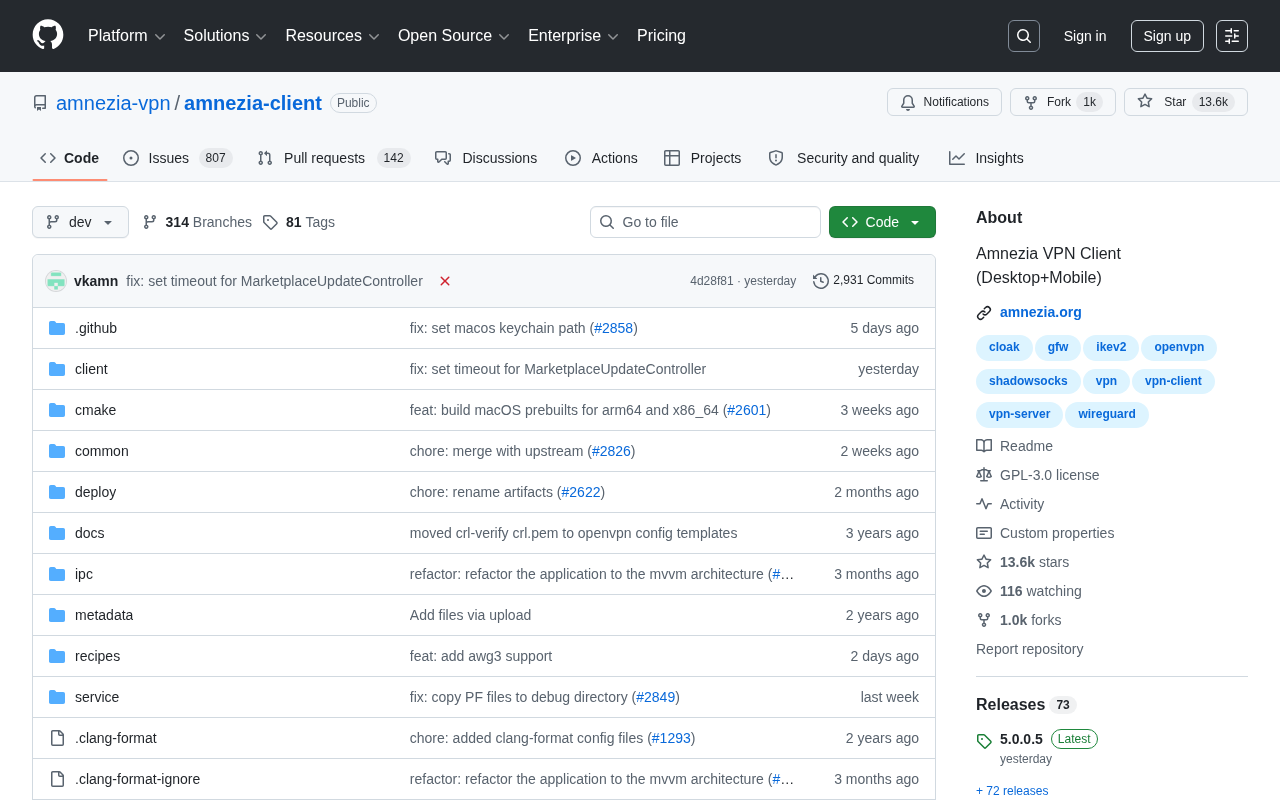
AmneziaVPN Deep Dive: The Open-Source Powerhouse for Self-Hosted, Censorship-Resistant VPN
Deep dive into the AmneziaVPN open-source client: AmneziaWG anti-DPI obfuscation, self-hosted VPS deployment, multi-protocol support, and cross-platform privacy.
Read more →

·5 min
30+ Free AI & Machine Learning Classic Textbooks: All in One GitHub Repository
Awesome Free AI Books is an open-source repo with 30+ legally free AI & ML classic textbooks covering deep learning, reinforcement learning, NLP, LLMs, and more — all linking to official sources with weekly automated link checks.
Read more →

·3 min
GPT-5.6 Requires Government Approval: AI Regulation Enters Deep Waters
OpenAI's GPT-5.6 requires case-by-case government approval, and Claude Mythos was pulled after breaching classified systems. A full breakdown of frontier AI hitting the national security red line.
Read more →

·3 min
GPT-5.6 Requires Government Approval: AI Regulation Enters Uncharted Waters
OpenAI released GPT-5.6 but it requires case-by-case government approval, while Claude Mythos was pulled after breaching classified systems. A full breakdown of AI capabilities hitting national security red lines.
Read more →

·8 min
A Complete Guide to Agent Testing: Five Core Dimensions and Automation in Practice
In-depth analysis of the five core dimensions of AI Agent testing: command safety, tool-calling accuracy, task planning, output consistency, and error self-repair. Master automated testing and the transition path for test engineers.
Read more →

·8 min
The Complete Guide to Agent Testing: Five Core Dimensions and Automation in Practice
An in-depth analysis of the five core dimensions of AI Agent testing: command safety, tool-calling accuracy, task planning, output consistency, and error self-repair. Master automated testing methods and the transition path for test engineers.
Read more →