Deep Analysis and Hardening Practices for 16 Critical Vulnerabilities in an AI Security Platform

Deep analysis of 16 critical vulnerabilities in an AI security platform and systematic hardening strategies.
A recent hardening exercise on an AI security platform uncovered 16 critical vulnerabilities, including prompt injection, insecure deserialization, privilege escalation, and authentication bypass. This article examines the unique attack surface of AI security platforms, where traditional vulnerabilities are amplified by AI components, and distills systematic hardening methodologies including defense-in-depth, AI-specific protections, and continuous red team exercises.
When AI Security Platforms Themselves Become the Target
A rather ironic reality is emerging: the very AI security platforms designed to protect enterprises from security threats may themselves be an attacker's most ideal entry point. A recent technical writeup, "We Hardened an AI Security Platform Against 16 Critical Vulnerabilities," has drawn widespread attention — a team discovered and fixed as many as 16 critical vulnerabilities while hardening an AI security platform.
The number itself is worth reflecting on. AI security platforms typically possess extremely high system privileges, with access to network traffic, log data, user credentials, and even metadata about an enterprise's core assets. Take SIEM (Security Information and Event Management) systems as an example: they need to aggregate logs from dozens of data sources including firewalls, endpoints, databases, and cloud infrastructure, then use AI models for correlation analysis and anomaly detection. This means the platform not only has visibility into virtually all network traffic but also holds API keys and service account credentials for accessing various systems. Going further, SOAR (Security Orchestration, Automation and Response) platforms can automatically execute actions like isolating hosts, blocking IPs, and resetting user passwords. This combination of "god's-eye view" plus "automated execution authority" means that once such a platform is compromised, attackers gain not just a single point of access, but a master key capable of prying open the entire defense system.
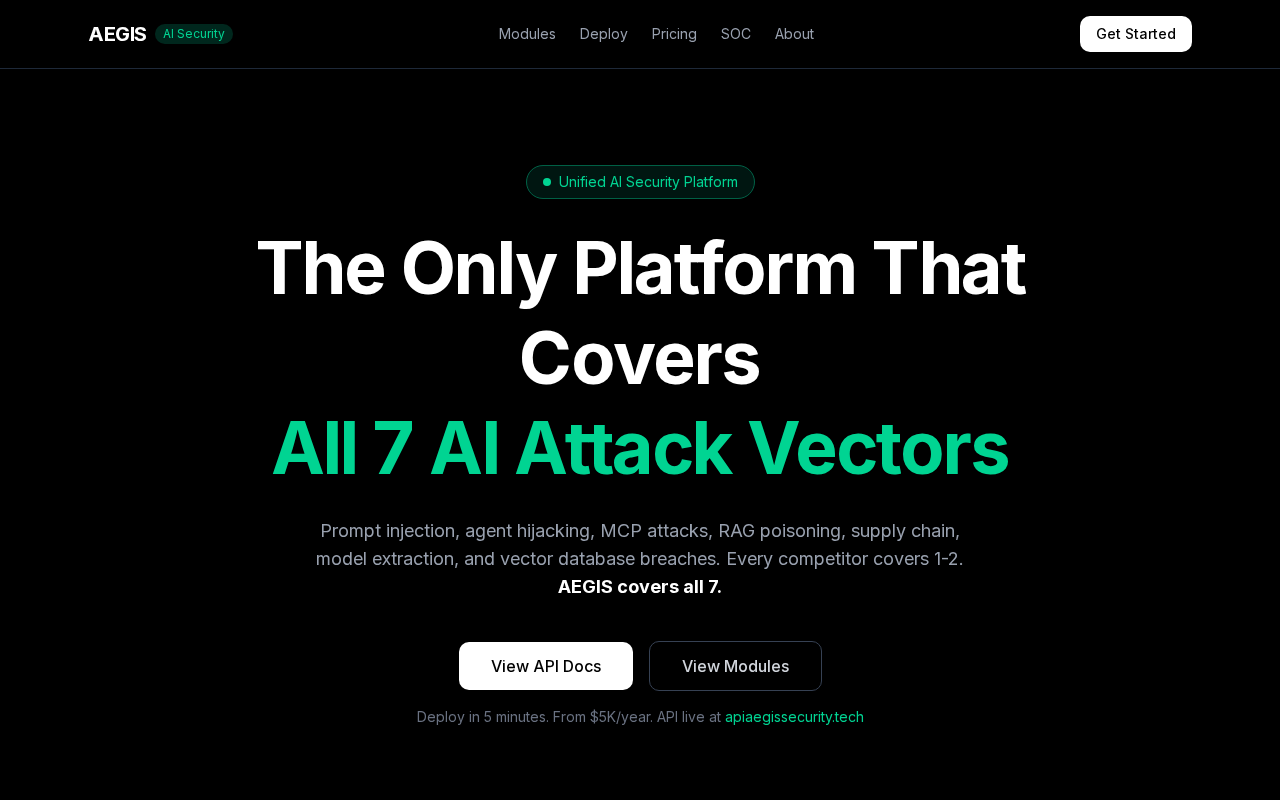
Unique Attack Surface Analysis of AI Security Platforms
Traditional Vulnerabilities Amplified in the AI Context
Compared to ordinary web applications, AI security platforms have a far more complex attack surface. They not only inherit traditional software vulnerability types — such as SQL injection, authentication bypass, privilege escalation, and insecure deserialization — but also introduce new risks brought by AI components.
Insecure deserialization deserves special attention. Deserialization is the process of restoring data from a storage or transmission format back into runtime objects. When an application deserializes data from untrusted sources without proper validation, attackers can craft malicious objects that trigger arbitrary code execution during the deserialization process. In AI security platforms, such vulnerabilities commonly appear in model file loading (e.g., Python's pickle format), data exchange between distributed computing nodes, and data recovery in caching systems. Due to their heavy reliance on the Python ecosystem and complex data pipelines, AI platforms have an especially broad deserialization attack surface.
When a platform integrates large language models (LLMs) or machine learning inference engines, new attack vectors emerge: prompt injection, model poisoning, and triggering anomalous behavior through carefully crafted inputs.
Prompt injection is an entirely new attack vector of the LLM era, similar to SQL injection in traditional web security, but the target shifts from database queries to the AI model's reasoning process. Attackers use carefully crafted input text to attempt to override or bypass the system's preset instructions (System Prompt), causing the model to perform unintended behavior. In the context of AI security platforms, this attack is particularly dangerous: if the platform uses an LLM to analyze security alerts or generate response recommendations, attackers could embed special instructions in malicious traffic to make the model classify real attacks as false positives, or trick the model into leaking internal system configuration information. Indirect prompt injection is even more insidious — attack instructions are hidden within external data processed by the model, taking effect without any direct interaction with the model.
Model poisoning represents a threat on another dimension entirely. It refers to attackers corrupting training data or the fine-tuning process to make machine learning models produce incorrect outputs under specific conditions. This attack comes in two forms: data poisoning (injecting malicious samples into the training set) and backdoor attacks (implanting triggers in the model that activate anomalous behavior when encountering specific input patterns). For AI security platforms, if attackers can influence the model's training data — for example, by generating specific patterns of "normal" traffic over an extended period to reshape the detection baseline — they could make the platform develop "immunity" to real attacks, losing its detection capability at critical moments. The terrifying aspect of this attack lies in its stealth: the model performs normally in the vast majority of cases, failing only at the timing chosen by the attacker.
The 16 critical vulnerabilities were often the result of these two categories of risk compounding: classic oversights at the code level combined with design flaws from insufficient validation during AI integration.
The Double-Edged Sword of Privilege and Trust Models
What makes security platforms dangerous is that they are built on a "high trust" assumption. To make the platform effective, enterprises typically grant it the ability to read sensitive data, execute automated responses, and even modify system configurations. While this design intent is to improve protection efficiency, it also means that any single vulnerability could be exploited for lateral movement, data exfiltration, or disabling defense mechanisms.
Systematic Hardening Methodology Distilled from 16 Vulnerabilities
Defense-in-Depth Strategy Over Point Fixes
Patching all 16 vulnerabilities one by one is only the most basic step. The truly valuable hardening approach starts from a systemic perspective, building a defense-in-depth architecture.
Defense in Depth originates from military strategy, with the core philosophy of never relying on any single defensive layer, but instead building multi-layered, complementary protection systems. In cybersecurity, this concept was promoted by the U.S. National Security Agency (NSA), emphasizing the deployment of independent security controls at the network, host, application, and data layers. For AI security platforms, the modern implementation of defense in depth includes: microsegmentation at the network layer to isolate AI inference clusters; Zero Trust architecture at the application layer requiring re-authentication for every access; encryption and tokenization at the data layer to protect sensitive information; and behavioral monitoring at runtime to detect anomalous operations. Even if an attacker breaches one defensive layer, subsequent layers can still prevent the attack from going deeper.
Specific measures include:
- Strict validation and sanitization of all external inputs
- Implementation of the Principle of Least Privilege
- Isolation of AI inference components from core systems
- Introduction of multi-factor confirmation mechanisms for sensitive operations
The Principle of Least Privilege requires that each system component receives only the minimum permissions necessary to fulfill its function, a concept rooted in the military's "Need-to-Know" principle. In practice for AI security platforms, implementing this principle faces unique challenges: AI model inference often requires access to large amounts of contextual data to make accurate judgments, and excessive restrictions on data access may reduce detection accuracy. Therefore, actual implementation requires striking a balance between security and functionality — for example, through data anonymization before model input, using temporary tokens instead of long-lived credentials, and strictly separating data read permissions from execution permissions. These approaches minimize the blast radius in the event of a breach while preserving the AI's analytical capabilities.
Fixing individual vulnerabilities is straightforward, but if the underlying architecture has systemic flaws, new ones will keep emerging after each fix. Therefore, hardening efforts should focus on identifying the common root causes behind vulnerabilities — for example, whether there is a unified input trust boundary, and whether privilege management is properly layered.
Specialized Security Protections for AI Components
For the AI integration portion, hardening requires additional specialized measures:
- Input-side protection: Apply structured processing to user prompts to avoid directly concatenating untrusted content into the model context, effectively preventing prompt injection attacks. Specific practices include using parameterized prompt templates, pre-screening user input through intent classification, and scoring input risk through an independent security model before passing it to the primary model.
- Output-side review: Conduct security review of model-generated content, especially when model output will be used to execute commands or trigger downstream actions. This requires establishing a strict validation gateway between the model output and the execution layer, intercepting outputs containing sensitive patterns such as system commands, file paths, or network addresses, and requiring manual confirmation.
- Interface protection: Model access interfaces should be subject to strict rate limiting and authentication protections to prevent abuse for probing or poisoning. This includes implementing API key rotation mechanisms, behavior-based anomaly detection, and fine-grained monitoring of inference request sources and frequencies.
Establishing Continuous Red Team Exercises
The process of discovering 16 vulnerabilities was essentially an intensive red team test. Red teaming originated from Cold War-era military intelligence simulations, where professional attack teams simulate the tactics, techniques, and procedures (TTPs) of real adversaries to conduct comprehensive attack testing against target systems. Unlike standard penetration testing, red team exercises are more objective-driven (e.g., "Can we steal the customer database?"), span longer timeframes, and employ attack methods that more closely resemble real threat actors.
In the AI security domain, red team exercises require both traditional cyber offense/defense capabilities and AI/ML adversarial knowledge. In recent years, the industry has begun promoting the "Purple Team" concept — where the red team (attackers) and blue team (defenders) collaborate in real-time, with attack findings immediately translated into defensive improvements, forming a rapid feedback loop. Companies like OpenAI and Anthropic have incorporated red team testing into their standard pre-release processes for models.
This reminds us that AI security platforms cannot be deployed once and forgotten. As AI models iterate, dependency libraries update, and attack techniques evolve, new attack surfaces will continue to emerge. Establishing routine penetration testing and threat modeling mechanisms is the only guarantee of long-term security.
A Deeper Warning for the AI Security Industry
This hardening exercise sounded the alarm for the entire AI security industry. In recent years, numerous security vendors have rushed to launch "AI-driven" protection products, and the market's enthusiasm for AI capabilities has led many platforms to neglect their own security posture during rapid iteration.
Ironically, a security platform with 16 critical vulnerabilities may pose a far greater risk than the threats it was designed to prevent. When enterprises place their trust in these platforms, vendors have a responsibility to ensure the platforms themselves can withstand rigorous security audits.
For buyers, when selecting AI security products, key considerations should include:
- Whether the vendor publicly shares security test reports
- Whether a vulnerability disclosure and response mechanism exists (such as a Bug Bounty program)
- Whether the vendor follows a Security Development Lifecycle (SDL)
- The frequency and depth of third-party penetration testing
The Security Development Lifecycle (SDL) was first systematized by Microsoft in 2004, aiming to embed security practices into every stage of software development rather than conducting security testing only after product release. A complete SDL includes: threat modeling during the requirements phase, security architecture review during the design phase, static code analysis during the coding phase, dynamic security testing and penetration testing during the testing phase, and vulnerability response processes after release. For AI security products, SDL must also extend to cover: auditing the provenance of model training data, verifying the integrity of the model supply chain (to prevent malicious pre-trained models), and continuous assessment of AI-specific risks. OWASP's LLM Top 10, published in 2023, provides an important reference framework for the secure development of AI applications.
After all, a security platform that cannot protect itself has no business claiming to protect others.
Conclusion
"The guardians" need to be guarded first — this is a lesson the AI security field is learning. The discovery and remediation of 16 critical vulnerabilities is not an endpoint but a starting point — it reveals systemic risks that are prevalent across AI security platforms during their rapid development. In an era where AI technology is deeply integrated into security defense, only by building security into the design from the ground up, continuously testing, and continuously hardening, can these platforms truly live up to the word "security" in their name.
Related articles
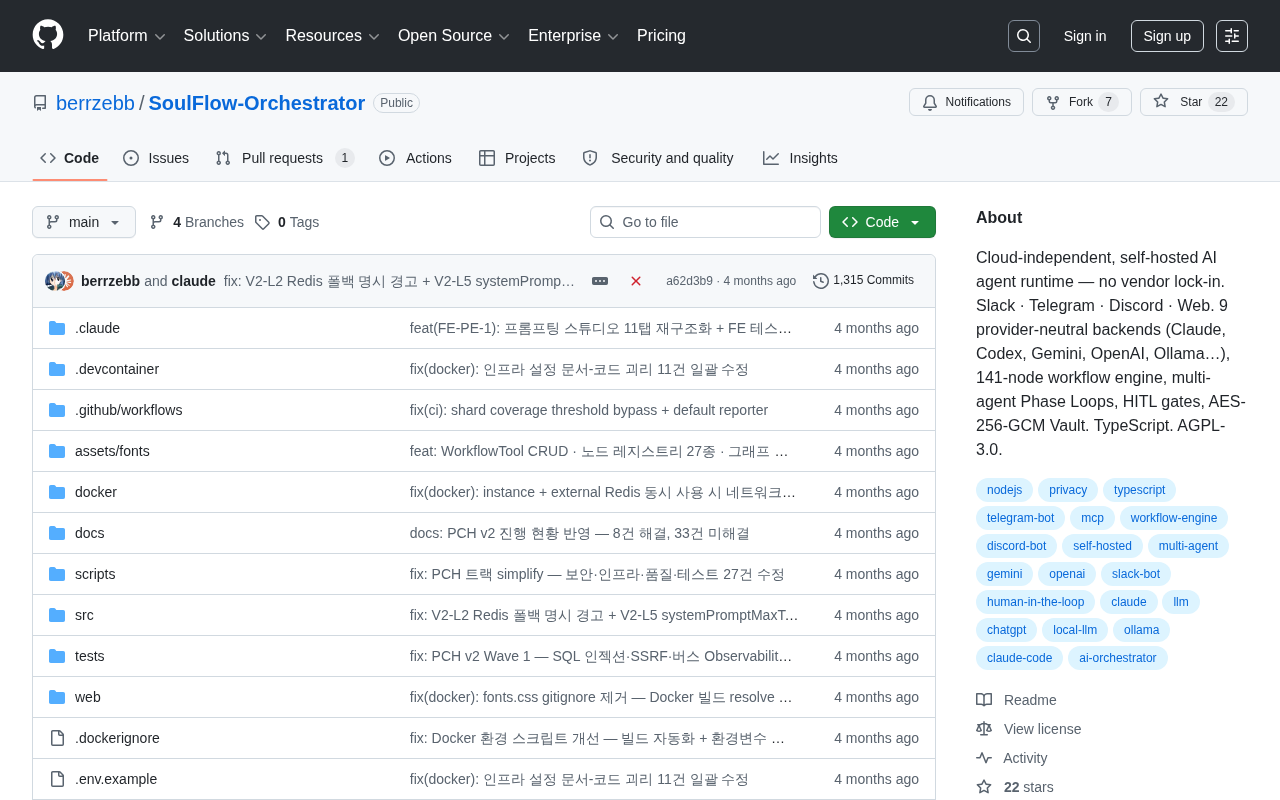
SoulFlow-Orchestrator: A Self-Hosted, Vendor-Lock-In-Free AI Agent Runtime
SoulFlow-Orchestrator is an open-source, self-hosted AI agent runtime with no vendor lock-in. Supports 9 neutral backends (Claude, OpenAI, Ollama), 141-node workflow engine, multi-agent loops, and HITL gates.
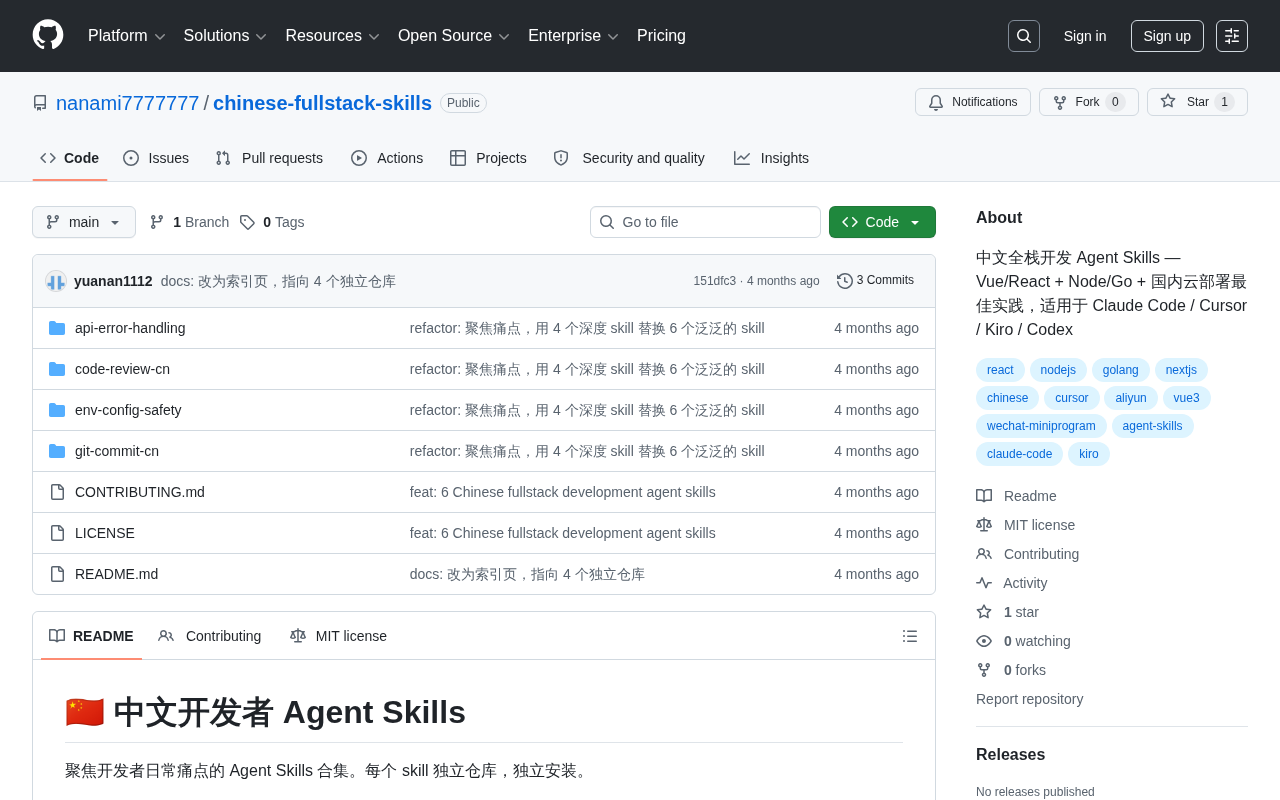
Chinese Full-Stack Agent Skills: A Skill Library Tailored for Domestic AI-Assisted Development
chinese-fullstack-skills is an Agent Skills library for Chinese full-stack development, covering Vue/React, Node/Go, and domestic cloud deployment best practices. Compatible with Claude Code, Cursor, Kiro, and Codex.
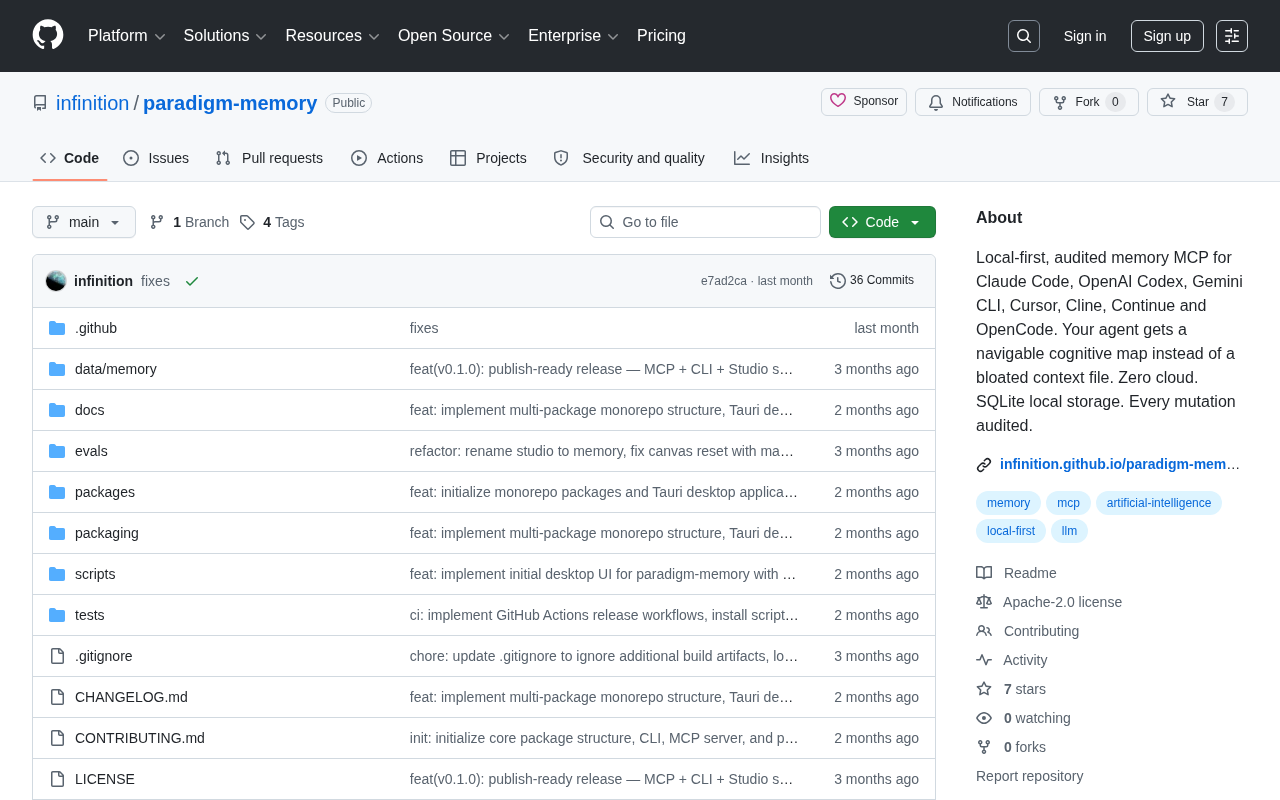
Paradigm Memory: A Local-First Memory System for AI Coding Assistants
paradigm-memory is a local MCP memory tool for Claude Code, Cursor, and Cline. It uses SQLite local storage, zero cloud, full audit trails, and a navigable cognitive map instead of bloated context files.