#agent collaboration
2275 related articles
Expert Opinions
When AI Treats Humans as Subagents: Ro…
·4 min
When AI Treats Humans as Subagents: Role Reversal and Hidden Risks in Human-AI Collaboration
Exploring the paradigm shift where humans become "subagents" in AI Agent architectures. Analyzes human node design in LangChain and AutoGen, and the risks of ceding control and cognitive atrophy.
Read more →

·2 min
When Millions of AI Agents Meet: A Deep Dive into Distributed Intelligence Collaboration and Security Challenges
Deep dive into AI Agent era challenges: multi-Agent collaboration, delegation mechanisms, agentic traps, cybersecurity threats, cognitive monoculture risks, and distributed intelligence as a new path to AGI.
Read more →

·2 min
Sakana AI × Sumitomo Mitsui: Multi-AI Agent Collaboration Auto-Generates Proposals, Boosting Efficiency 100x
Sakana AI and SMBC developed a multi-AI Agent proposal auto-generation app, reducing creation time from 1-2 weeks to hours. Deep dive into the multi-Agent architecture and its implications for financial AI.
Read more →

·3 min
Coze Tutorial: A Detailed Guide to ByteDance's Multi-Agent Collaboration Platform
Complete guide to ByteDance's Coze platform covering multi-agent collaboration, credits system, model selection, local programming tool integration, and workflow building for beginners.
Read more →

·2 min
Claude Code Dynamic Workflows Explained: How Multi-Agent Collaboration Is Changing AI Programming
Deep dive into Claude Code's Dynamic Workflows: how multi-agent parallel collaboration enables 750K-line code migrations, repo-wide bug hunts, and pre-launch red team validation.
Read more →

·3 min
Antigravity 2.0 In-Depth Review: A Multi-Agent Collaboration Platform Powered by Gemini 3.5 Flash
In-depth review of Google's Antigravity 2.0 desktop Agent app, testing Gemini 3.5 Flash code generation, scheduled task automation, and dynamic Sub-agent parallel collaboration features.
Read more →

·4 min
A Complete Guide to Multi-Agent Teams in AI Coding: From Solo Work to Team Collaboration
Deep dive into multi-agent solutions from Cursor, Claude Code, and Tencent CodeBuddy — covering parallel exploration, cross-layer collaboration, context isolation, practical tips, and selection guide.
Read more →

·2 min
Replit's AI Loops Workflow Explained: Multi-Agent Collaboration Replaces Prompt Engineering
Deep dive into Replit's AI Loops workflow: how orchestrators, parallel agents, and Computer Use Verifiers build automated closed-loop systems through multi-agent collaboration.
Read more →
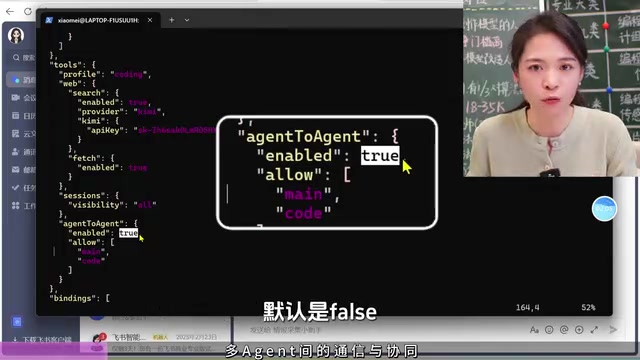
·3 min
Multi-Agent Communication & Collaboration in Feishu: A Complete Guide to Configuration and Group Chat Orchestration
Learn how to configure Open Cloud for multi-Agent communication, including session_visibility, agent_to_agent toggle, and whitelist setup, plus Feishu group chat orchestration for AI team collaboration.
Read more →

·3 min
HiClaw Open-Source Multi-Agent Collaboration System: A New Paradigm for Human-AI Collaboration Based on the Matrix Protocol
Deep dive into HiClaw, an open-source multi-Agent OS built on the Matrix protocol for transparent, controllable human-AI task coordination with Human-in-the-Loop design.
Read more →

·3 min
CrewAI Multi-Agent Collaboration in Practice: A Complete Guide from Setup to API Service
A detailed guide to CrewAI multi-Agent collaboration covering core concepts, FastAPI service setup, and real-world comparisons of GPT-4o Mini, Qwen Max, and Llama 3.1.
Read more →

·1 min
Cosmos Unified Agents Platform First Live Demo: A Platform-Level Solution for Multi-Agent Collaboration
Cosmos Unified Agents Platform gives its first live demo, detailing its design philosophy and cloud agent operations. Learn how it solves AI Agent fragmentation with unified multi-agent building, deployment, and management.
Read more →
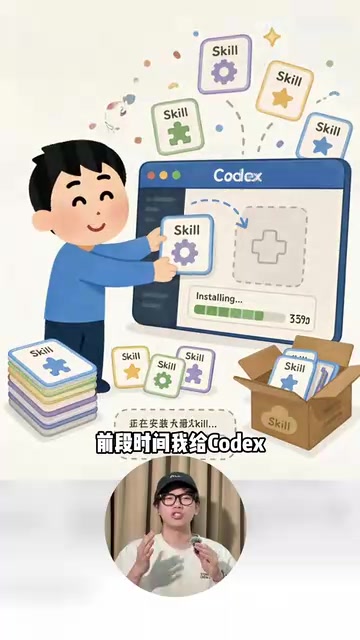
·2 min
Codex and Claude Code Multi-Agent Collaboration: A Practical Guide to Team-Based Workflows
Learn how to make Codex and Claude Code collaborate like a team. Use a cloud Agent orchestrator, shared project spaces, and clear task division to build a multi-AI Agent team workflow.
Read more →

·3 min
The Four Stages of AI Coding Tool Evolution: From Code Completion to Multi-Agent Collaboration
A deep dive into the four stages of AI coding tool evolution: from code completion and chat Q&A to Agentic Coding and multi-Agent collaboration, explaining the design logic behind Claude Code, Cursor, and Codex.
Read more →

·2 min
Practical Experience Building an Automated Development Pipeline with Multi-AI Agent Collaboration
Practical experience building a dev pipeline with multiple AI Agents: three-Agent architecture, Batch API cutting 50% token costs, 24/7 async execution, and the one-person company paradigm.
Read more →

·2 min
Cosmos Unified Agents Platform: A New Paradigm for AI Agent Collaboration Through Shared Context and Memory
Deep dive into how the Cosmos Unified Agents Platform solves multi-AI Agent collaboration challenges through shared context and memory mechanisms, and its positioning in enterprise multi-Agent orchestration.
Read more →

·2 min
Gemini 3.5 Flash Teams Up with Antigravity: Multi-Agent Collaboration to Build an Entire City
Deep dive into how Gemini 3.5 Flash and Antigravity platform use multi-subagent architecture to design and build a complete virtual city from scratch.
Read more →

·4 min
OpenAI Codex Pixel Identicons: A Visual Identification Solution for Multi-Agent Collaboration
OpenAI introduces Pixel Identicons for Codex background agents, using stable visual identifiers to solve multi-agent recognition challenges and reduce cognitive load in AI programming workflows.
Read more →
 Tutorials
·3 min
Building an AI Software Factory from Scratch: A Cursor Engineer's Hands-On Experience with Multi-Agent Collaboration
Cursor engineer Eric shares practical insights on building an AI software factory: automation levels, guardrail design, parallel Agent management, and scaling to 1000+ Agents for 24/7 development.
Read more →
 Tutorials
·2 min
Building AI Agents on Kinoviz for Vector Animation: System Capabilities and AI Collaboration in Practice
Explore building AI Agents on Kinoviz for automated vector animation, analyzing the division between system and AI capabilities, and applications in logo animation and data visualization.
Read more →