#ambiguity clarification
25 related articles

·7 min
Tencent DiscoBench: The First Benchmark for Evaluating LLM Search Agents' Ambiguity Clarification Capabilities
Tencent Hunyuan and Tsinghua jointly release DiscoBench, the first benchmark evaluating search agents' dynamic ambiguity clarification. Covering 463 ambiguity instances across 11 domains, it reveals real weaknesses of mainstream LLMs.
Read more →

·3 min
Starling Project Analysis: Can AI Independently Write a Complete Desktop System?
Starling claims to be the first desktop system written by AI. This article analyzes technical complexity, AI coding limitations, and engineering feasibility.
Read more →

·7 min
Claude Code in Action: Building an Embedded Tetris Game with AI in Under 3 Hours
A hands-on case: using Claude Code and the LVGL graphics library to build a Tetris game running on an embedded board from scratch in under 3 hours.
Read more →
·7 min
Claude Code in Action: Building an Embedded Tetris Game with AI in 3 Hours
A hands-on case study: using Claude Code and the LVGL graphics library to build a Tetris game running on an embedded dev board from scratch in under 3 hours.
Read more →

·5 min
Inside Cursor: How Recursive Model Improvement Enables AI to Self-Evolve
A Cursor ML engineer breaks down AI training methodology: outer/inner loop acceleration, preventing reward hacking, textual feedback, and recursive self-improvement (RSI) where models train the next generation.
Read more →

·4 min
Can a 2.5 Overall Score Get Accepted at EMNLP? A Deep Dive into Review Scoring
A detailed breakdown of EMNLP/ACL review dimensions—Overall, Soundness, Excitement, Reproducibility—with an objective assessment of acceptance odds at 2.5 Overall, plus Rebuttal strategy and Findings advice.
Read more →
·4 min
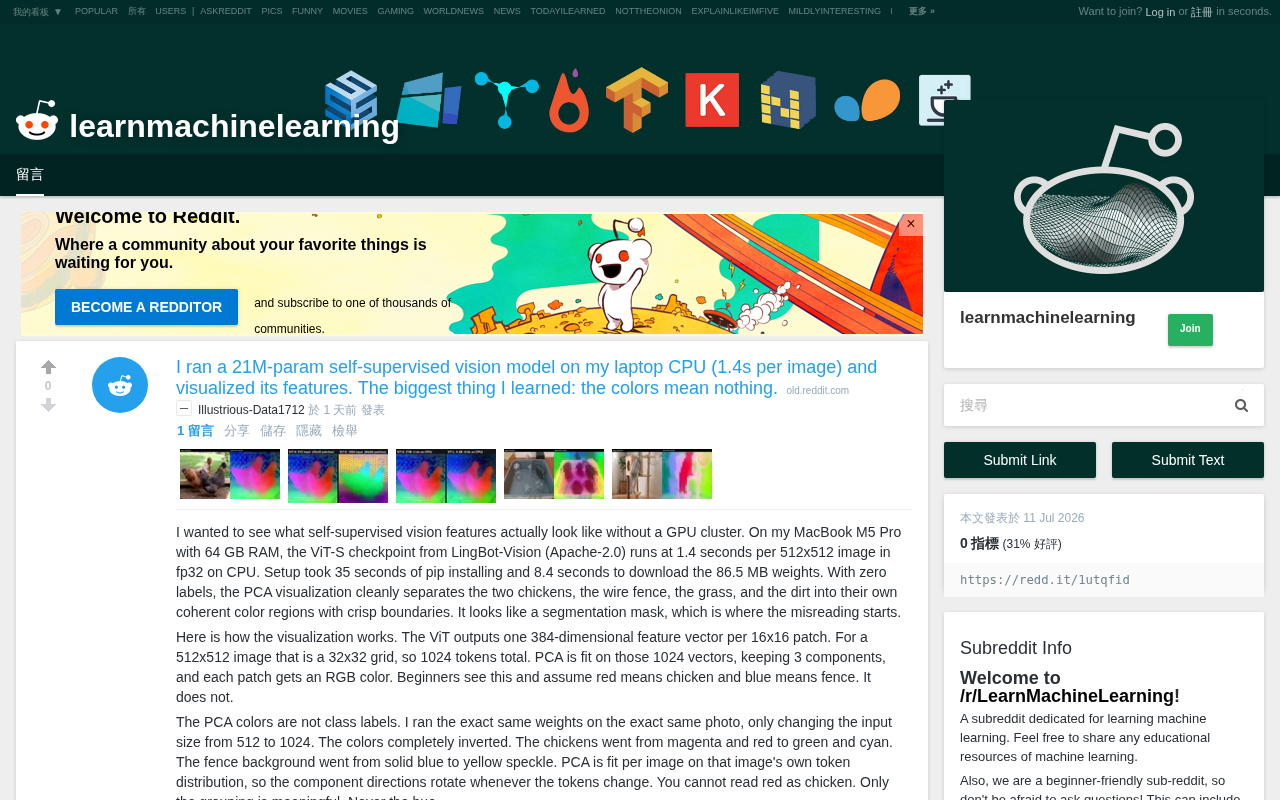
A Guide to Avoiding Pitfalls in PCA Visualization of Self-Supervised Vision Models: Why the Colors Are Meaningless
Running self-supervised vision models (SSL) on a MacBook CPU isn't hard. This article reveals the core misconception of PCA visualization through ViT-S experiments: colors can't convey semantics across images, and changing resolution reverses hues entirely.
Read more →
·5 min
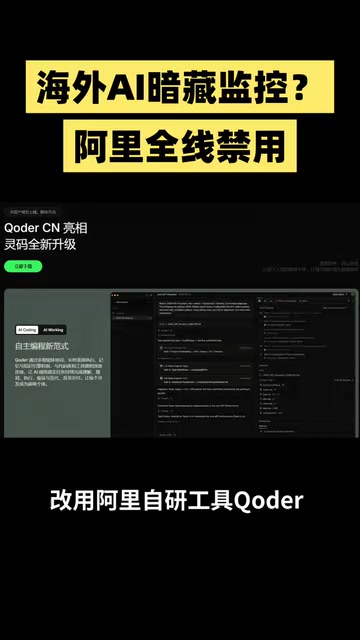
Deep Analysis of the Alibaba-Claude Ban: The Battle for Autonomous Control of AI Coding Tools
Alibaba bans all Anthropic products including Claude Code, while ByteDance and Tencent switch to in-house tools. A deep dive into the security logic and industry trends behind China's push for autonomous AI coding tools.
Read more →

·6 min
AI Agent Practical Guide: From Chatting to Directing — Building Fully Automated Workflows
AI use has three levels: Chat, Automation, and Agent. Learn how to use tools like Manus AI with a "director mindset" to build fully automated workflows — no technical background required.
Read more →

·6 min
Escaping AI Agent Skill Hell: A Complete 4-Step Guide to Writing High-Quality Skills
Matt Pocock's 4-step framework for AI Agent Skill design: Trigger, Structure, Steering, Pruning. Escape skill hell and learn to write high-quality skills.
Read more →

·6 min
Escaping AI Agent Skill Hell: A Complete 4-Step Guide to Writing High-Quality Skills
Matt Pocock's 4-step framework for AI Agent Skill design: Trigger, Structure, Steering, Pruning. Escape skill hell, tell good skills from bad, and master leading words to make Agents follow your intent.
Read more →

·3 min
Why Claude Code Ditched RAG for Grep: The Engineering Logic Behind the Decision
Why did Claude Code abandon RAG for Grep? Breaking down the three root causes — undiagnosability, the multiplication effect, and index staleness — behind the shift to Agentic Search.
Read more →

·4 min
ChatGPT Plus Subscription Guide: Third-Party Top-Up Explained, Risks Analyzed, and Compliant Alternatives
Struggling to subscribe to ChatGPT Plus in China? This guide explains how third-party top-up services work, the real security and ban risks involved, and safer alternatives including official subscriptions, API access, and Chinese LLMs.
Read more →

·4 min
GitHub Spec-Kit in Practice: 5 Core Commands to Keep AI Coding on Track
Deep dive into GitHub's open-source Spec-Kit: 5 core commands and 2 optional checkpoints that solve AI coding drift. From setting Rules to generating code, every step makes the AI pause for your approval.
Read more →

·3 min
Making Games from Scratch with Claude Code: A Wild Snake + Shooter Mashup
Build web games from scratch with Claude Code: a full walkthrough from shoot-'em-up to Snake mashup, no coding needed. Covers AI task scheduling and iterative dev tips.
Read more →

·2 min
Level Up Claude Code: Building an Enhanced Plan Mode with Grill Me
Learn how to install and use the Grill Me Skill for Claude Code, replacing AI guesswork with structured questioning to clarify requirements before generating execution plans.
Read more →

·4 min
Grill With Docs: Doubling AI Programming Collaboration Efficiency with a Unified Language
From Grill Me to Grill With Docs: applying DDD's Ubiquitous Language to solve terminology drift and context loss in AI programming for efficient cross-session collaboration.
Read more →

·2 min
Advanced Claude Code: 5 Skill Techniques for Building Efficient AI Workflows
5 advanced Claude Code Skill techniques — Prompt Optimizer, Deep Interview, Real Plan, Code Simplifier, and Skill Creator — to build reusable AI workflows that reduce rework and boost precision.
Read more →
 Product Reviews
·2 min
Grok Build vs GPT 5.5 vs Composer 2.5: Hands-On Comparison Across 17 Frontend Tasks
Hands-on comparison of Grok Build 0.1, GPT 5.5, and Composer 2.5 across 17 complex frontend tasks, evaluating code depth, visual quality, requirement coverage, and cost-effectiveness.
Read more →
 Product Reviews
·2 min
Hachigo Review: Automatically Build Reusable AI Workflows with a Single Sentence
Hachigo is an AI workflow automation tool that builds reusable workflows from natural language descriptions. This review covers its core features, use cases, and how it differs from Zapier and ChatGPT.
Read more →