#async task handling
368 related articles

·3 min
Graph Engineering: The Core Paradigm and Design Patterns for AI Agent Orchestration
Explore how graph engineering uses state machines and directed graph structures to constrain AI agent behavior, covering reflection, routing, human-in-the-loop, and parallel execution patterns.
Read more →

·3 min
Graph Engineering: The Core Paradigm and Design Patterns for AI Agent Orchestration
Deep dive into how graph engineering uses state machines and directed graphs to constrain AI agent behavior, covering reflection, routing, human-in-the-loop, and parallel execution patterns.
Read more →

·3 min
Perplexity Computer Real-World Test: 15,000 Credits Burned with Zero Results
A user burned over 14,000 Perplexity Computer credits building an AI Agent workflow with zero output. We break down the three fatal flaws and the Claude+OpenAI workaround.
Read more →

·3 min
Self-Hosted Ticketing Systems: Turning Family Tech Support into a Streamlined Service
Explore how to manage family IT support with a self-hosted ticketing system. Compares osTicket, Zammad, FreeScout and more, with Docker deployment tips and UX advice.
Read more →

·3 min
Supabase in Production: A Deep Dive into Cron and Queue Reliability Issues
Deep analysis of Supabase pg_cron and pgmq reliability issues in production, including task loss, execution uncertainty, and observability gaps, with practical architecture optimization advice.
Read more →

·3 min
Building a Streaming LLM Backend in Go: Deep Dive into the SDK and React Frontend Library
Deep dive into an open-source Go SDK for building streaming LLM backends, covering streaming responses, tool-calling architecture, and companion React library for end-to-end integration.
Read more →

·3 min
tinbase: A Local Supabase Alternative That Runs as a Single Process
tinbase compresses Supabase's 12 Docker containers into a single process with real Postgres 17, Auth, Storage, and Realtime, supporting RLS and direct supabase-js calls—even runs in a browser.
Read more →

·2 min
BlackFlare: A Powerful macOS Menu Bar Tool for Managing Claude Code and Codex
BlackFlare is a native macOS menu bar app for Claude Code and Codex users. It keeps your Mac awake, sends task notifications, monitors usage, and switches configs—all running locally for privacy.
Read more →

·2 min
Gemini Spark Goes Global: A Deep Dive into Google's 24/7 Background AI Agent
Gemini Spark is now available globally for Pro/Ultra users with 24/7 background operation. This deep dive covers its core features, use cases, and impact on the AI agent industry.
Read more →

·2 min
Openbase Review: Managing AI Coding Agent Teams with Voice, Anytime, Anywhere
Openbase is a voice-driven AI coding agent management tool that lets developers dispatch tasks, steer agents, and approve code changes via phone. Deep analysis of its cross-platform sync and voice interaction advantages and limitations.
Read more →

·3 min
OpenComputer: Deploy Managed AI Agents with a Single Sentence — A Minimalist Launch Solution for Developers
OpenComputer is an AI agent managed deployment platform that gives you a live agent URL from a single description. This article analyzes its workflow design, market positioning, and security/cost considerations.
Read more →

·3 min
Buzz Open-Source Group Chat Platform: A New Choice for Human-AI Agent Collaboration
Buzz is an open-source decentralized group chat platform for human-AI agent collaboration—model-agnostic, self-sovereign, and designed to replace the fragmented Slack/GitHub experience.
Read more →

·4 min
Infrastructure Architecture for Agent Applications: Four Core Patterns Explained
A deep dive into infrastructure architecture patterns for production-grade Agent applications, covering state persistence, sandbox isolation, LLM observability, and cost control.
Read more →

·4 min
Infrastructure Architecture for Agent Applications: Four Core Patterns Explained
Deep dive into infrastructure architecture patterns for production-grade Agent applications, covering state persistence, sandbox isolation, LLM observability, and cost control.
Read more →

·3 min
Can Claude Opus 5 Refactor 25-Year-Old Legacy Code? The Real Capability Boundaries of AI Programming
Reddit debates whether Claude Opus 5 can independently refactor a 25-year, 50K-line undocumented legacy codebase. Analyzing AI programming's real capability boundaries and human-AI collaboration.
Read more →

·3 min
Verification Browser for AI Agents: How 13ms Ultra-Fast Validation Solves the Trust Problem in Automation
Deep dive into the verification browser for AI agents: how 13ms verification windows and one-call checks solve hallucination problems in browser automation, enabling the leap from capability to trustworthiness.
Read more →

·2 min
OpenWork: Open-Source Alternative to Claude Cowork with 17,000+ Stars
OpenWork is an open-source alternative to Claude Cowork built on opencode with TypeScript. With 17,000+ GitHub stars, it offers data privacy, flexible model switching, and deep customization.
Read more →

·3 min
Self-Hosted Team Collaboration Tools Compared: Zulip, Campfire, and Matrix in Real-World Testing
Real-world comparison of Teams alternatives for 8-15 person teams: Zulip's topic-based chat, Campfire's minimalist one-time purchase, and Matrix's decentralized deployment evaluated for features, cost, and ops.
Read more →

·3 min
Building a Custom Switch Management Interface with Gemini: AI-Powered Network Operations in Practice
A Homelab user leveraged Gemini AI to build a custom web management interface for an HP switch via REST API, enabling port control, PoE management, and connection visualization.
Read more →
·4 min
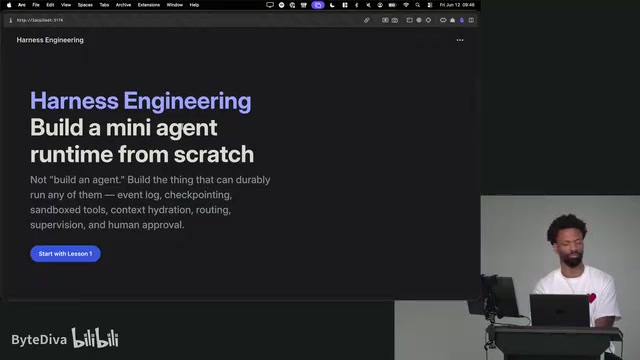
Harness Engineering: The Core Infrastructure for Taking AI Agents from Demo to Production
Deep dive into Harness Engineering: why AI Agents need memory management, durable execution, guardrails & approvals to go from demo to production.
Read more →