#behavioral telemetry
30 related articles

·7 min
LangSmith Engine: An Intelligent Operations Tool That Automatically Diagnoses and Fixes Agent Failures
LangChain's LangSmith Engine is an intelligent agent tool for tracking Agent failures, prioritizing issues, and auto-drafting fixes. Deep dive into its core capabilities, sandbox isolation, sub-Agent architecture, and continuous evaluation challenges.
Read more →

·5 min
NVIDIA AI-Q Blueprint × OCI: A Practical Guide to Production Deployment of Enterprise AI Agents
Deep dive into NVIDIA AI-Q Blueprint production deployment on Oracle Cloud Infrastructure, covering NIM microservices, RAG architecture, multi-agent orchestration, and OCI GPU selection for enterprise AI agents.
Read more →

·5 min
NVIDIA AI-Q Blueprint × OCI: A Practical Guide to Production Deployment of Enterprise AI Agents
Deep dive into NVIDIA AI-Q Blueprint production deployment on Oracle Cloud Infrastructure, covering NIM microservices, RAG architecture, multi-agent orchestration, and OCI GPU selection.
Read more →

·6 min
LangChain Open-Sources OpenWiki: Automatically Generate and Maintain AI-Readable Wikis for Your Codebase
LangChain open-sources OpenWiki, a tool that auto-generates and maintains AI-readable wiki documentation for codebases via a single command, powered by Git history and agents.md integration.
Read more →
Morph Reflexes: Building Real-Time Beh…
·4 min
Morph Reflexes: Building Real-Time Behavioral Guardrails for AI Agents with Multi-Head Classifiers
Morph Reflexes is an open-source AI agent monitoring tool that uses multi-head classifiers for real-time trace classification — enabling safety guardrails, quality scoring, and training data filtering.
Read more →

·6 min
Gas Town: A Multi-Agent Workspace Manager Built in Go
Gas Town is an open-source multi-agent workspace manager built in Go with 16,000+ GitHub Stars. This article analyzes its architecture, Go language advantages, and typical multi-agent collaboration scenarios.
Read more →
MSI Center High-Risk Privilege Escalat…
·2 min
MSI Center High-Risk Privilege Escalation Vulnerability: How Standard Users Can Gain SYSTEM Access in Seconds
Security researchers disclose an MSI Center LPE vulnerability allowing standard users to escalate to SYSTEM in seconds. Analysis of root causes, impact, and mitigations for MSI device users.
Read more →

·6 min
Getting Started with LangChain: A Deep Dive into Model and Agent Core Concepts
Deep dive into LangChain's core Model and Agent concepts, covering unified model interfaces, agent tool calling, middleware mechanisms, and key principles for building LLM applications.
Read more →
·4 min
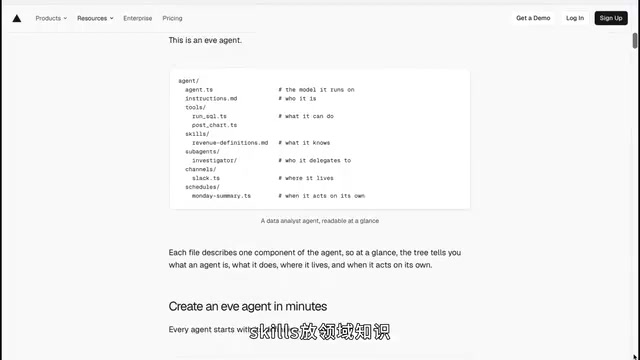
Deep Dive into Six AI Development Tools: Loop Recipe Library, Vercel Agent Framework, and More
Deep analysis of Loop workflow recipes, Vercel's open-source Agent framework, Pyker AI-native project management, Arrow P2P tool, DBX database client, and NVIDIA's Skill Spectre security tool.
Read more →

·2 min
LLM Observability & Eval in Practice: A Complete Guide to Monitoring and Evaluating Large Models in Production
A deep dive into LLM observability, evaluation systems, and experimentation loops for production AI. Covers OpenTelemetry, trace monitoring, five eval signal types, four scope levels, and automated improvement flywheels.
Read more →