#compute bloat
119 related articles

·4 min
Dark Mode for WeChat Mini Programs: One-Click Color Scheme Generation with Pencil MCP
Complete guide to WeChat Mini Program dark mode: from generating dark color schemes with Pencil MCP and AI image generation, to building a Theme.js switching architecture with CSS variables and system dark mode detection.
Read more →

·3 min
Essential for AI-Powered Coding: Keep Your Git Repository Clean with .gitignore
Learn essential .gitignore techniques for AI-powered coding. Covers AI temp files, system files, and dependencies with ready-to-use Node.js and Python templates.
Read more →

·4 min
A Practical Guide to Loop Engineering: Pain Points and Solutions in Automated AI Coding Workflows
Deep dive into Loop Engineering: core mechanisms, three major pain points (reliability, cost, context bloat), and Harness workflow solutions including mixed model strategies and Human in the Loop.
Read more →

·4 min
Ponytail: The Lazy Philosophy That Teaches AI to Write 90% Less Code
Deep dive into how GitHub's trending project Ponytail uses YAGNI principles, NCP protocol, and declarative scheduling to constrain AI coding assistants, cutting 90% of redundant code.
Read more →

·4 min
Agent Tool Selection Guide: A Comprehensive Comparison of API, CLI, MCP, Browser Use, and Computer Use
Compare 5 Agent tool types: CLI, API, MCP, Browser Use & Computer Use on speed, accuracy, and token cost. Includes a selection priority table to cut costs and boost Agent efficiency.
Read more →

·3 min
Fed Up with Every AI Coding Assistant, a Veteran Game Developer Built His Own Coding Agent
Veteran game dev Mario tried every AI coding tool including Claude Code, found them all lacking, and built Pi — a minimalist, extensible coding agent framework centered on developer control.
Read more →
·3 min
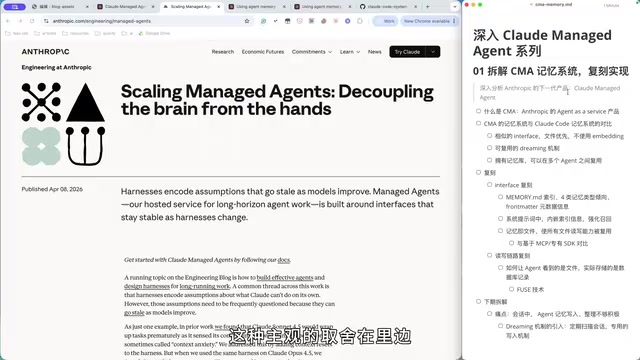
Deep Dive into Claude Cloud Agent Memory System Architecture: CMA Design Philosophy and Technical Choices
Deep analysis of Anthropic's Cloud Managed Agents memory architecture, covering file-first strategy, memory store reuse, Dreaming async consolidation, and key differences from Claude Code's memory system.
Read more →
·1 min
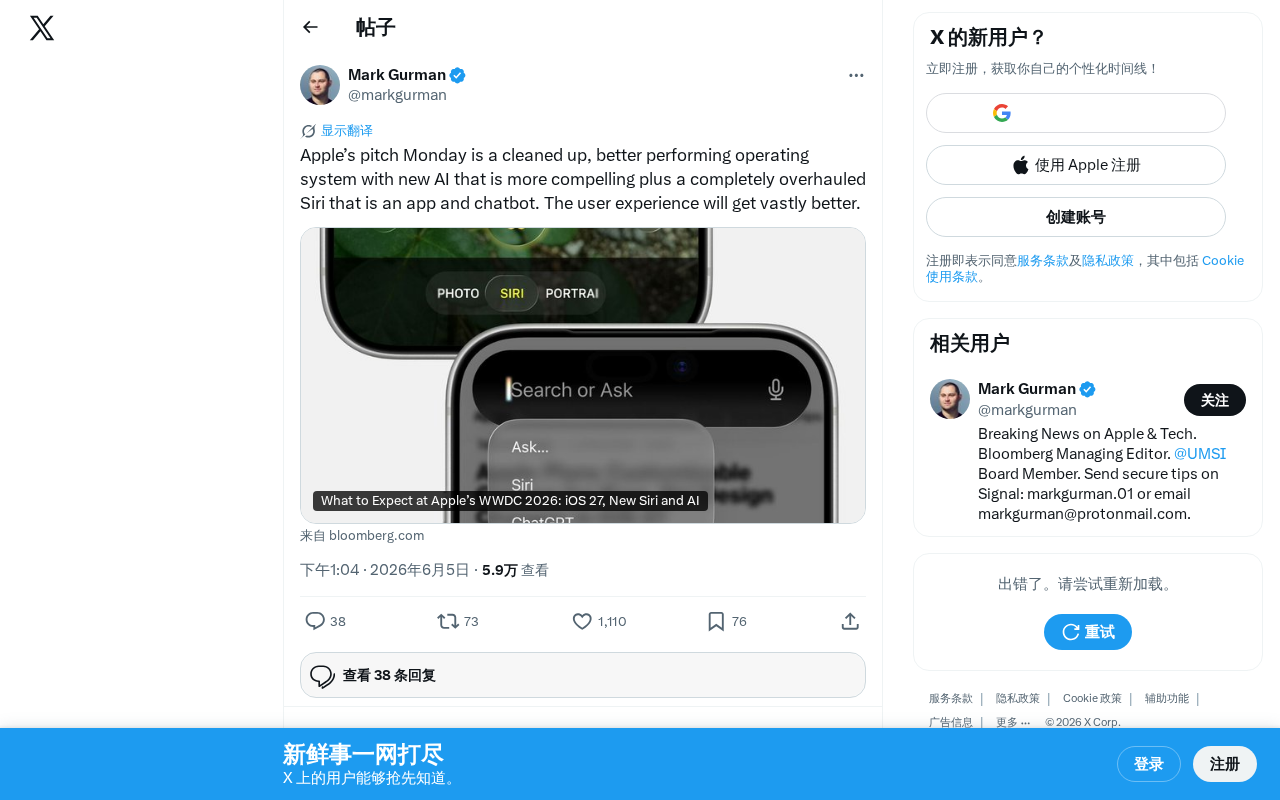
WWDC Keynote Preview: Complete Siri Overhaul, Major AI Upgrades, and System Performance Optimization
Apple's WWDC keynote set to unveil major system updates including a completely overhauled Siri chatbot, more compelling AI features, and significantly optimized OS performance.
Read more →

·2 min
Former Anthropic Engineer's Hands-On Review: Why He Ditched Claude Code for Codex
Former Anthropic engineer Pietro shares why he ditched Claude Code for Codex, his efficient workflow, model switching strategies, and how AI Agents are reshaping software and startups.
Read more →

·1 min
Pi Agent: When Every AI Coding Framework Is Adding More, It Chose to Subtract
Deep dive into Pi Agent's minimalist design: no sub-agents, no MCP, no background tasks—yet its self-extending Harness makes it ideal for building AI coding products.
Read more →

·2 min
Deep Dive into the AI Bubble: The Death Spiral of Losing $1.22 for Every $1 Earned
Deep analysis of the AI industry bubble: OpenAI's -122% profit margin, enterprise token budgets burned in months, NVIDIA's shell game, and collapsing software quality.
Read more →

·2 min
Hermes Agent in Practice: A Complete Guide from VPS Deployment to Telegram Integration
A detailed guide to deploying Hermes Agent on VPS with Docker, integrating Telegram Bot, configuring scheduled tasks, and scaling with multi-agent strategies.
Read more →

·3 min
PyTorch Beginner's Guide: A Complete Analysis of Deep Learning Framework Selection and Evolution
A comprehensive analysis of why PyTorch became the most mainstream deep learning framework. Covers framework history, comparisons with TensorFlow and Keras, dynamic graphs, Tensors, installation guide, and cloud trends.
Read more →
 Tutorials
·3 min
MCP vs CLI: 40x Token Cost Difference — How AI Engineers Should Choose
In-depth comparison of MCP vs CLI architecture, Token costs (CLI ~1400 vs MCP ~54600), security mechanisms, and use cases with practical selection guidance for AI engineers.
Read more →
 Industry Insights
·3 min
From GPT-1 to ChatGPT: How Ilya's Bet Ignited the AI Revolution
From GPT-1 mocked as garbage in 2018 to ChatGPT sweeping the globe, how Ilya Sutskever's faith in Scaling Laws led OpenAI from the Transformer to the LLM revolution.
Read more →
 Product Reviews
·4 min
Generic Agent: An Open-Source AI Agent That Uses Only One-Tenth the Tokens of Comparable Products
Generic Agent is an open-source AI Agent that reduces token consumption by 90% through minimalist tool design, four-layer memory hierarchy, and experience reuse. Supports computer operation, browser automation, Feishu integration, and more.
Read more →
 Tutorials
·2 min
Deep Dive into Claude Code's Seven-Layer Architecture: Source-Level Analysis of the ReAct Loop and Configuration-Driven Design
Deep analysis of Claude Code's seven-layer architecture, ReAct loop core principles, and configuration-driven design. Source-level deconstruction of AI Agent mechanics with best practices.
Read more →
 Tutorials
·3 min
Hermes Orchestrating DeepSeek + MiniMax Dual-AI Collaborative Coding: A From-Scratch Project Test
Testing Hermes agent coordinating DeepSeek V4 and MiniMax 2.7 for collaborative coding: PDF export in 9 minutes, RSS service built from scratch in Nim language.
Read more →
 Tutorials
·3 min
Batch AI Image Generation on Mac: Lessons Learned from Generating 10,000+ Illustrations
Practical guide to batch AI image generation on Mac using Draw Things, covering prompt iteration strategies, negative prompt pitfalls, performance tips, and the decision to switch to Replicate cloud platform.
Read more →
 Expert Opinions
·4 min
Is HTML Replacing Markdown? A Deep Dive into the AI Output Format Debate
Anthropic's team claims HTML is better than Markdown for AI output, and Karpathy agrees. A deep analysis of HTML's advantages in information density, interactivity, and visualization, plus its limitations in version control and token efficiency.
Read more →