#exception edges
97 related articles

·4 min
7-Step Framework for Deploying Commercial AI Agents: From Requirements to Production
A detailed 7-step guide to building commercial AI Agents, covering requirements, platform selection (Coze/Dify/FastGPT), prompt engineering, databases, UI, testing, and deployment.
Read more →

·3 min
6 AI Testing Skills Covering the Full Workflow, Boosting Efficiency Several Times Over
6 AI Skills for test engineers: test case generation, PRD-to-XMind, JMeter scripts, Playwright automation, performance reports, and requirement checklists—completing 2-3 days of work in half a day.
Read more →

·2 min
Codex Overtakes Claude Code: A Hands-On Comparison and Selection Guide for AI Coding Tools
Hands-on comparison of Codex vs Claude Code: Codex overtakes in UI aesthetics and layout. Covers domestic models, DeepSeek free options, and price-capability analysis for AI coding tools.
Read more →

·3 min
Core Analysis of Agent Skill: Progressive Disclosure & Middleware Practical Guide
Deep dive into Agent Skill's core design—Progressive Disclosure—with detailed middleware and dynamic tool implementation, Multi-Agent comparison, and practical tips.
Read more →
·3 min
Claude Code Source Code Leak: 500,000 Lines of Code Reveal Core Multi-Agent Architecture Design
Anthropic accidentally leaked 500K+ lines of Claude Code TypeScript source via a Source Map misconfiguration, revealing its Coordinator multi-agent architecture, Kairos prediction system, and shadow rollback mechanism.
Read more →

·4 min
AI Full-Stack Development Architecture: A Three-Layer Progressive Path from Prototype to Production
A detailed guide to AI full-stack development architecture covering Node.js+TypeScript+Monorepo engineering, Docker CI/CD deployment, and AI engine design with interview tips.
Read more →

·3 min
Four Core Advantages Frontend Developers Have When Transitioning to AI Agent Development
Frontend developers have key advantages for AI Agent development: TypeScript ecosystem fit, low-barrier full-stack bridging, and state management isomorphism. Learn the transition path here.
Read more →

·3 min
Deep Dive into LangChain's Social Media Agent Open-Source Project: Architecture, Features, and Practical Value
In-depth analysis of LangChain's open-source social-media-agent: content sourcing, AI curation, scheduled publishing, Human-in-the-Loop design, and LangGraph architecture.
Read more →

·3 min
Alex Honnold's 4000-Foot Sea Cliff Climb in Greenland: The Complete Record of the Ingmikortilaq First Ascent
Alex Honnold tackles Greenland's Ingmikortilaq—a 4,000-foot unclimbed sea cliff nearly 1,000 feet taller than El Capitan. Full account of team conflicts, deadly rockfall, the headwall summit push, and glacier science findings.
Read more →

·4 min
Agent Development Learning Roadmap: A Four-Stage Systematic Guide from Beginner to Practitioner
A systematic four-stage learning roadmap for AI Agent development, covering core concepts, classic paradigms like ReAct, multi-agent collaboration frameworks, and hands-on projects to master Agent development skills in 2-3 months.
Read more →
 Expert Opinions
·3 min
Windsurf CEO Deep Dive Interview: Speed Is the Only Moat
Windsurf CEO Varun Mohan shares insights on AI coding IDE pivots, product methodology, async Agent challenges, and differentiation strategy vs Cursor. Speed is the only moat.
Read more →
 Tutorials
·3 min
Advanced LangGraph in Practice: Complete Guide to Agent Optimization, Evaluation, and Cloud Deployment
Deep dive into three advanced LangGraph topics: multi-agent architecture optimization, evaluation frameworks for non-deterministic AI systems, and cloud deployment with LangGraph Platform.
Read more →
 Deep Dives
·4 min
Is Context Engineering the Core of Agent Development? A Deep Dive into Architecture and Practical Solutions
Deep dive into context engineering as the core of Agent development, covering five context modules, four pain points, and dynamic assembly solutions including compression, hybrid retrieval, multi-Agent architecture, and state machine control.
Read more →
 Tutorials
·4 min
Semi-AI Mode: A Pragmatic Approach to API Automation Testing Frameworks
Explore the semi-AI approach to API automation testing: why pure AI fails, framework design principles, technology choices, and clear human-AI division of labor for practical implementation.
Read more →
 Tutorials
·3 min
Spring AI Agent Utils: A Java Agent Toolkit Reverse-Engineered from Claude Code's Core Features
Deep dive into Spring AI Agent Utils toolkit covering Skill modules, Ask a User Question, To Do Write, Auto Memory, and multi-Agent orchestration — empowering Java developers to build powerful AI Agents.
Read more →
 Tutorials
·2 min
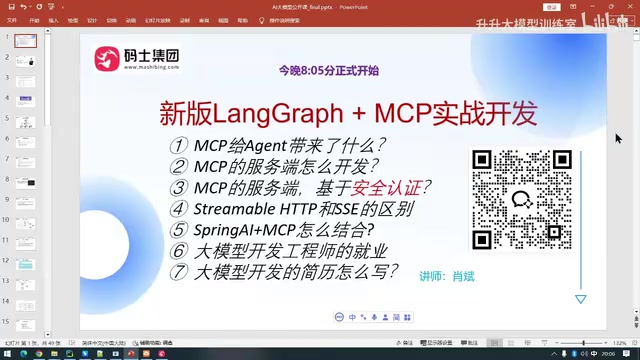
LangGraph 0.5.3 + MCP Agent Development in Practice: Security Authentication & Deployment Guide
LangGraph 0.5.3 introduces MCP server security authentication and agent deployment solutions. Combined with Qwen3 models, it provides a complete production-grade AI agent development stack.
Read more →
 Tutorials
·3 min
Building an On-Chain Trading Bot Management Dashboard with AI — Zero Coding Required
Learn how to use the open-source AI framework Bolt with DeepSeek LLM API to build a visual on-chain trading bot management dashboard through natural language — zero coding required.
Read more →
 Tech Frontiers
·2 min
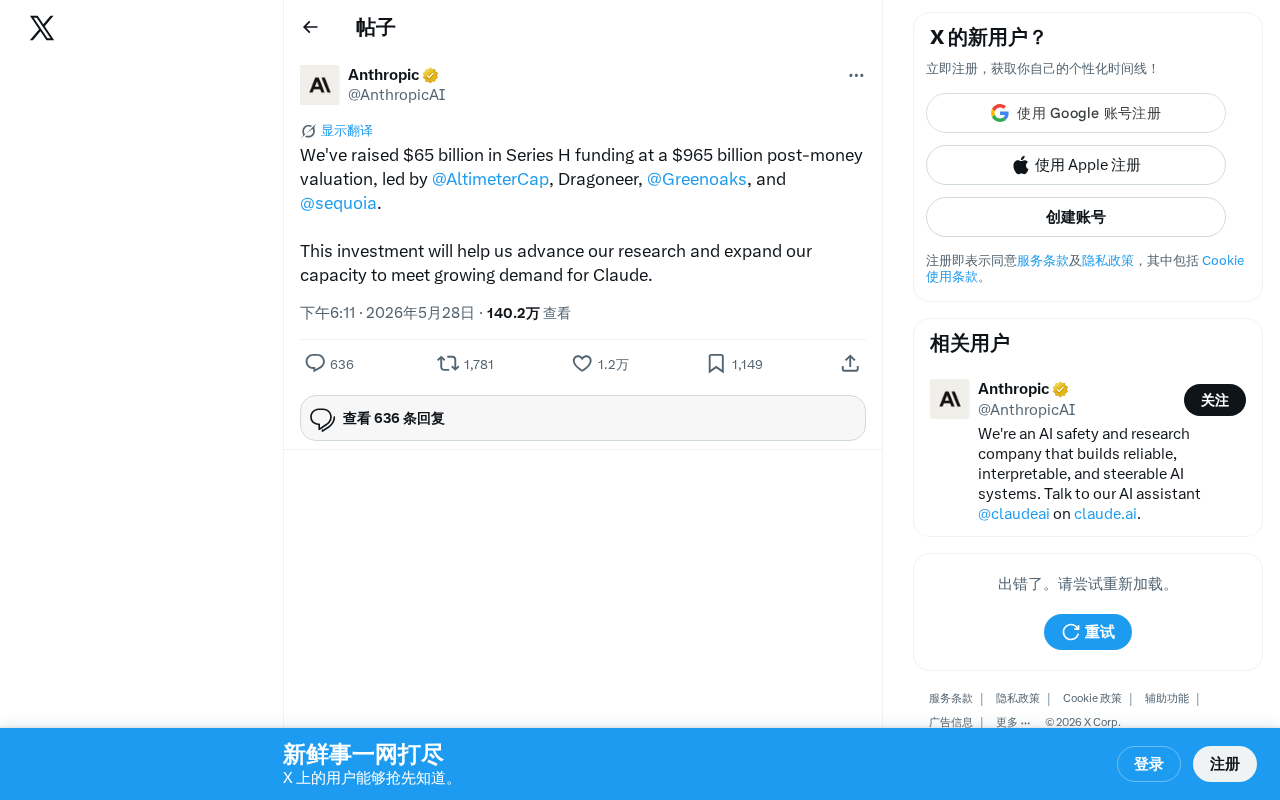
Anthropic Closes $65 Billion Series H, Valuation Approaches $1 Trillion
Anthropic closes a $65B Series H round at a $965B valuation, co-led by Sequoia and others. Funds target frontier AI research and Claude compute scaling, setting a new tech private funding record.
Read more →
 Tutorials
·2 min
LangGraph vs LangChain: How to Choose Your Agent Development Framework
In-depth comparison of LangGraph vs LangChain: controllability, extensibility, and FastAPI-powered performance. Covers storage, enterprise private deployment, and migration guidance for agent developers.
Read more →
 Deep Dives
·2 min
Agents Need Control Flow, Not More Prompts
Why do longer Prompts make AI Agents less stable? This article explains the control flow first architecture, replacing natural language control flow with code orchestration to boost multi-step reliability from 40% to over 90%.
Read more →