#llama.cpp R
202 related articles

·4 分钟
jlens-gguf: Bringing Jacobian Lens Visualization and Steering to llama.cpp Local LLMs
jlens-gguf is an open-source tool bringing Anthropic's Jacobian Lens interpretability method to GGUF and llama.cpp, enabling internal observation, real-time steering, and abliteration for both dense and MoE models.
阅读全文 →

·2 分钟
llama.cpp Milestone: The Open-Source Evolution of Local LLM Inference
llama.cpp hits a new milestone, growing from a solo hobby project into core local AI inference infrastructure. Explore its iteration speed, GGUF quantization, and how AI coding agents are reshaping open-source development.
阅读全文 →

·4 分钟
Llama.cpp Windows Local Deployment Guide: Run LLMs in Three Steps Without Compiling
Step-by-step guide to deploying Llama.cpp on Windows without compiling. Download pre-built packages, configure CUDA, and run GGUF quantized models locally with GPU acceleration and web UI in three simple steps.
阅读全文 →
 教程攻略
教程攻略·3 分钟
llama.cpp MTP Acceleration Deployment Guide: Configuration Steps & Real-World Benchmarks
Guide to enabling MTP multi-Token prediction acceleration in llama.cpp, covering CUDA setup, desktop configuration, model selection, and benchmarks showing ~60 Token/s with Qwen3 27B.
阅读全文 →

·3 分钟
Cursor Privacy Controversy: Is Your Code Being Uploaded to Servers? What Developers Need to Know
Cursor AI coding tool accused of uploading user code to servers even with telemetry disabled. Analyze the controversy, privacy mode details, and security recommendations for enterprise developers.
阅读全文 →

·2 分钟
HuggingFace Open-Source Voice Assistant: A Complete Guide to Local Deployment
A deep dive into HuggingFace's speech-to-speech open-source project, covering its modular VAD, STT, LLM, and TTS pipeline architecture and the advantages of local deployment for privacy, cost, and latency.
阅读全文 →

·3 分钟
Spring AI Explained: Unified API, RAG, and Enterprise AI Development Guide
Deep dive into Spring AI framework's core features including provider-agnostic unified API abstraction, RAG retrieval-augmented generation, and structured output to help Java developers build enterprise AI apps.
阅读全文 →

·3 分钟
Spring AI Explained: Unified API, RAG, and Enterprise AI Development Practical Guide
Deep dive into Spring AI framework's core features including provider-agnostic unified API abstraction, RAG retrieval-augmented generation, and structured output to help Java developers build enterprise AI apps.
阅读全文 →

·4 分钟
Colibri: Running a 744-Billion-Parameter LLM on an Ordinary Laptop
Colibri uses MoE hot-cold separation and 4-bit quantization to run 744B-parameter models like GLM 5.2 on consumer hardware. Learn about its three-tier memory architecture and speculative decoding.
阅读全文 →

·3 分钟
Apple Silicon LLM Inference Speed Benchmarks: A Complete Guide to Local Large Model Performance on Mac
In-depth analysis of Apple Silicon local LLM inference speed benchmarks covering M-series memory bandwidth, model quantization, MLX framework optimization, and Mac configuration guidance.
阅读全文 →
·3 分钟
The Open-Weights Model Debate: Balancing Safety and Openness
An in-depth analysis of the open-weights model debate: public release brings transparency and innovation, but raises safety and misuse risks. Exploring tiered release, red-teaming, and governance challenges.
阅读全文 →
·3 分钟
The Open-Weights Model Debate: Balancing Safety and Openness
An in-depth analysis of the open-weights model debate: publicly releasing model weights enables transparency and innovation but raises safety risks. Explores tiered release, red-teaming, and the industry dynamics behind open AI governance.
阅读全文 →
·3 分钟
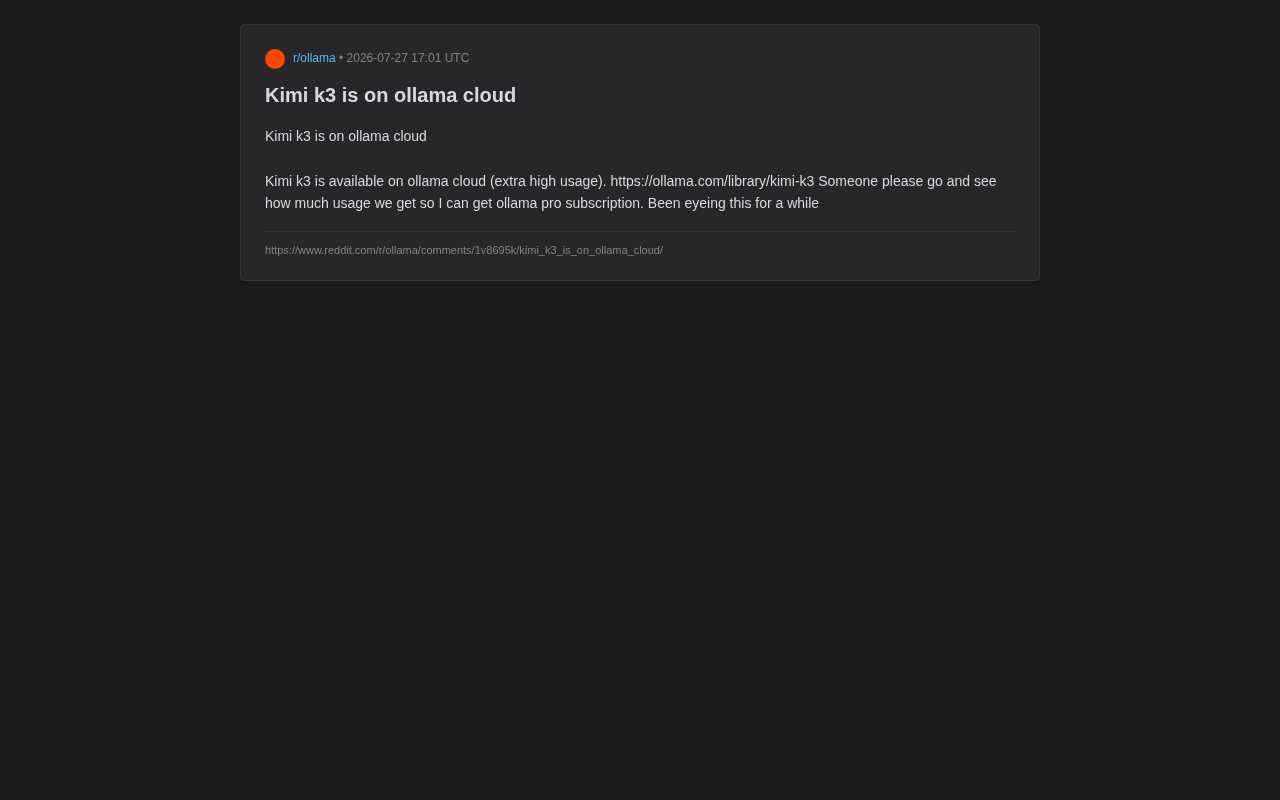
Kimi K3 Launches on Ollama Cloud: Free Tier, User Experience, and Developer Guide
Kimi K3 officially launches on Ollama Cloud as an "extra high usage" model. This guide covers free tier quotas, cloud inference experience, technical advantages, and how developers can seamlessly call this high-performance LLM.
阅读全文 →
·3 分钟
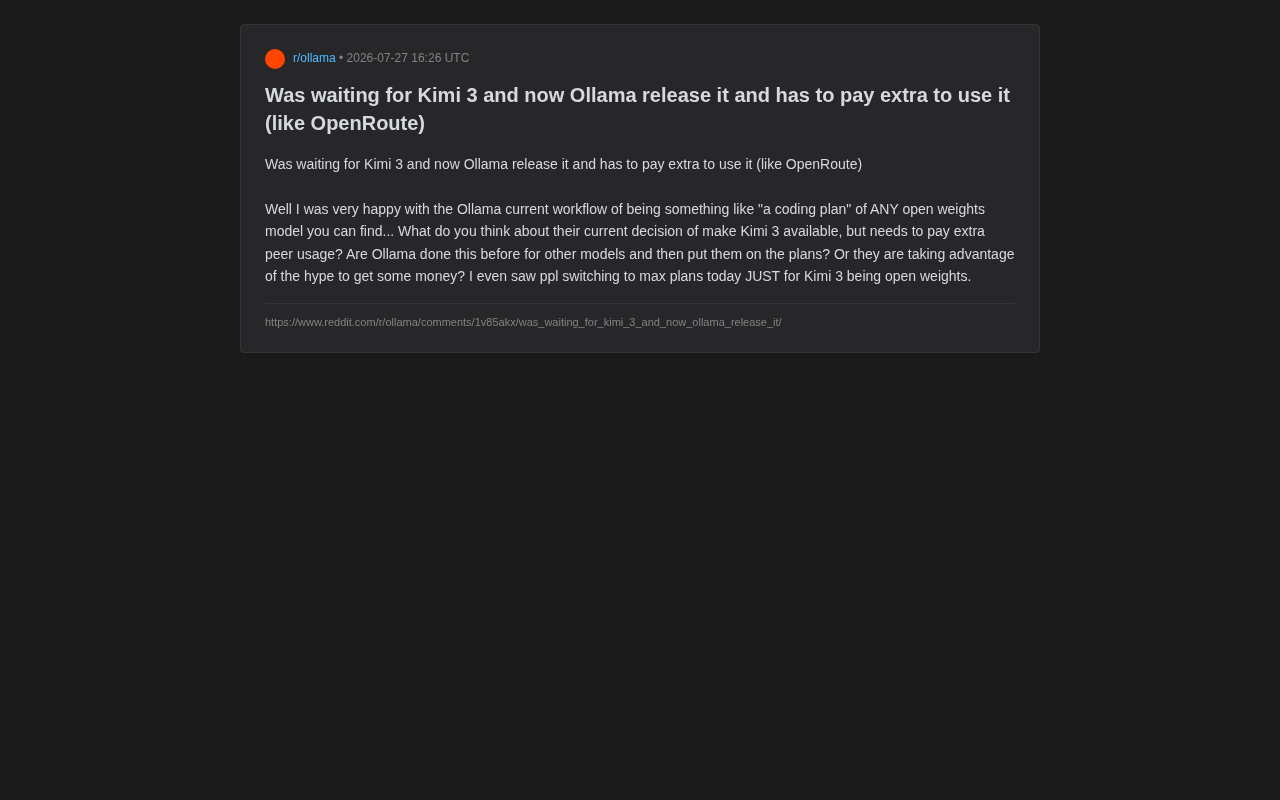
Ollama's Extra Charges for Kimi 3 Spark Community Controversy: Should Open-Source Models Be Free to Use?
Ollama lists Kimi 3 with extra pay-per-use fees, breaking subscription expectations and sparking debate over open-weight models and AI service pricing tiers.
阅读全文 →

·2 分钟
RX 9060 XT vs RTX 5060 Ti: Which GPU to Pick for Local AI?
RX 9060 XT vs RTX 5060 Ti — both 16GB VRAM, but which is better for local AI? We compare CUDA ecosystem, ROCm compatibility, LLM inference, and real-world usability.
阅读全文 →

·2 分钟
RX 9060 XT vs RTX 5060 Ti: How to Choose a GPU for Local AI
RX 9060 XT vs RTX 5060 Ti both offer 16GB VRAM — which is better for local AI inference? A full comparison of CUDA ecosystem, ROCm compatibility, LLM performance, and real-world usability.
阅读全文 →

·3 分钟
Why Anthropic Never Open-Sources Claude: Safety Concerns or Commercial Moat?
Anthropic has never open-sourced Claude's model weights. As OpenAI, Meta, and Google embrace open source, is Anthropic's AI safety stance genuine caution or a commercial moat? A deep dive into the debate.
阅读全文 →

·3 分钟
Kimi K3 Local Deployment Guide: Storage Requirements for q4 and q8 Quantization Explained
Detailed analysis of Kimi K3 quantization deployment options, comparing q4 vs q8 storage requirements, precision trade-offs, and hardware configurations for local self-hosting.
阅读全文 →

·3 分钟
HuggingHack Update: S3 Storage, Dual-Engine Scheduling, and GGUF Inspection Get Major Upgrades
HuggingHack releases major updates with S3/MinIO storage, Ollama + vLLM dual-engine scheduling, GGUF inspection, and local accounts for enterprise-grade local LLM management.
阅读全文 →

·3 分钟
Build RAG and AI Agent Projects at Zero Cost: A Practical Guide to Open-Source Tools
Build high-quality AI projects on a budget. Learn how to use Ollama, Groq, Chroma, and other free open-source tools to build RAG systems and multi-Agent workflows from scratch.
阅读全文 →