#long-task consistency
18 related articles

·3 min
Solving Codex Long-Task Drift: Deep Analysis and Fix Strategies for Three Failure Modes
Deep analysis of AI coding agent drift in long tasks, decomposed into goal drift, state drift, and strategy drift with targeted diagnostic methods and fix strategies.
Read more →

·3 min
GitHub Daily · August 1: The Rise of SuperAgents and Generative AI's Mass Education Moment
GitHub trending Aug 1: ByteDance's deer-flow SuperAgent, Microsoft's GenAI course, 3D generation, voice cloning, and privacy-first tools shape the AI landscape.
Read more →

·2 min
qm: A Deep Dive into the Multiplayer AI Agent Harness for Team Collaboration
Deep dive into qm, a multiplayer AI Agent collaboration framework that uses state sync, real-time observability, and human takeover mechanisms to transform Agents from solo tools into team infrastructure.
Read more →

·8 min
A Complete Guide to Agent Testing: Five Core Dimensions and Automation in Practice
In-depth analysis of the five core dimensions of AI Agent testing: command safety, tool-calling accuracy, task planning, output consistency, and error self-repair. Master automated testing and the transition path for test engineers.
Read more →

·2 min
GPT-5.6 Three-Model Showdown: Sol vs Terra vs Luna — Which One Should You Pick?
OpenAI GPT-5.6 launches Sol, Terra, and Luna simultaneously. We compare benchmarks and real-world coding tests to help you choose the right model for your needs.
Read more →

·3 min
DeepAgents in Practice: A Complete Guide to Building a HarmonyOS Automated Testing Agent
A deep dive into DeepAgents' core mechanisms, with a hands-on guide to building a HarmonyOS automated testing Agent — covering create_deep_agent, LangChain comparison, and long-chain task planning.
Read more →

·3 min
40-Hour Stress Test: An In-Depth Evaluation of GPT-5.6's Coding Capabilities
A developer spent 40 hours exhausting Codex Pro's weekly quota to benchmark GPT-5.6 on real enterprise projects. Key findings: proactive root cause tracing, stronger global codebase understanding, and stable long-task execution.
Read more →

·3 min
Can MiniMax Serve as a Hermes Agent's Brain? A Complete V0.18 Evaluation
A hands-on test of MiniMax as an AI Agent brain using the Hermes V0.18 framework: fast inference, low cost, stable long tasks—but clear flaws in complex reasoning and tool calling. Learn its three strengths, three weaknesses, and best-fit workflows.
Read more →

·2 min
GPT-5.6 Real-World Test: Nearly 1,000 Lines of Code, Done in One Shot
A Snorkel AI senior research scientist tested an early GPT-5.6 build on a ~1,000-line coding task — completed in one shot, no repeated prompting needed.
Read more →

·4 min
The Three Eras of AI Agents: The Capability Leap from Tool Calling to Autonomous Orchestration
An in-depth look at the three core eras of AI Agent development: reliable tool calling, coherent long-task execution, and autonomous orchestration with metacognition. Helps developers match tasks to model capabilities.
Read more →

·5 min
GPT-5.6 Explained: Sol, Terra & Luna — Tiered Positioning and Capability Comparison
OpenAI releases the GPT-5.6 series with flagship Sol, balanced Terra, and lightweight Luna. An in-depth look at each model's positioning, use cases, pricing, and the multi-agent Ultra architecture.
Read more →

·6 min
LangChain 1.3 in Practice: A Complete Guide to DeepAgent Architecture and the Harness Philosophy
An in-depth look at LangChain 1.3's core modules and DeepAgent architecture—covering the Harness philosophy, LangGraph internals, HITL, memory management, and guardrails to master production-grade AI Agent development.
Read more →

·7 min
Context Warp Drive: A Deep Dive into Deterministic Context Folding for AI Agents
An in-depth look at 'Deterministic Context Folding' from Context Warp Drive: solving AI agent context window management with reproducible, cacheable, debuggable context compression for production-grade agents.
Read more →

·7 min
Cost Optimization for AI Agent Fleets: Why an Expensive Commander + Cheap Workers Is More Cost-Effective
Deep analysis of multi-agent system cost optimization: why the 'expensive commander + cheap workers' combination outperforms all-frontier fleets, covering decision-intent cost logic and Sonnet 5 tokenizer traps.
Read more →

·7 min
AI Agent Practical Guide: The Complete Path from Building to Production Deployment
A deep dive into AI Agent architecture and engineering practices, covering tool design, ReAct execution patterns, Vercel deployment, and production considerations to bridge the prototype-to-production gap.
Read more →

·4 min
5 Models Coding Showdown: Claude, GPT, DeepSeek, M3 — Who's the Best Engineering Tool?
Hands-on comparison of Claude Opus 4.8, GPT 5.5, MiniMax M3, DeepSeek V4 Pro, and Mimo 2.5 Pro across SVG drawing, 3D game generation, elevator scheduling, and real bug fixing.
Read more →
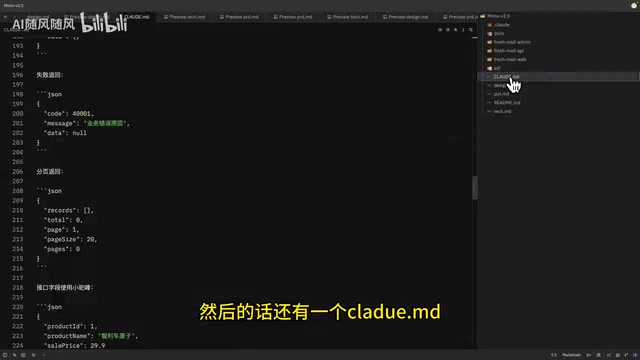
·4 min
Real-World Comparison of Chinese AI Coding Models: Which One Best Generates a Complete E-Commerce System in One Shot?
Real-world test of six Chinese AI coding models — Qwen 3.7 Max, DeepSeek V4 Pro, MiniMax M3 and more — generating a complete e-commerce system, scored on UI, checkout flow, and backend management.
Read more →
 Research
·3 min
MementoGUI: A Multimodal Memory Management Framework for Solving Long-Horizon GUI Agent Amnesia
MementoGUI is a plugin-style multimodal memory management framework that solves GUI agent forgetting in long-horizon tasks through dual time-scale memory and four memory control operators, boosting long-task completion without fine-tuning.
Read more →