#matrix multiplication AI
160 related articles

·4 min
How Much Math Do You Need for Machine Learning? Finding the Balance Between Preparation and Practice
How much math do you really need before starting ML projects? This article analyzes the 'bottomless pit' trap, proposes a minimum viable math framework, and offers project-driven learning strategies.
Read more →

·3 min
Moonshot AI Open-Sources FlashKDA: A Deep Dive into High-Performance CUDA Kernels for KDA Attention
Moonshot AI open-sources FlashKDA, providing high-performance CUDA kernels for Kimi Delta Attention. Learn about its technical principles, performance gains, and value for long-context training and inference acceleration.
Read more →

·3 min
Moonshot AI Open-Sources FlashKDA: A Deep Dive into High-Performance CUDA Kernels for KDA Attention
Moonshot AI open-sources FlashKDA, providing high-performance CUDA kernels for Kimi Delta Attention. Explore its technical principles, performance gains, and value for long-context training and inference.
Read more →

·2 min
Reverse Engineering Apple's ANE: Open-Source Project Enables On-Device Training on the Neural Engine
Deep dive into the maderix/ANE GitHub project that reverse engineers Apple's private APIs to enable neural network training on the Apple Neural Engine, exploring its technical approach, efficiency gains, compliance risks, and implications for on-device AI.
Read more →

·3 min
Kimi Delta Attention Explained: The Evolution from Standard Attention to Linear Attention
A deep dive into Kimi Delta Attention (KDA): tracing the evolution from quadratic Softmax attention through linear attention, Delta rules, and gated decay mechanisms, with insights on associative memory and hardware optimization.
Read more →

·3 min
Kimi Delta Attention Explained: The Evolution from Standard Attention to Linear Attention
Deep dive into Kimi Delta Attention (KDA): from standard Softmax attention's quadratic bottleneck through linear attention, Delta Rule, and gated decay mechanisms — the complete evolution explained.
Read more →

·3 min
AMD CDNA5 Architecture Deep Dive: Technical Evolution and the AI Computing Competition Landscape
Deep analysis of AMD's CDNA5 architecture covering Chiplet packaging upgrades, HBM memory evolution, and low-precision compute optimization, examining how AMD challenges NVIDIA's AI chip dominance.
Read more →
·3 min
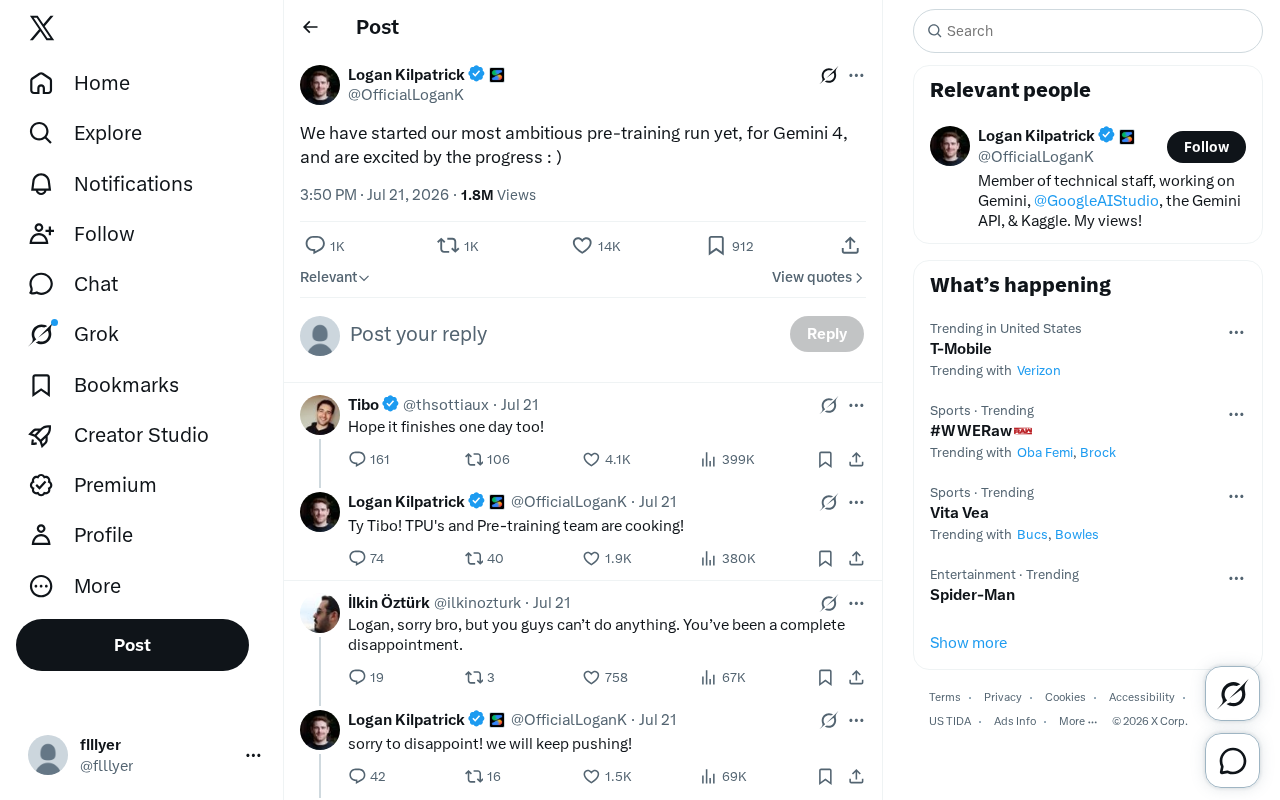
Google Launches Gemini 4 Pre-training: Its Most Ambitious AI Model Training Yet
Google DeepMind announces Gemini 4 pre-training has begun, calling it their most ambitious training yet. A deep dive into its technical direction, compute scale, multimodal breakthroughs, and competitive impact.
Read more →

·3 min
Running AI Inside DRAM: A Processing-in-Memory Experiment That Breaks DDR4 Timing Rules
Explore how deliberately violating DDR4 timing rules enables running PrismML's Bonsai AI model inside DRAM, covering the principles, energy benefits, and challenges of processing-in-memory.
Read more →

·3 min
How Hidden Layers Solve the XOR Problem: A Complete Walkthrough from Math to Geometry
A deep dive into how neural network hidden layers solve the XOR problem through feature space transformation, with math, geometry, and concrete examples.
Read more →

·3 min
Mathematical Foundations for Machine Learning: A Complete Learning Path from Linear Algebra to Probability Theory
A systematic guide to the three core math areas for ML—linear algebra, calculus, and probability—with verified free resources like Mathematics for Machine Learning, 3Blue1Brown, and practical learning strategies.
Read more →

·3 min
If Digital Computers Have Consciousness, It Exists Only at the Hardware Level — Not in Software
If digital computers can produce consciousness, does it reside in software algorithms or physical hardware? Exploring causal closure, substrate independence, and implications for AI consciousness.
Read more →

·1 min
Radxa Cubie A7Z Real-World Test: 330ms End-to-End Object Detection Latency Under Full NPU Load
Deep analysis of Radxa Cubie A7Z achieving 330ms glass-to-glass object detection latency under full NPU load, covering latency breakdown, practical use cases, and edge AI optimization strategies.
Read more →

·3 min
Building a YOLO26 Inference Engine from Scratch in ARM64 Assembly: A Deep Dive into Low-Level Optimization
Deep dive into building a YOLO26n object detection inference engine from scratch using ARM64 assembly and C, covering NEON SIMD, Winograd convolution, GEMM micro-kernels, and cache tiling optimizations.
Read more →

·3 min
Sebastian Lague's Custom Graphics Library: A Complete Breakdown of Building a Renderer from Scratch
Deep dive into Sebastian Lague's experiment building a graphics library from scratch, covering rasterization, depth buffering, texture mapping, and the educational value of software renderers.
Read more →

·4 min
FPGA Softmax Approximation in Practice: A Detailed Guide to Taylor Expansion and Padé Approximation Methods
A detailed guide on efficiently implementing Softmax on FPGAs, comparing Taylor series and Padé approximation methods for accuracy and resource trade-offs, with Python simulation and range reduction techniques.
Read more →

·5 min
30+ Free AI & Machine Learning Classic Textbooks: All in One GitHub Repository
Awesome Free AI Books is an open-source repo with 30+ legally free AI & ML classic textbooks covering deep learning, reinforcement learning, NLP, LLMs, and more — all linking to official sources with weekly automated link checks.
Read more →

·3 min
Rust and Mojo Are Quietly Replacing Python's Low-Level Engine
Python tops the language rankings again, but AI teams are quietly swapping its internals for Rust and Mojo. A look at Python's speed and GIL pains, the two-language problem, and the rise of Rust tooling and Mojo on GPUs.
Read more →
·6 min
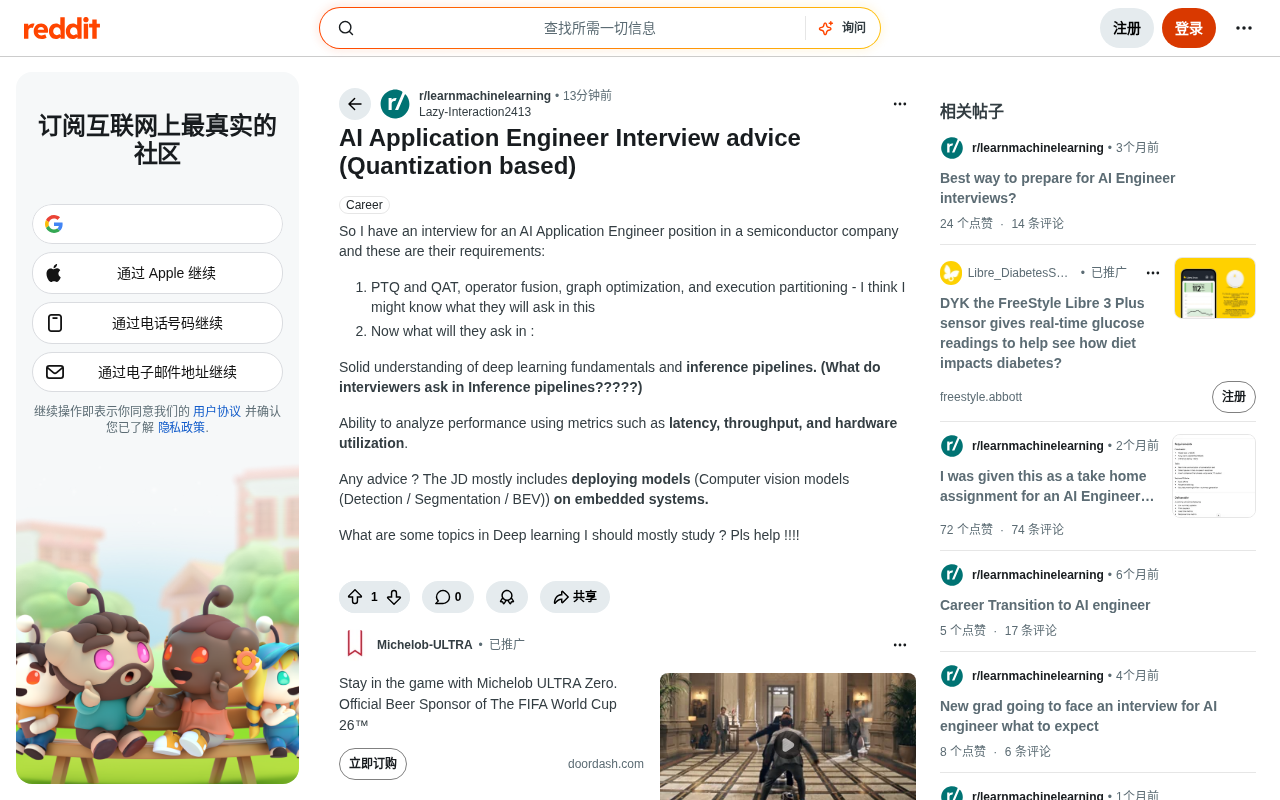
AI Application Engineer Interview Guide: Core Topics in Model Quantization and Inference Deployment
A systematic review of must-know topics for AI Application Engineer interviews: PTQ/QAT quantization, operator fusion, inference pipelines, latency/throughput analysis, and edge deployment of detection/segmentation/BEV models.
Read more →
·6 min
AI Application Engineer Interview Guide: Core Topics on Model Quantization and Inference Deployment
A systematic guide to must-know AI application engineer interview topics: PTQ/QAT quantization, operator fusion, inference pipelines, latency/throughput analysis, and edge deployment of detection/segmentation/BEV models.
Read more →