#model evaluation
2306 related articles

·2 min
Agent Device: The Automation Tool That Lets AI Autonomously Operate and Verify on Mobile Phones
Agent Device is a CLI tool by Costec that uses accessibility snapshots to let AI coding Agents control iOS and Android devices for automated verification, script replay, and CI testing.
Read more →
·3 min
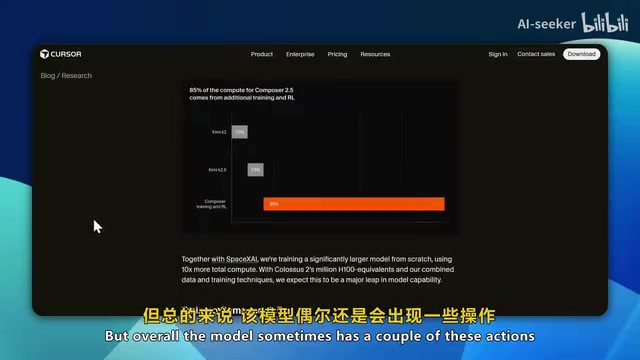
Cursor Composer 2.5 In-Depth Review: Top-Tier Coding Experience at One-Tenth the Price
In-depth review of Cursor Composer 2.5 coding model vs Opus 4.7 and GPT 5.5. Covers macOS clone, frontend generation, 3D scenes, and more—analyzing its speed-intelligence ratio and price advantage.
Read more →

·3 min
LFM2.5 Local Deployment Hands-On: An 8B Parameter Model That Outperforms GPT-o3s in Tool Calling
Hands-on test of Liquid AI's LFM2.5 local deployment: architecture breakdown, 16GB VRAM troubleshooting, and GraphRAG tool-calling benchmarks vs GPT-o3s.
Read more →
·3 min
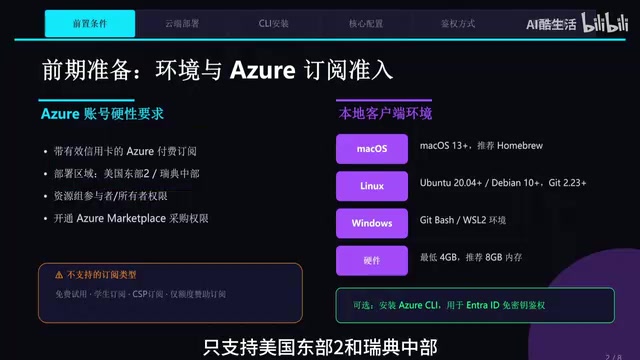
Complete Guide to Connecting Claude Code with Claude Opus 4 via Microsoft Foundry
Step-by-step guide to deploying Claude Opus 4 on Microsoft Azure Foundry and connecting it to Claude Code, covering resource setup, environment variables, and authentication.
Read more →

·2 min
Avoid oh-my-openagent: Hardcoded Model Identity Injection Wastes Half Your Tokens
Deep analysis of oh-my-openagent plugin's critical flaws: hardcoded Claude Opus 4.7 identity misleads non-Claude users, prompt injection doubles token costs. Includes alternatives and developer tips.
Read more →

·2 min
In the Era of Incremental Model Upgrades, AI Platforms Are the Real Productivity Variable
AI model upgrades are hitting diminishing returns. The real differentiator is AI Agent platforms like Codex that restructure workflows — task orchestration, cross-device collaboration, and automation are what truly eliminate human overhead.
Read more →

·4 min
Learning Path for AI Agent Development: A Complete Guide from Core Architecture to Production Deployment
A complete learning path for AI Agent development covering core architecture, ReAct paradigm, multi-agent collaboration, RAG integration, and lightweight deployment to guide developers from basics to production.
Read more →

·2 min
Andrew Ng on AI Agent Development: Evaluation and Error Analysis Are the Core Competitive Advantage
Andrew Ng argues that the core gap in AI Agent development isn't model selection — it's systematic evals and error analysis. A breakdown of his methodology.
Read more →

·3 min
Career Transition Guide for AI Product Managers: Pick the Right Track Across Three Industry Layers
A deep dive into the AI product manager industry's three-layer pyramid — from infrastructure to models to applications — helping traditional PMs find the best career transition track.
Read more →

·3 min
Getting Started with AI Agents: A Complete Learning Path from Zero to Production
A comprehensive guide to AI Agent architecture covering ReAct paradigm, multi-agent collaboration, RAG integration, and the planning-memory-tools framework, with a complete learning path from concepts to production deployment.
Read more →

·4 min
AI Engineer Job Search: The Capability Leap from Demo to Production System
AI job demand is surging but companies can't find qualified candidates. Learn the 3 core skills—advanced RAG, local model deployment, and full-stack monitoring—to leap from demo builder to production engineer.
Read more →

·3 min
CC Switch Tutorial: Connect Claude Code to Domestic Chinese LLMs Without a VPN
Step-by-step tutorial on using CC Switch to connect Claude Code to DeepSeek, Kimi, and other Chinese LLMs without a VPN or Claude account for low-cost AI coding.
Read more →

·3 min
Cursor Composer 2.5 In-Depth Review: One-Tenth the Cost of Opus — Is It Worth Using?
In-depth review of Cursor Composer 2.5 coding model through real-world tests including macOS cloning, landing pages, and 3D scenes. At just 7 cents per task, it offers stunning value vs Opus.
Read more →

·4 min
Frontier Code Deep Dive: Code That Runs ≠ Code That Merges — A Quality Revolution in Programming Benchmarks
Deep dive into Cognition's Frontier Code benchmark: why passing tests isn't enough, how six quality dimensions evaluate code, and why code quality is AI coding's next bottleneck.
Read more →

·3 min
AI Coding Showdown: Four Major Models Show Shocking Performance Gaps on a Dynamic Web Scraping Task
Real-world test of ChatGPT 5.4, Gemini 3.1, DeepSeek V4 Pro, and Kimi 5.1 on a Baidu dynamic web scraping task reveals surprising gaps in AI coding ability.
Read more →

·4 min
Nex-N2 Pro In-Depth Review: Impressive Code Generation, But How Inflated Are the Benchmarks?
In-depth review of open-source agent model Nex-N2 Pro: testing code generation, SVG output, and game dev capabilities while analyzing benchmark inflation, GPT distillation traces, and speed issues.
Read more →

·3 min
The Complete Guide to DeepSeek TUI: Installation, Configuration, and Hands-On Use of a Terminal AI Coding Agent
A deep dive into DeepSeek TUI: the terminal AI coding agent with chain-of-thought visualization, million-token context, and multi-task parallelism. Covers installation, configuration, and real-world use cases.
Read more →

·3 min
Codex vs Claude Code: The Truth Behind the 10x Bill Difference & a Practical Selection Guide
Same coding task: Codex costs $15, Claude Code costs $155. The 10x gap isn't in unit price — it's in token usage. A practical guide to choosing the right AI coding tool by scenario.
Read more →

·3 min
Open-Source Models Keep Throwing Errors in Your Code? The Problem Might Be the Framework
DeepSeek and Kimi keep failing at coding? The problem may not be the model but the framework. Learn how Commander Code fixes this with cache routing, tool call repair, and continuous learning.
Read more →

·4 min
The Complete Guide to Claude Desktop: 15 Core Features & 9 Money-Saving Tips
Deep dive into Claude Desktop's Chat, Cowork & Code modes, Skill system setup, 8 automation workflow examples, and 9 practical tips to dramatically save Tokens.
Read more →