#model evaluation
2266 related articles

·1 min
OpenAI Codex Personal Activity Profile Feature Explained: Data Visualization and Gamification Design
OpenAI Codex launches personal activity profile with activity graphs, streaks, token usage stats, and gamification design. A deep dive into its features, privacy philosophy, and product strategy.
Read more →

·3 min
Google CEO Pichai Admits AI Coding Gap, Details Catch-Up Strategy and AGI Outlook
Google CEO Sundar Pichai admits Google lags in AI coding, details its catch-up strategy involving data flywheels, addresses Gemini controversies, and shares his evolving views on AGI.
Read more →

·3 min
Sonar Tests Code Quality Across 53 LLMs: Claude Has the Most Security Vulnerabilities, GPT-5 Code Volume Surges 5x
Sonar evaluates 53+ LLMs on 4,444 Java tasks: Claude has the highest security vulnerability density at 300/million lines, GPT-5 code volume surges 5x to 1.2M lines. Deep analysis of real-world code quality.
Read more →

·3 min
OpenAI Researcher: Spec Documents Are the Real Code
OpenAI researcher Sean Grove argues code is only 10-20% of value—spec documents are the real source code. From Vibe Coding insights to model alignment, why writing specs will be the scarcest skill in the AI era.
Read more →

·4 min
MCP Hands-On Tutorial: Using AI to Automate Reverse Engineering of JS Encryption Algorithms
A detailed guide on MCP protocol setup and hands-on workflow showing how AI can automatically locate encrypted APIs, analyze obfuscated JS, set breakpoints, and restore sign algorithms to generate Python scraper code.
Read more →

·3 min
NestJS + LangChain: A Practical Guide for Frontend Engineers Transitioning to AI Full-Stack Architecture
How can frontend engineers transition to AI full-stack? This guide covers NestJS + LangChain, TypeScript fundamentals, AI Agent development, local model deployment, and cross-language architecture skills.
Read more →

·2 min
GPT 5.6 Internal Testing Codename Revealed, Google Pays SpaceX $920M Monthly for Computing Power
OpenAI begins GPT 5.6 Kindle Alpha internal testing with stronger base reasoning. Google partners with SpaceX at $920M/month for computing power. Gemma 4 QAT enables edge deployment, Claude Cowork doubles credits.
Read more →

·4 min
Vibe Coding Beginner's Guide: Tool Selection Across Three Categories with Practical Examples
A comprehensive guide to Vibe Coding's three tool categories: Agent frameworks, CLI Coding, and IDE tools, with practical examples including Snake game and data analysis workbench.
Read more →

·2 min
Anthropic London Developer Conference: Claude Model Upgrades, Enterprise Agent Platform, and Developer Tools Fully Evolved
Anthropic's first London Code with Claude event unveiled Opus 4.7, Mythos, Cloud Managed Agents, Claude Code Routines, and more for AI-assisted development.
Read more →

·3 min
GPT-5.2 Codex vs Opus 4.5 Hands-On: A Comprehensive Comparison of Coding Ability, Speed, and Developer Experience
Hands-on comparison of GPT-5.2 Codex vs Opus 4.5 across frontend generation, physics simulation, 3D scenes, and code refactoring, with practical selection advice.
Read more →

·3 min
Vibe Coding in Practice: A Junior Student Uses Cursor to Build a Multi-Agent System with 51 AI Officials Based on the Three Departments and Six Ministries Framework
A junior student uses Cursor and Vibe Coding to build a multi-agent system with 51 AI officials modeled on China's Three Departments and Six Ministries, featuring task distribution, approval workflows, and Token cost visualization.
Read more →

·2 min
Anthropic Team in Practice: Claude Code Experience with 16 Parallel Agents Developing a Compiler
Deep analysis of Anthropic's real-world Claude Code practices: 16 parallel Agents building a C compiler, three-role architecture for full-stack apps, smart approvals solving 93% blind approval issues, and six official best practices.
Read more →
·2 min
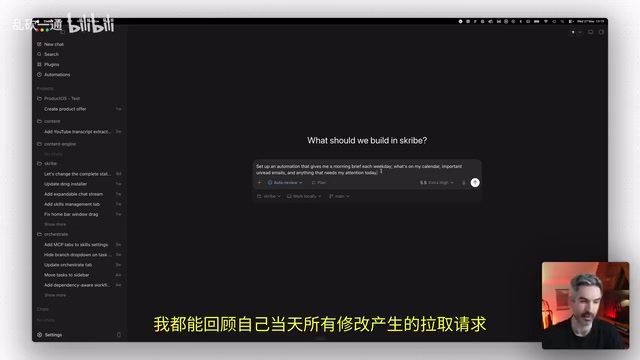
AI Super App Showdown: A Comprehensive Comparison of Cursor, Codex, Claude, and Anti-Gravity
In-depth comparison of four AI Super Apps — Cursor, Codex, Claude Desktop, and Anti-Gravity — across 11 dimensions to help you find the best AI dev tool.
Read more →

·4 min
PAO Project in Practice: Bayesian Optimization-Driven Aspen Plus Automated Simulation Tutorial
Learn how the PAO project integrates Bayesian optimization with Aspen Plus via YAML configuration for automated multi-objective chemical process optimization.
Read more →

·4 min
Agent Development Learning Roadmap: A Four-Stage Systematic Guide from Beginner to Practitioner
A systematic four-stage learning roadmap for AI Agent development, covering core concepts, classic paradigms like ReAct, multi-agent collaboration frameworks, and hands-on projects to master Agent development skills in 2-3 months.
Read more →

·4 min
The 8 Core Modules of Prompt Engineering: A Complete Guide from Fundamentals to Advanced Techniques
A systematic breakdown of the 8 core modules of prompt engineering, covering fundamentals, CoT, Few-shot, prompt security, and real-world AI applications.
Read more →

·3 min
Prompt Template Design for Document Summarization: A Practical Guide to Three-Layer Progressive Prompt Engineering
A practical guide to three-layer progressive Prompt template design for document summarization, covering requirements analysis, architecture design, validation, and optimization — boosting information extraction completeness from 78% to 91%.
Read more →
·4 min
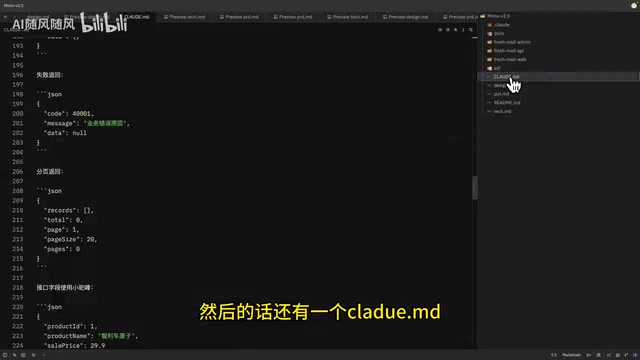
Real-World Comparison of Chinese AI Coding Models: Which One Best Generates a Complete E-Commerce System in One Shot?
Real-world test of six Chinese AI coding models — Qwen 3.7 Max, DeepSeek V4 Pro, MiniMax M3 and more — generating a complete e-commerce system, scored on UI, checkout flow, and backend management.
Read more →

·3 min
Andrew Ng's AI Prompting Guide: Four Key Gaps Between Beginners and Experts
Andrew Ng's AI prompting methodology reveals four core gaps between beginners and experts: deep thinking, sufficient context, neutral questioning, and iterative writing. Applicable to ChatGPT, Claude, Gemini, and all major AI tools.
Read more →

·2 min
ChatGPT Merges with Codex: What a 24-Hour Autonomous AI Assistant Means
OpenAI fully integrates Codex into ChatGPT, creating an AI digital worker capable of autonomous planning and up to 24 hours of continuous execution. A deep dive into core upgrades, use cases, and industry impact.
Read more →