#multi-agent coding
738 related articles
 Tutorials
·1 min
AI Large Language Model Learning Roadmap: Six Stages from Zero to Engineer
A systematic LLM engineer learning roadmap covering Transformer basics, prompt engineering, RAG, Agent development, API integration, fine-tuning, deployment, and project practice across six stages.
Read more →
 Product Reviews
·3 min
Deep Comparison of AI Coding Tools: Why OpenClaw Is Not Suitable for Writing Code
Deep comparison of AI coding tools like VS Code and Google IDE, revealing why OpenClaw is just a gateway not a coding tool, with analysis on model binding issues.
Read more →
 Tutorials
·3 min
Complete Learning Roadmap for Java Developers Transitioning to AI Engineering
A detailed five-phase learning roadmap for Java developers transitioning to AI engineering, covering Spring AI, LangChain4j, RAG core technology, and Agent development.
Read more →
 Deep Dives
·4 min
AI Agents 101: Core Concepts, Technical Architecture, and How They Work
A beginner's guide to AI Agents: understand core concepts, the perception-decision-action loop, LLM, tool calling, memory systems, and RAG architecture explained from scratch.
Read more →
 Tutorials
·3 min
Claude Code Plugin System Explained: Four Core Components Building an Extensible Development Platform
Deep dive into Claude Code 2.0.14's plugin system covering Slash Commands, Sub-agents, MCP integration, and Hooks—with demos on one-click plugin installation and custom code review plugin creation.
Read more →
 Tutorials
·2 min
How Enterprise Text-to-SQL Breaks the 90% Accuracy Barrier: A Practical Guide to Agent Architecture
A deep dive into engineering strategies for enterprise Text-to-SQL to break 90% accuracy, covering precise schema retrieval, multi-Agent architecture, self-correction, and AI coding practices.
Read more →
 Product Reviews
·3 min
Claude Code 2.1 Deep Dive: Hooks Automation, MCP Ecosystem & Multi-Agent Collaboration Fully Explained
Full breakdown of Claude Code 2.1: Opus 4.6 model upgrade, Hooks deterministic automation, Skills multi-agent collaboration, MCP tool chain integration, plus IDE shortcuts and practical commands.
Read more →
 Deep Dives
·4 min
Can AI Agents Replace a Development Team? A Practical Guide for Non-Technical People
Can non-technical people use AI Agents to build virtual dev teams? From CEO Agent to Developer Agent, we analyze the theory vs. reality and offer a practical implementation guide.
Read more →
 Tutorials
·3 min
Gemini CLI Complete Guide: MCP Extensions & Memory Files in Practice
Complete guide to Google Gemini CLI setup, MCP Server extensions, and memory files. Covers 1M token context analysis, Context7 docs, Taskmaster task breakdown, and more.
Read more →
 Tutorials
·3 min
OpenClaw Advanced Guide: Model Selection, Memory Restructuring & Gateway Auto-Repair
Deep dive into OpenClaw advanced techniques: Claude Opus 4.6 vs GPT-5.2 model selection, topic-based memory splitting with LanceDB vectorization, Codex deep search integration, and systemd + Claude Code Gateway auto-repair.
Read more →
 Tech Frontiers
·3 min
Claude Code Source Code Leak: Full Roadmap for Opus 4.7 and Mythos 5 Exposed
Anthropic suffers a major code leak exposing 500K+ lines of Claude Code source, unreleased Opus 4.7, Sonnet 4.8, Mythos 5 models, 44 hidden feature flags, and the full product roadmap.
Read more →
 Industry Insights
·2 min
The AI Market Is Expanding Rapidly: Why a Growing Pie Matters More Than Fighting Over Slices
The global AI market is expanding at a CAGR exceeding 35%, creating new demand across nearly every segment. This article analyzes the core logic of AI's expanding market and key takeaways for practitioners and investors.
Read more →
 Product Reviews
·4 min
Comprehensive Review of 10 Mainstream AI Coding Tools: How to Choose from Cursor to Claude Code
In-depth comparison of 10 AI coding tools including GitHub Copilot, Cursor, Claude Code, and Windsurf, analyzed across features, target users, and pricing to help developers choose the right AI assistant.
Read more →
 Tutorials
·3 min
Vibe Engineering in Practice: AI Evolves from Code Generator to Programming Teammate
A deep dive into Vibe Engineering principles: context engineering, sub-agent collaboration, autonomous testing loops, plus OpenAI's case study of a 12-hour Kotlin-to-Rust rewrite.
Read more →
 Industry Insights
·4 min
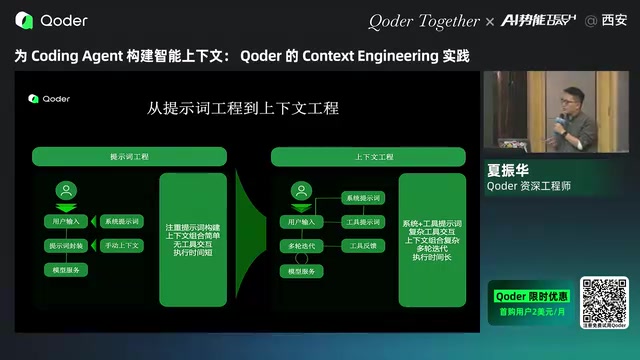
Qoder's Context Engineering in Practice: Four-Layer Retrieval Engine and Memory System Architecture
Deep analysis of Qoder's (Tongyi Lingma international edition) context engineering architecture, including its four-layer retrieval engine, memory engine, context caching, and core product design.
Read more →
 Product Reviews
·2 min
Agent Memory: Giving AI Coding Agents Persistent Memory Across Sessions
Agent Memory is an open-source local memory layer providing persistent, cross-session, cross-tool long-term memory for AI coding agents like Claude Code, Cursor, and Codex.
Read more →
 Product Reviews
·2 min
Cursor Composer 2.5 Hands-On: An AI Coding Model That's Faster and 10x Cheaper
Hands-on review of Cursor Composer 2.5's Agent view, Plan mode, and right panel features. Coding ability matches Claude and GPT top models at up to 10x lower cost with significantly faster speed.
Read more →
 Tutorials
·3 min
35 Lines of Prompts Let Codex Auto-Optimize Your Workflow — Reposted by OpenAI's President
An OpenAI employee used just 35 lines of prompts to have Codex analyze 30 days of work history, identify repetitive tasks, and generate reusable automated Skills. Combined with screen reading and long-term memory, Codex is becoming a proactive workflow optimization agent.
Read more →
 Tutorials
·3 min
Claude Code Hidden Configurations Fully Explained: From Chat Assistant to Semi-Automated Programming Workflow
Explore Claude Code's source code to unlock hidden configurations like Hooks, Agents, Permissions, and Memories. Transform your AI assistant into a customizable semi-automated development workflow.
Read more →
 Product Reviews
·3 min
Cursor 3.0 Deep Dive: The AI Agent Command Center Rewritten in Rust
Cursor 3.0 abandons VS Code entirely, rewritten from scratch in Rust as an AI agent management platform. Deep dive into its three evolutions, Composer 2 controversy, parallel agent orchestration, and the paradigm shift from assisted to autonomous coding.
Read more →