#non-technical AI assessment
69 related articles

·3 min
GPT-5.6 Launches with Three Models: Sol/Terra/Luna and ChatGPT Work Reshape How We Work
OpenAI launches the GPT-5.6 family—Sol, Terra, and Luna—alongside ChatGPT Work, a new desktop app, and Sites. AI evolves from a chat tool into a true productivity partner, completing financial analysis, presentations, and cross-platform collaboration in one operation.
Read more →
OpenAI Targets the Home Market: How Ch…
·5 min
OpenAI Targets the Home Market: How ChatGPT Aims to Become the Whole Family's AI Assistant
OpenAI is recruiting a family product manager, targeting older adults and caregiver scenarios. An in-depth analysis of ChatGPT's shift from productivity tool to home digital assistant.
Read more →

·4 min
AI Coding Tool Data Leakage Risks: A Security Guide for Protecting Quantitative Strategies
AI coding tools carry cloud data transmission risks, exposing quantitative trading strategies to leakage. This article analyzes AI tool data security and offers protection strategies.
Read more →

·4 min
Electrical Engineer to AI Engineer: A Real Story and Practical Transition Roadmap
A 6-year electrical engineer from Brazil weighs transitioning to AI engineering. This deep-dive covers the stability vs. freedom tradeoff, transition advantages, and a practical roadmap for engineers with similar backgrounds.
Read more →

·7 min
AI Coding in Practice: Generating a Minecraft Clone in 90 Minutes as LLMs Enter Project-Level Development
A major breakthrough in AI coding! Hands-on tests show new LLMs generating a Minecraft clone in 90 minutes and a TMNT game in 30 minutes, building 3D scenes, animation, and game logic in one shot.
Read more →

·5 min
OpenAI's No. 2 Fidji Simo Steps Down: Leadership Shake-Up Amid Dual Pressure of IPO Preparation and Anthropic Competition
OpenAI's No. 2 executive Fidji Simo steps down from her full-time role after extended medical leave, at a critical juncture as the company prepares for an IPO and chases Anthropic in the enterprise market.
Read more →

·3 min
Getting Started with Codex: A Deep Dive Comparison of AI Coding Agents vs. Claude Code
A deep dive into AI coding agents like Codex and Claude Code — real-world comparisons, MCP protocol explained, and how these tools are transforming programming for developers and beginners alike.
Read more →

·5 min
Defending the Right to Run Local AI: A Battle for Privacy, Freedom, and Digital Sovereignty
Local AI faces a triple threat from tightening regulation, hardware lock-downs, and commercial pressure. A deep analysis of why running open-source LLMs on your own device is a digital right worth defending.
Read more →
OpenAI Research: How AI Agents Are Res…
·2 min
OpenAI Research: How AI Agents Are Reshaping Work and Productivity
OpenAI research reveals AI agents are evolving from chat assistants into autonomous "digital workers," driving productivity gains across technical and non-technical roles alike.
Read more →

·7 min
Getting Started with LangGraph Multi-Agent Development: Architecture Analysis and Three Practical Case Studies
Learn LangGraph multi-agent development covering Supervisor and Collaboration architectures, with three hands-on projects: code assistant, prompt assistant, and WebRTC digital human.
Read more →

·7 min
App Builder: Generate Runnable Applications from a Single Sentence — A New Paradigm in AI Programming Tools
App Builder generates single-file runnable apps from natural language, with real-time sandbox preview and conversational revision. Deep analysis of its workflow, architecture, limitations, and costs.
Read more →
·8 min
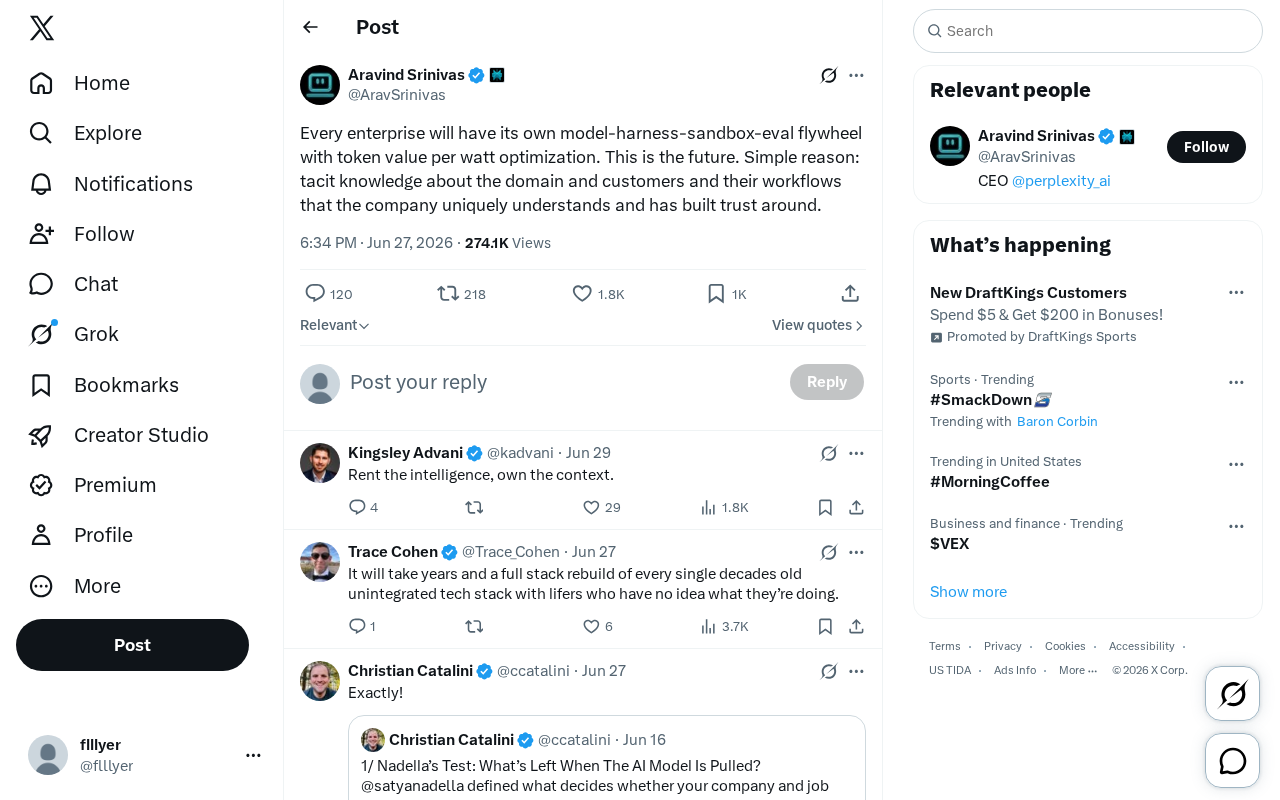
The Enterprise AI Flywheel: Building a Model-Eval Loop as a Competitive Moat
The core of enterprise AI isn't calling general models—it's building a self-reinforcing "model-harness-sandbox-eval" flywheel. This article analyzes the four components, tacit knowledge moats, and the "token value per watt" efficiency metric.
Read more →

·3 min
Dify Comprehensive Guide: The Open-Source Platform for Building AI Apps Without Code
Deep dive into Dify, the open-source LLM app development platform featuring visual workflow engine, RAG knowledge base, Agent capabilities, hundreds of model integrations, Docker deployment, and comparisons with LangChain, Coze, and FastGPT.
Read more →

·3 min
AI Engineering in Practice: From Vibe Coding to Enterprise-Grade Development
Explore three AI programming modes — Vibe Coding, Plan Mode, and AI Engineering — with practical comparisons of Claude Code, Codex, and domestic LLMs, plus SDD-driven enterprise development workflows.
Read more →

·3 min
Andrew Ng's Advanced AI Prompting Guide: Core Methods for Going from Beginner to Expert
Based on Andrew Ng's latest AI prompting tutorial, learn the core gaps between beginners and experts: providing context, overcoming sycophancy, iterative workflows, and four key principles.
Read more →

·3 min
N2 Model as a Free Claude Code Alternative: Does Voice-Driven AI Coding Actually Work?
N2 model, built on Qwen 3.5, is completely free and integrates with Claude Code. Real-world tests show voice commands generating full landing pages, with AgentOS enabling shared memory and multi-model collaboration for zero-cost AI coding.
Read more →

·3 min
OpenAI Reveals Its AI Policy Stance: Why Transparency Matters
OpenAI publicly outlines its AI policy stance and advocacy approach. This article analyzes the logic behind transparency, the challenges of tech policy lobbying, and implications for AI regulation.
Read more →

·4 min
AI Full-Stack Development Architecture: A Three-Layer Progressive Path from Prototype to Production
A detailed guide to AI full-stack development architecture covering Node.js+TypeScript+Monorepo engineering, Docker CI/CD deployment, and AI engine design with interview tips.
Read more →

·3 min
Vibe Coding Tutorial for Beginners: Three Steps from Idea to Product Launch
A complete Vibe Coding guide: use natural language to drive AI for product development — from ideation and PRD generation to UI design and code implementation. Build launchable products with zero coding skills.
Read more →

·3 min
Building AI Chatbots for Foreign Clients: A Side Hustle Breakdown at $150–$800 Per Project
A detailed breakdown of building AI chatbots for overseas clients as a side hustle: $150–$800 per project, no coding or English fluency required. Covers pricing, no-code tools, and a 5-step path to your first client.
Read more →