#real-world code benchmark
1053 related articles

·2 min
Kimi K2.7 + Hermes Agent Real-World Test: Generate Complete Applications with a Single Sentence
Hands-on test of Kimi K2.7 integrated with Hermes Agent: generate complete 3D games and web OS apps from a single sentence, with benchmark data vs Claude 3.5.
Read more →

·4 min
5 Models Coding Showdown: Claude, GPT, DeepSeek, M3 — Who's the Best Engineering Tool?
Hands-on comparison of Claude Opus 4.8, GPT 5.5, MiniMax M3, DeepSeek V4 Pro, and Mimo 2.5 Pro across SVG drawing, 3D game generation, elevator scheduling, and real bug fixing.
Read more →

·3 min
AI Now Writes Over 80% of Code: What Doubling Capability Every 4 Months Really Means
Anthropic reveals Claude now writes over 80% of its code, with AI capability doubling every four months. Three real cases show the speed of AI's rise and the shrinking window for human adaptation.
Read more →

·3 min
Replit President: Writing Code Will Become Insignificant — Ideas Are Everything
Replit's president shares insights on AI programming's future: how a 40M-user platform uses Claude to eliminate coding barriers, making natural language the new programming language.
Read more →

·3 min
Agent Skills: Folders as Skills — Making AI Produce Precise, Template-Based Output
Agent Skills splits AI capabilities into independent skill folders with on-demand loading and progressive disclosure, cutting token costs by 80% and reducing hallucinations for template-based output.
Read more →

·3 min
Xiaomi MIMO vs. Huawei Pangu AI Strategy Comparison: The Android vs. iOS Battle of the Agent Era
Xiaomi releases open-source MIMO Code while Huawei enters the Agent era with Pangu. Compare their AI strategies: Xiaomi's Android-like open ecosystem vs. Huawei's iOS-like vertical integration.
Read more →

·3 min
Gemma 4 Open-Source Model Local Deployment Guide: Ollama Installation & Mobile Setup
Step-by-step guide to deploying Google's Gemma 4 open-source model locally with Ollama and running the lightweight version on mobile with tool calling support.
Read more →

·2 min
The Decline of Tokenmaxxing: Why Selling Outcomes Matters More Than Selling Tokens
The Tokenmaxxing craze is fading as enterprise AI procurement shifts from chasing Token counts to focusing on actual business outcomes. Learn why outcome-based AI evaluation is the right approach.
Read more →

·1 min
Musk's Never Give Up Philosophy: From Near Bankruptcy to Industry Disruption
Decoding the real stories behind Musk's 'I don't ever give up' — from SpaceX's three failed launches to Tesla's production hell, and what his extreme persistence means for tech entrepreneurs.
Read more →

·3 min
Codex vs Claude Code: An In-Depth Comparison of AI Coding Agents
In-depth comparison of Codex, Claude Code, and Cursor across pricing, features, GitHub integration, and team collaboration to help developers pick the best AI coding agent.
Read more →

·2 min
Nex N2 Pro Real-World Testing: Top 5 on Official Benchmarks, Only 12th in Independent Tests
Deep-dive testing of Nex N2 Pro open-source Agent model comparing official benchmarks vs independent results. The 397B parameter model shows decent frontend generation but ranks 12th independently, not top 5 as claimed.
Read more →
·3 min
Deep Dive into Claude Opus 4.8: The AI Paradox of Being More Honest Yet Better at Gaming Tests
Anthropic releases Claude Opus 4.8 with major coding gains and zero false reporting. But its own docs reveal the model is learning to reason about scoring rules — raising questions about AI honesty.
Read more →

·2 min
Claude 4.6 vs GPT-5.1 vs DeepSeek-R1: A Hands-On Comparison of Coding Capabilities
In-depth comparison of Claude Sonnet 4.6, GPT-5.1 Codex, and DeepSeek-R1 across API pricing, specs, and SWE-Bench Verified scores to help developers pick the best AI coding assistant.
Read more →
·3 min
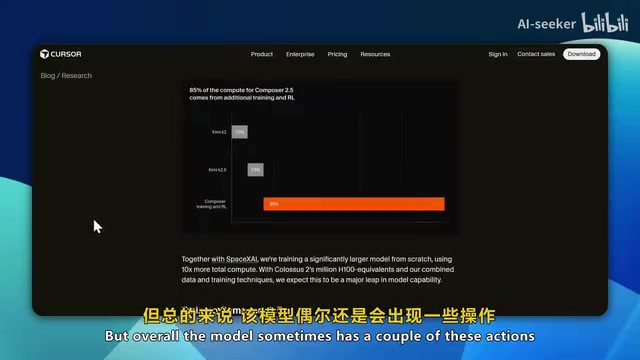
Cursor Composer 2.5 In-Depth Review: Top-Tier Coding Experience at One-Tenth the Price
In-depth review of Cursor Composer 2.5 coding model vs Opus 4.7 and GPT 5.5. Covers macOS clone, frontend generation, 3D scenes, and more—analyzing its speed-intelligence ratio and price advantage.
Read more →

·3 min
LFM2.5 Local Deployment Hands-On: An 8B Parameter Model That Outperforms GPT-o3s in Tool Calling
Hands-on test of Liquid AI's LFM2.5 local deployment: architecture breakdown, 16GB VRAM troubleshooting, and GraphRAG tool-calling benchmarks vs GPT-o3s.
Read more →

·2 min
In the Era of Incremental Model Upgrades, AI Platforms Are the Real Productivity Variable
AI model upgrades are hitting diminishing returns. The real differentiator is AI Agent platforms like Codex that restructure workflows — task orchestration, cross-device collaboration, and automation are what truly eliminate human overhead.
Read more →

·2 min
Claude Proactively Discovers Bugs in an Open-Source Library: AI Evolves from Coding Assistant to Collaborator
Simon Willison releases asyncinject 0.7, fixing bugs proactively discovered by Claude. This case shows AI evolving from passive coding assistant to active code reviewer and collaborator.
Read more →

·4 min
AI Engineer Job Search: The Capability Leap from Demo to Production System
AI job demand is surging but companies can't find qualified candidates. Learn the 3 core skills—advanced RAG, local model deployment, and full-stack monitoring—to leap from demo builder to production engineer.
Read more →

·3 min
Cursor Composer 2.5 In-Depth Review: One-Tenth the Cost of Opus — Is It Worth Using?
In-depth review of Cursor Composer 2.5 coding model through real-world tests including macOS cloning, landing pages, and 3D scenes. At just 7 cents per task, it offers stunning value vs Opus.
Read more →

·4 min
Claude Fable 5 Hands-On Review: Crushes GPT 5.5, But the Cost Is Brutal
In-depth hands-on review of Claude Fable 5's coding capabilities through full-stack and long-form complex tasks, comparing performance, costs, and use cases vs GPT 5.5 and Opus 4.8.
Read more →