#self-play
44 related articles

·5 min
How Does AI Conquer Imperfect Information Games? A Deep Dive into Tactico
Chess and Go have been conquered by AI, but imperfect information games with hidden data are the true frontier. This article dives deep into Tactico: how imitation learning + self-play RL train AI toward Nash equilibrium.
Read more →

·7 min
AI Agent Runs a Fully Automated Chess Channel: A Real-World Practice of Combining LLMs with Engines
A German engineer built a fully automated chess YouTube channel with an AI Agent, combining LLMs and chess engines to auto-generate explainer videos nightly, reaching 500K views. Here's the tech architecture, tool design, and real costs.
Read more →

·5 min
GPT-5.6 Three-Model Breakdown: Sol/Terra/Luna Pricing and the Regulatory Dilemma
In-depth analysis of OpenAI's GPT-5.6: Sol, Terra, Luna pricing, Cerebras inference advantages, and how OpenAI and Anthropic navigate government regulation amid US-China AI competition.
Read more →

·2 min
Behavior Cloning Training Failing? A Systematic Guide to Data Quality and Tuning
Behavior cloning model barely moves after training? This guide systematically covers data alignment, class imbalance, learning rate, and epoch count — with a step-by-step debugging checklist and advanced alternatives like DAgger.
Read more →

·4 min
FTPO: A Training-Level Solution to AI Repetition Loops
FTPO (Final Token Preference Optimization) tackles AI "Doom Loops" at the training level rather than patching them at inference time — exploring its principles, value for small/quantized models, and open challenges.
Read more →
·6 min
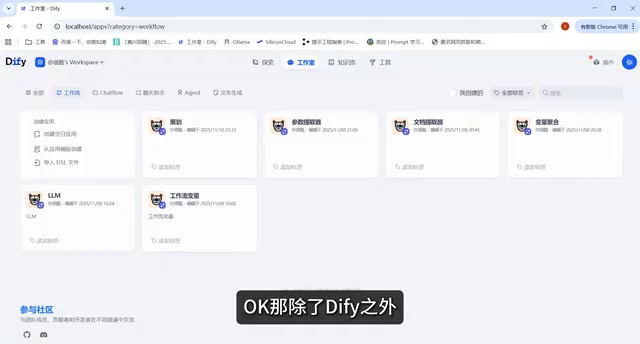
Complete Guide to Deploying Dify Locally: Docker + Ollama + RAG Setup Tutorial
A detailed guide to deploying the Dify agent platform locally: from Docker setup and integrating Ollama + DeepSeek local LLMs to workflow orchestration and RAG knowledge base construction.
Read more →

·6 min
GPT-5.6 Released: Three-Tier Soul/Terra/Luna Lineup, Orchestration Baked Into the Model
OpenAI releases the GPT-5.6 series with Soul, Terra, and Luna models. Ranked first on Terminal Bench coding evaluation, Ultra mode natively bakes agent orchestration into the model, while revealing Agentic Trace data as the core competitiveness of next-gen AI training.
Read more →
Leanstral 1.5: AI-Assisted Formal Proo…
·3 min
Leanstral 1.5: AI-Assisted Formal Proofs, Making Lean Theorem Verification Accessible to All
Leanstral 1.5 combines LLMs with Lean theorem proving to lower the barrier to formal proofs. Explore its core value, technical approach, and how AI can make formal mathematics accessible to all.
Read more →

·3 min
Grok CLI + Fish Audio in Practice: Building a Full-Stack AI Voice Studio at Zero Cost
Fish Audio offers free S2.1 Pro TTS API in 83 languages. See how creator KatKat used Grok CLI's Composer 2.5 and DeepSeek to build Voxweaver Studio in 42 minutes.
Read more →

·4 min
Deconstructing the Core Principles of AI Agents: A Deep Dive into the Control, Perception, and Action Modules
A systematic breakdown of the three core AI Agent modules (Control, Perception, Action), with deep analysis of AutoGPT, BabyAGI, HuggingGPT, LlamaIndex architectures and Chain-of-Thought reasoning.
Read more →

·2 min
Why Is AI Progressing Fastest in Coding? A Deep Dive into Four Structural Advantages
AI coding advances faster than writing or image generation due to four structural advantages: instant feedback, GitHub's natural high-quality data, unified quantifiable standards, and perfect fit for reinforcement learning.
Read more →
 Tutorials
·3 min
Agent Tuning: A Complete Guide to Training LLMs with Agent Capabilities
A deep dive into Agent Tuning principles and practices, covering why Agent training is needed, the evolution from Prompt to RAG to Agent, development workflows, and cost assessment for private deployment.
Read more →
 Tech Frontiers
·3 min
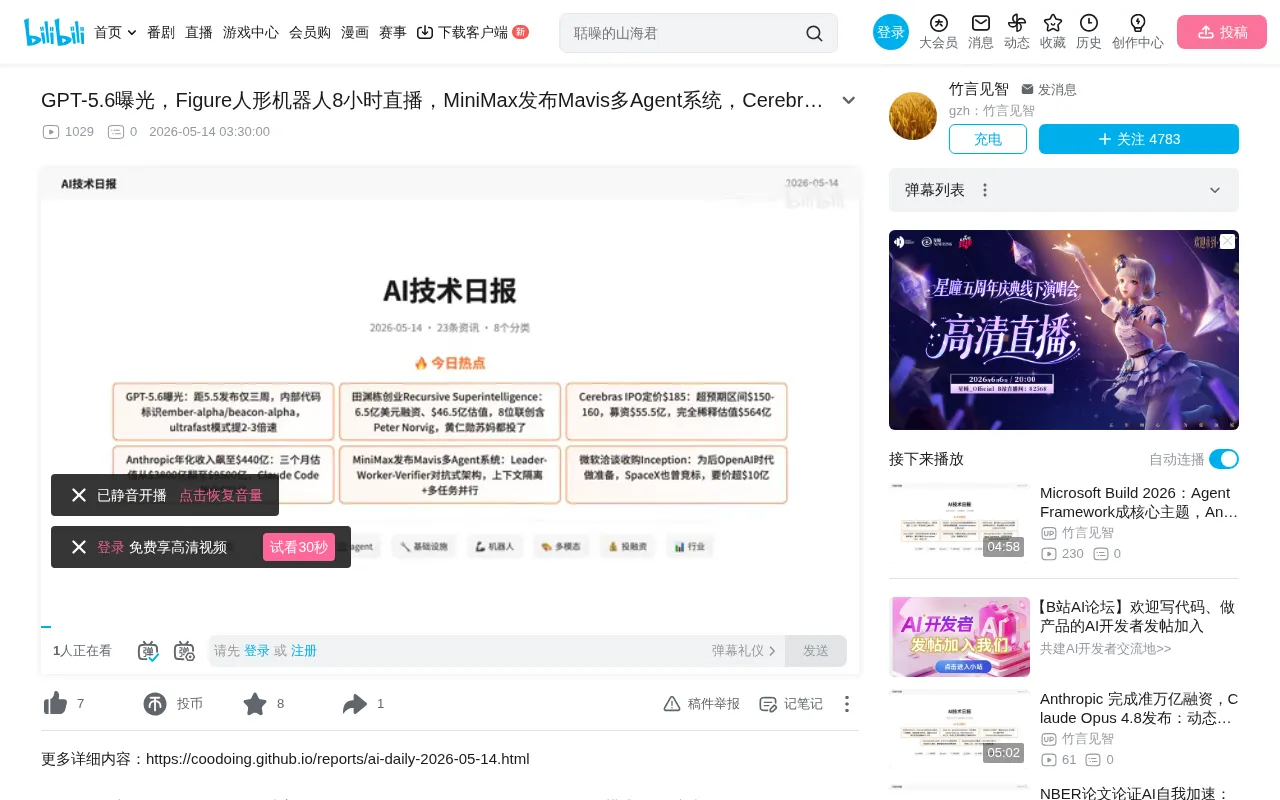
GPT-5.6 Internal Testing Begins: A Complete Breakdown of the Week's Biggest AI Developments
GPT-5.6 internal testing launches UltraFast mode, Codex goal-driven mode revolutionizes AI programming, MiniMax cuts costs 360x, Anthropic vs OpenAI valuation war, Cerebras IPO raises $5.55B, Figure robot validates 8-hour autonomous ops, Google Vio 3.1 leads AI video.
Read more →
 Deep Dives
·4 min
Introduction to Artificial Intelligence: A Comprehensive Guide from Basic Concepts to Core Machine Learning Principles
A comprehensive guide to AI definitions, working principles, strong vs. weak AI, and the relationship between machine learning and deep learning. Perfect for beginners entering the AI field.
Read more →
 Product Reviews
·3 min
Google Jules 2.0 Major Upgrade: Deep Dive into Seven New Features
Google's AI coding assistant Jules exits Beta with environment snapshots, Critic Agent reinforcement learning code review, interactive planning, web preview, web search, and more.
Read more →
 Tutorials
·3 min
Complete Breakdown of Andrew Ng's Agent Course: A Practical Guide to the Five Core Modules of AI Agent Development
Deep dive into Andrew Ng's viral AI Agent course covering five core modules: Reflection, Planning, Tool Use, Multi-Agent Collaboration, and Memory, with practical learning paths for LLM agent development.
Read more →
 Expert Opinions
·1 min
Karpathy on Vibe Coding and Agentic Engineering: A Paradigm Shift for Programmers
Karpathy explains the paradigm shift from vibe coding to agentic engineering, how LLMs reshape programming in the Software 3.0 era, and why verifiability matters.
Read more →
 Research
·1 min
Calico Teams Up with Google Co-Scientist: How AI Is Cracking the Challenges of Aging Research
Google's Calico Life Sciences uses AI tool Co-Scientist to integrate cross-disciplinary literature and generate new aging research hypotheses, accelerating scientific discovery.
Read more →
 Research
·2 min
Google Antigravity Uses 93 AI Agents to Build a Complete Operating System from Scratch
Google Antigravity built a complete OS from scratch using 93 AI agents and a single prompt—including kernel, drivers, and all components—for under $1,000.
Read more →
 Tutorials
·2 min
DeepSeek R1 Usage Guide: Prompt Techniques & Practical Tips (2025)
A detailed guide to DeepSeek R1's reasoning capabilities and prompt techniques, covering reasoning vs. general models, core capabilities, and practical prompt strategies for 2025.
Read more →