#theoretical physics
120 related articles
High-Speed Atomic Force Microscopy: A …
·2 min
High-Speed Atomic Force Microscopy: A Real-Time Revolution in Nanoscale Dynamic Imaging
High-Speed AFM (HS-AFM) raises imaging frame rates to tens of frames per second, enabling real-time video of nanoscale dynamics like steel etching and live bacteria. A deep dive into HS-AFM's principles, breakthroughs, and applications.
Read more →
Box3D Open-Source 3D Physics Engine Re…
·4 min
Box3D Open-Source 3D Physics Engine Released: A New Work from Box2D Creator Erin Catto
Erin Catto, creator of Box2D, releases open-source 3D physics engine Box3D, combining Box2D's architecture with Valve Rubikon's commercial-grade tech, featuring cross-platform determinism and SIMD-accelerated contact solving.
Read more →
·8 min
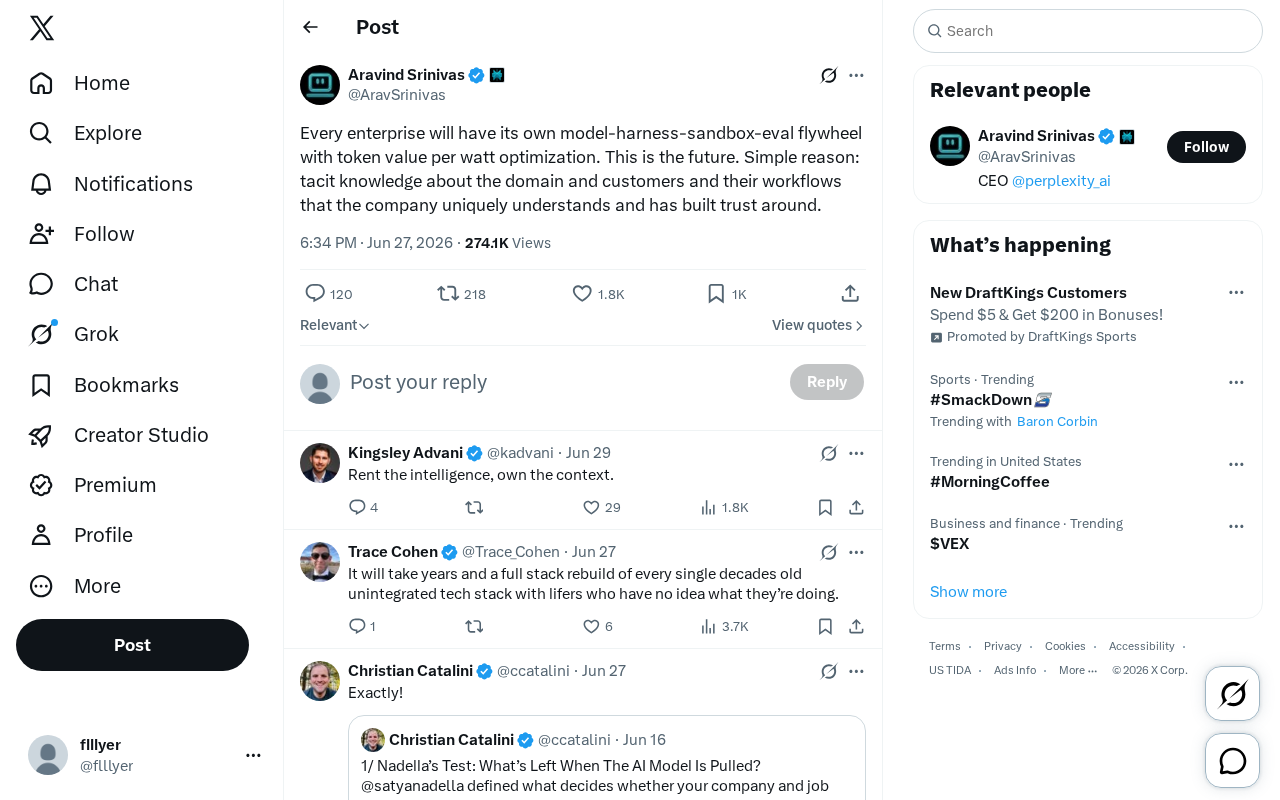
The Enterprise AI Flywheel: Building a Model-Eval Loop as a Competitive Moat
The core of enterprise AI isn't calling general models—it's building a self-reinforcing "model-harness-sandbox-eval" flywheel. This article analyzes the four components, tacit knowledge moats, and the "token value per watt" efficiency metric.
Read more →

·2 min
Youdao AI Tutoring Pen Space X Review: Is This $190 STEM Learning Device Worth Buying?
In-depth review of the Youdao AI Tutoring Pen Space X: analyzing core features, pricing value, and buying advice for this 1,399 RMB smart learning device covering English, STEM, and all subjects from elementary to high school.
Read more →
Google Co-Scientist Explained: A Gemin…
·2 min
Google Co-Scientist Explained: A Gemini-Powered Multi-Agent AI Research System
Deep dive into Google's Co-Scientist: a Gemini-powered multi-agent AI system that autonomously generates hypotheses, conducts agent debates, and iteratively evolves research directions.
Read more →

·2 min
AlphaFold Key Figure John Jumper Departs: A Nine-Year Partnership with Demis Hassabis Comes to an End
DeepMind's Demis Hassabis bids farewell to AlphaFold lead John Jumper after 9 years. A look at their journey from protein folding breakthroughs to the Nobel Prize in Chemistry.
Read more →

·3 min
Fusion Startup Funding Landscape: A Deep Dive into the $7.1 Billion Flow and Industry Dynamics
Global fusion startups have raised $7.1B, heavily concentrated in top players. A deep analysis of funding patterns, tech pathways, commercialization challenges, and the investment logic behind this ultimate energy bet.
Read more →

·3 min
One Person + AI Agent Team: Building a Web Game from Idea to Finished Product
A developer built a self-designed AI Agent collaboration system that turns a one-sentence idea into a complete playable Web game, auto-generating GDD docs and code.
Read more →

·3 min
OpenAI Codex Powers Black Hole Simulation: 1000x Algorithm Speedup Brings First-Ever Black Hole Video Within Reach
The EHT team used OpenAI Codex to speed up black hole plasma simulation algorithms by 1000x, from ten days to minutes. Learn how Codex is enabling the first-ever black hole video.
Read more →

·3 min
A $10 Million Research Fund Launches: What Happens When Millions of AI Agents Interact with Each Other?
Google.org and Schmidt Sciences launch a $10M fund to study collective behavior and emergent risks of multi-agent AI systems, from flash crashes to mass AI Agent deployment.
Read more →

·3 min
Codex in Action: One Prompt, 47 Minutes, a Complete Algorithm Research Paper
Testing OpenAI Codex: one detailed prompt generates a complete algorithm paper in 47 minutes, including working code, figures, and LaTeX manuscript. Covers prompt design, quality assessment, and real submission experience.
Read more →

·2 min
Is Time an Illusion? A Deep Dive into What Physics Reveals About the Nature of Time
From Einstein's block universe to entropy and the arrow of time to wormhole time travel, explore how modern physics overturns our understanding of time's nature.
Read more →

·2 min
Top Cambridge Lecture: Why Quantum Mechanics' Century-Long Impact May Far Exceed AI's
In a Rothschild Lecture at Cambridge's Newton Institute, Bristol professor Marklof explains how quantum mechanics reshaped civilization over a century and why its impact may surpass AI.
Read more →

·2 min
MiniMax M3 Hands-On Review: 7 Hardcore Tasks Reveal Its True Coding Ability
MiniMax M3 scores just 58.3 in hands-on testing across 7 hardcore tasks including 3D scenes, physics sims, and optical refraction — formulas right, demos broken.
Read more →
·2 min
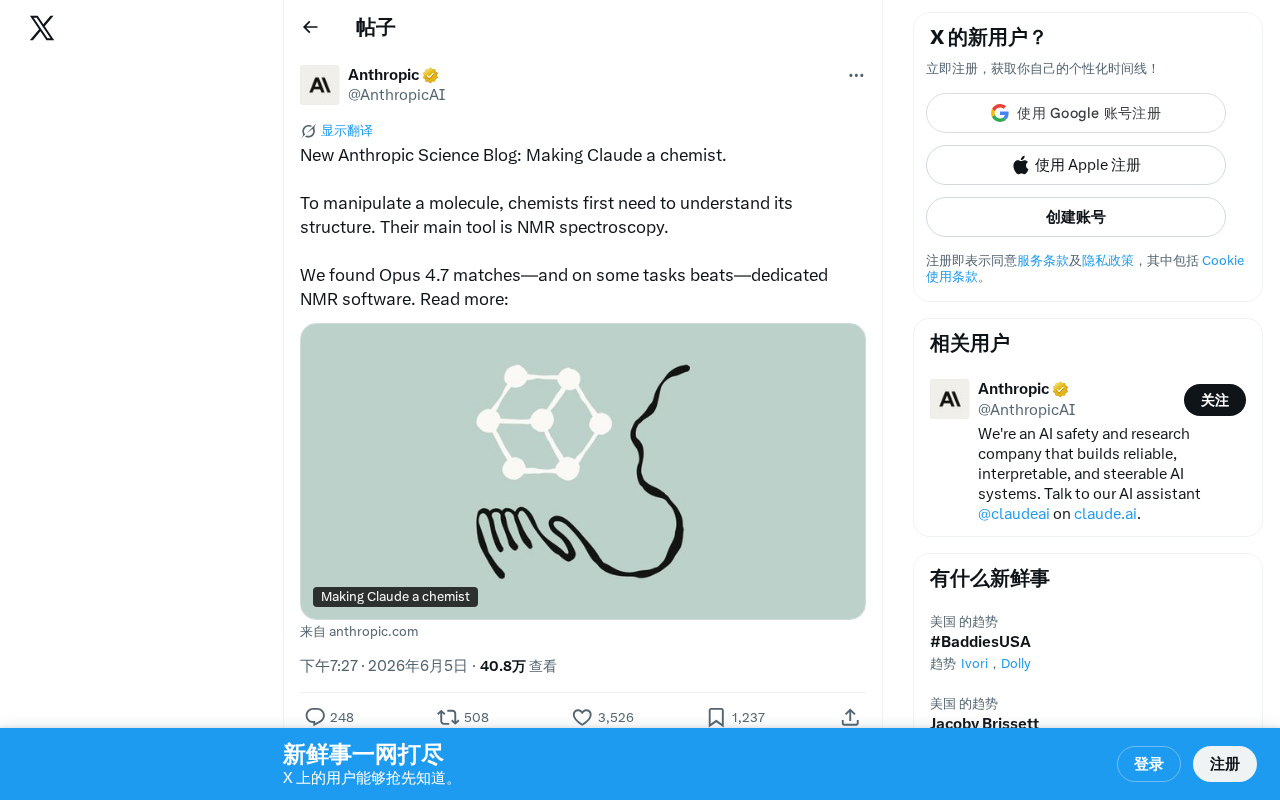
Claude Opus 4.7 Conquers NMR Spectroscopy Analysis: A General-Purpose AI Rivaling Specialized Chemistry Software
Anthropic's latest research shows Claude Opus 4.7 matches or surpasses dedicated NMR spectroscopy software. Explore the technical significance, drug discovery implications, and future of AI science tools.
Read more →

·3 min
Xi Yin Joins OpenAI: What It Means When Top Scientists Leave Universities
Harvard's youngest Chinese full professor Xi Yin reportedly joins OpenAI. His shift from string theory to AI reflects how compute is replacing talent as the core research resource.
Read more →

·1 min
GPT-Rosalind: A Deep Dive into OpenAI's First Frontier Model for Scientific Research
OpenAI launches GPT-Rosalind, its first frontier AI model for biology, drug discovery, and translational medicine. A deep dive into its capabilities, trusted access deployment, and industry impact.
Read more →
 Deep Dives
·4 min
AI Hallucinations: Why Large Language Models Inevitably "Make Things Up" and How to Deal With It
Deep dive into AI hallucination's three root causes: training objective flaws, exposure bias, and probabilistic generation. Covers classification and practical mitigation strategies including RAG.
Read more →
Deep Dives
Where Did the Antimatter Go? The Most …
·2 min
Where Did the Antimatter Go? The Most Profound Unsolved Mystery of the Universe
The Big Bang should have produced equal matter and antimatter, yet antimatter nearly vanished. Explore antimatter's discovery, CERN experiments, production challenges, and the matter-antimatter asymmetry puzzle.
Read more →
Deep Dives
How the Higgs Field Gives Particles Ma…
·4 min
How the Higgs Field Gives Particles Mass: From Electroweak Unification to Symmetry Breaking
A deep dive into how the Higgs field gives particles mass, from electroweak unification to symmetry breaking, the discovery of the Higgs boson, and the critical phase transition in the early universe.
Read more →