#token optimization LLM
1193 related articles
 Tutorials
·3 min
Hermes Agent in Practice: A Complete Breakdown from ReAct Loop to Autonomous Skill Evolution
Deep dive into Hermes Agent's four progressive cases: terminal ReAct loop, Feishu AI assistant, four-layer persistent memory, and three-stage Skill evolution with DeepSeek support.
Read more →
 Tutorials
·3 min
The Complete Guide to Claude Code Commands: 10 Core Commands & Practical Workflows
A systematic guide to Claude Code's 10 core commands, keyboard shortcuts, CLI parameters & 4 practical workflows covering context management, code review, model switching & cost optimization.
Read more →
 Tutorials
·3 min
Gemini CLI Complete Guide: MCP Extensions & Memory Files in Practice
Complete guide to Google Gemini CLI setup, MCP Server extensions, and memory files. Covers 1M token context analysis, Context7 docs, Taskmaster task breakdown, and more.
Read more →
 Tutorials
·3 min
Spring AI + MCP Protocol in Practice: Tool Calling, Security Authentication, and Enterprise Deployment
Deep dive into Spring AI and MCP protocol integration, covering tool calling, OAuth security, horizontal scaling, and context optimization for enterprise AI Agent services.
Read more →
 Industry Insights
·4 min
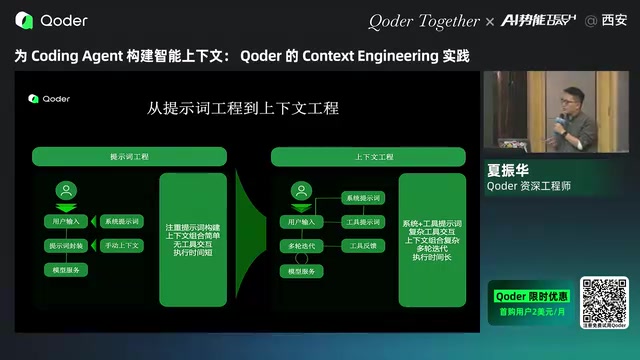
Qoder's Context Engineering in Practice: Four-Layer Retrieval Engine and Memory System Architecture
Deep analysis of Qoder's (Tongyi Lingma international edition) context engineering architecture, including its four-layer retrieval engine, memory engine, context caching, and core product design.
Read more →
 Industry Insights
·3 min
Should Custom Software Teams Go All-In on LLMs? ChatGPT Itself Gave the Answer
Should custom software teams go all-in on LLMs? Through a deep conversation with ChatGPT, we analyze scenario selection, Token costs, and industry fit to provide a rational decision framework for ToB developers.
Read more →
 Product Reviews
·2 min
Agent Memory: Giving AI Coding Agents Persistent Memory Across Sessions
Agent Memory is an open-source local memory layer providing persistent, cross-session, cross-tool long-term memory for AI coding agents like Claude Code, Cursor, and Codex.
Read more →
 Tutorials
·3 min
35 Lines of Prompts Let Codex Auto-Optimize Your Workflow — Reposted by OpenAI's President
An OpenAI employee used just 35 lines of prompts to have Codex analyze 30 days of work history, identify repetitive tasks, and generate reusable automated Skills. Combined with screen reading and long-term memory, Codex is becoming a proactive workflow optimization agent.
Read more →
 Tech Frontiers
·2 min
Claude Opus 4.8 Thinking Effort Calibration Explained: A Critical Optimization Direction for AI Reasoning Models
Anthropic releases Claude Opus 4.8 with optimized thinking effort calibration. This article explains what it is, why it matters for AI reasoning models, and its impact on industry competition.
Read more →
 Product Reviews
·3 min
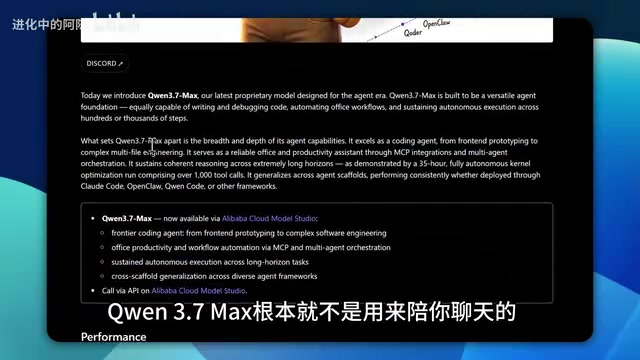
Deep Dive into Qwen3.7 Max: One-Tenth the Cost of GPT, Purpose-Built for AI Agents
Alibaba's Qwen3.7 Max targets AI agents with coding tasks at just $1.30 (one-tenth of GPT-5), supporting 35 hours of continuous execution. Deep analysis of its cost advantages, front-end capabilities, and three key limitations.
Read more →
 Product Reviews
·2 min
Claude Opus 4.8 Real-World Testing: What $50 in Tokens Actually Gets You
In-depth testing of Claude Opus 4.8 across game dev, UI reproduction, 3D scenes, and tool building—$50 in Tokens reveals its true capabilities and limits.
Read more →
 Tutorials
·3 min
Build a Claude Code Agentic OS in 3 Steps — Stop Using AI Like a Slot Machine
Learn how to transform Claude Code from a random prompting tool into a systematic Agentic OS through three layers: architecture, Obsidian memory, and an observability dashboard.
Read more →
 Tech Frontiers
·1 min
Windsurf Integrates Claude Opus 4.7 Fast Mode with 2.5x Speed Boost
Windsurf integrates Claude Opus 4.7 fast mode with 2.5x speed boost while retaining full intelligence. Analysis of its impact on developer productivity and AI coding tool competition.
Read more →
 Research
·2 min
Agent Loops in Practice: Transforming Token Output into Productivity from CUDA Kernels to Automated Research
Deep dive into how the Humanize framework transforms LLM tokens into engineering productivity via Agent Loops. Covers KDA winning CUDA kernel contests, virtual hardware optimization, and 50% research cost reduction.
Read more →
 Tutorials
·2 min
Tutorial: Deploying a PD-Disaggregated SGLang Multi-Node Inference Cluster on AMD GPUs
Learn how to deploy a PD-disaggregated SGLang inference cluster on AMD GPUs using a single config file, boosting LLM throughput and latency performance.
Read more →
 Tech Frontiers
·2 min
SGLang v0.5.12.post1 Released: DeepSeek V4 Stability Fixes and Blackwell Adaptation
SGLang v0.5.12.post1 stability patch details: 12 critical fixes covering DeepSeek V4 garbled text and crashes, NIXL PD disaggregated inference logic, Blackwell B300 adaptation, and cold start optimization.
Read more →
 Tech Frontiers
·2 min
Step 3.7 Flash: Deep Dive into the 198B Sparse MoE Multimodal Model
Deep dive into StepFun AI's Step 3.7 Flash, a 198B sparse MoE vision-language model with 256K context and 3-level reasoning, excelling in multimodal understanding, AI coding, and Agent tool orchestration.
Read more →
 Tech Frontiers
·2 min
LFM2.5-8B-A1B: A MoE Model with 1.5B Active Parameters Delivering 4x Its Weight Class Performance
Liquid AI releases LFM2.5-8B-A1B, a MoE model with 8B total params but only 1.5B active, matching 6B-class models in tool calling. Supports 128K context, local deployment, multilingual, with SGLang Day-0 support.
Read more →
 Industry Insights
·2 min
AMD MI355X Beats B200: Full-Stack Optimization Breakdown for 5% Lower TCO on DeepSeek-R1 Inference
AMD Instinct MI355X achieves 5% lower TCO than NVIDIA B200 on DeepSeek-R1 disaggregated inference via SGLang+MoRI full-stack optimization with 1.25x per-GPU throughput.
Read more →
 Tech Frontiers
·1 min
Cloudflare Contributes Critical KV Cache and Mooncake Fixes to SGLang
Cloudflare contributes decode KV cache offload and Mooncake recovery fixes to SGLang, resolving garbled output under high concurrency for Kimi K2.6 and enabling automatic fault recovery in distributed inference.
Read more →