#token optimization LLM
909 related articles

·2 min
Grok 4.6 and 4.7 Roadmap Leaked: Analyzing xAI's Rapid Iteration Strategy
Reddit leaks suggest Grok 4.6 arrives around August 7 and Grok 4.7 in early September. This article analyzes xAI's rapid iteration strategy and token efficiency improvements.
Read more →

·3 min
Gemini Managed Agents API Update: Environment Hooks and Free Tier Fully Explained
Google Gemini Managed Agents API introduces environment hooks, model selection, free tier support, and default model upgrades—empowering AI Agent developers with stronger execution control and lower barriers to entry.
Read more →

·3 min
New Gemini Jailbreak Method: Deep Analysis of the Observer and Accomplice Technique
Deep analysis of a Gemini jailbreak technique—the Observer and Accomplice method—examining how it exploits contextual manipulation and reasoning chain inconsistencies to bypass AI safety alignment.
Read more →

·3 min
Lessons from Claude Code's 80% Prompt Reduction: Less Is More in Prompt Engineering
Anthropic cut Claude Code's system prompt by 80% and got better performance. Learn why verbose prompts hurt, how to streamline them, and key takeaways for AI developers.
Read more →

·3 min
Is Perplexity Still Worth Renewing? Analyzing the Optimal Multi-Model Subscription Strategy
Deep analysis of whether Perplexity Pro remains the best multi-model subscription choice, comparing Poe, You.com, API solutions and more, with a decision framework to find your optimal AI subscription.
Read more →

·3 min
Lessons from Claude Code's 80% Prompt Reduction: Less Is More in Prompt Engineering
Anthropic cut Claude Code's system prompt by 80% and got better results. Learn why verbose prompts hurt performance, how to streamline them, and key lessons for AI developers.
Read more →

·2 min
Gemini 3.6 Flash Hands-On: Upgrades in Both Quality and Token Efficiency
In-depth analysis of Google Gemini 3.6 Flash's core upgrades including output quality improvements and token consumption optimization, with developer migration advice.
Read more →

·2 min
Gemini 3.5 Flash-Lite: A Low-Cost, High-Throughput Powerhouse for Scaling AI
Deep dive into Google's Gemini 3.5 Flash-Lite model. This lightweight model is designed for high-frequency repetitive tasks like ticket sorting and data extraction, solving enterprise AI scaling challenges through ultra-low cost and high throughput.
Read more →

·2 min
Gemini 3.5 Flash-Lite: A Low-Cost, High-Throughput Powerhouse for Scaling AI
A deep dive into Google's Gemini 3.5 Flash-Lite model. Designed for high-frequency repetitive tasks like ticket sorting and data extraction, it tackles the core cost challenge of enterprise AI scaling through ultra-low pricing and high throughput.
Read more →

·3 min
Ctrlb-decompose: Denoise Logs Before Feeding Them to LLMs — Save Tokens, Improve Quality
Ctrlb-decompose is an open-source log denoising tool that strips redundant noise via templatization and clustering before sending logs to LLMs, reducing Token costs and improving AI analysis quality.
Read more →

·3 min
Ctrlb-decompose: Denoise Logs Before Feeding Them to LLMs — Save Tokens, Improve Quality
Ctrlb-decompose is an open-source log denoising tool that strips redundant noise from logs before sending them to LLMs, reducing Token costs and improving AI analysis quality for AIOps and observability.
Read more →

·2 min
HuggingFace Open-Source Voice Assistant: A Complete Guide to Local Deployment
A deep dive into HuggingFace's speech-to-speech open-source project, covering its modular VAD, STT, LLM, and TTS pipeline architecture and the advantages of local deployment for privacy, cost, and latency.
Read more →
·3 min
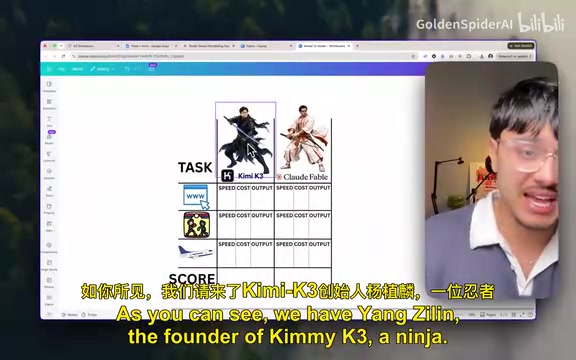
Kimi K3 vs Claude Real-World Test: Near-Equal Performance at 1/8 the Price
Real-world comparison of Kimi K3 vs Claude flagship across e-commerce pages, 3D fighting games, and flight simulators. Kimi K3 delivers 90% output quality at 1/8 the price with faster speeds and local deployment support.
Read more →

·3 min
Claude Code vs Codex: Hands-On Comparison and Installation Guide for AI Programming Tools
In-depth comparison of Claude Code and Codex AI programming tools covering accuracy, installation, and network setup tips to help developers choose the best solution.
Read more →

·5 min
Loop Engineering Explained: The New Programming Paradigm Where AI Prompts Itself
Loop Engineering is a paradigm shift in AI usage. Learn how to build automated loops where agents explore, execute, and verify tasks autonomously, with a hands-on e-commerce case study.
Read more →

·4 min
Cursor Start India Plan at ₹649/Month: Decoding the Regional Pricing Strategy for AI Coding Tools
Cursor launches its Start plan for India at ₹649/month (~$7.70), featuring Grok 4.5 and Composer Agent. A deep dive into the PPP pricing strategy and its market implications.
Read more →

·5 min
Learn AI Agent Development from Scratch: A 3-Step Practical Path to Get Started Quickly
How to learn AI Agent development from scratch? This article outlines a clear 3-step path: Python crash course, LLM theory & practice, and LangChain framework project implementation.
Read more →

·3 min
Agent Skill Routing: Engineering Trade-offs Between Retrieval and LLM, and the Two-Stage Layered Architecture
Deep dive into Agent skill routing: comparing pure model vs. pure retrieval approaches, with a detailed two-stage layered architecture balancing accuracy, latency, and cost.
Read more →

·4 min
Spring AI 2.0 in Practice: Building an Enterprise RAG Knowledge Base Q&A System with Cursor
Build an enterprise RAG knowledge base Q&A system using Spring AI 2.0, Cursor AI programming, Ollama local deployment, and Redis vector storage. Runs on just 4GB VRAM.
Read more →

·3 min
Kimi K3 Deep Dive: How a 3 Trillion Parameter Open-Weight Model Reaches the Frontier
Deep dive into Kimi K3: the largest open-weight model at 3 trillion parameters, surpassing Opus-level models in Agentic coding with 896-expert MoE architecture, 1M token context, at Sonnet pricing.
Read more →