10 AI Agents Developed a Game Fully Automatically — I Didn't Write a Single Line of Code

Developer writes zero code — 10 parallel AI Agents autonomously build a complete game from scratch.
An indie developer ran a fully AI-driven game development experiment: without writing any code, they described their expectations and let approximately 10 AI Agents autonomously handle gray-box construction, self-playtesting, and multi-round iteration. The AI was instructed to auto-screenshot every key milestone, turning the dev log into a replayable narrative. Even after a laptop crash overnight, full documentation allowed the AI to effortlessly restore the Unity project with no content lost. The author called the AI's execution capability "absolutely mind-blowing," suggesting that future creative barriers may shift from technical mastery to the clarity of expressing ideas.
From a Single Scene to a Complete World: An AI Agent Game Development Experiment
Four months ago, an indie developer was struggling just to build a simple game scene — let alone construct a vast, internally consistent world. This experiment tells a very different story. The author didn't personally develop any part of the game. Instead, they simply described their expectations to the AI, and let AI Agents handle everything else.
This shift in development paradigm is worth paying attention to. In traditional game development, designers, programmers, and artists each own their domain. Now, the human role is closer to "definer of product requirements." The author's entire workflow boils down to one phrase: specify what I expected to do — and let the Agents take it from there.

The Iteration Mechanism of 10 Parallel Agents
The most striking aspect of this experiment is its scale of parallelism. The author mentioned that the system runs like 10 agents simultaneously, working together to close the loop from gray-box construction to actual playtesting.
A gray box, in game development, is a simplified model used to rapidly validate level structure and gameplay — typically without final art assets. The AI Agents first build the gray box, then "playtest" it themselves, and then iterate based on those results — iteration, iteration, iteration. It's a self-driven development loop: build, test, improve, with no need for human intervention at every step.
Running multiple Agents in parallel means different modules can advance simultaneously, theoretically compressing the time cost of traditional sequential development significantly. For an indie developer, this is the equivalent of conjuring a virtual team out of thin air.
What is an AI Agent in this context? An AI Agent refers to an AI system capable of autonomously perceiving its environment, planning tasks, and executing actions — distinct from conversational AI that only answers questions. In game development, Agents are typically granted direct control over development tools (such as the Unity editor, the file system, and script execution environments), allowing them to create scenes, modify code, run the game, and read runtime results. Ten Agents working in parallel implies a Multi-Agent architecture, where different Agents may each handle sub-tasks like level geometry, game logic, collision detection, or lighting setup, coordinating through shared state or message passing. The core advantage of this architecture is parallelizing what was once a sequential development pipeline — though it also introduces engineering challenges around state synchronization and conflict resolution between Agents.
Turning the Development Process into "a Movie"
The author discovered an interesting trick: ask the AI to document the process, basically doing a screenshot when something significant is added.

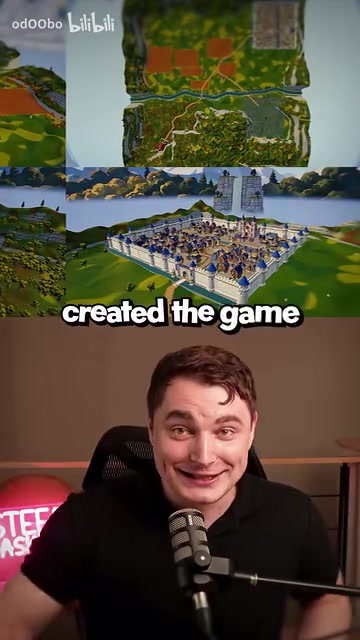
This approach transforms what would otherwise be a dry development log into a watchable narrative. In the author's own words, it's like watching a movie of how it created the game for you. Documentation here isn't just record-keeping — it becomes a window into the AI's decision-making logic. You can trace back every important node and see clearly what judgment the AI made at each step.
No Fear of Crashes: The AI's State Recovery Capability
An unexpected mishap occurred during the experiment. The author's gaming laptop decided to crash in the middle of the night — something that in traditional development often means lost unsaved work and a minor crisis.
Thanks to continuous documentation, however, the situation wasn't as bad as expected. The author described it as: nothing really lost. More critically, the AI demonstrated project recovery capability — it can restore the Unity project like easily.

This has significant implications for real production environments. When an AI can not only create content but also reconstruct its working state after a failure, it evolves from a pure "generation tool" into a "collaborator" with a degree of autonomous operational resilience.
How does AI restore a Unity project? Unity is one of the most widely used engines in indie game development. Its project file structure consists of directories like Assets, ProjectSettings, and Packages, storing scenes, asset references, and configuration data in text or binary formats. The AI's ability to "easily restore the Unity project" relies on the operational context preserved through continuous documentation screenshots and structured logs — the AI can use these to re-infer the project's state before the crash and rebuild the file structure by replaying the sequence of operations. This is essentially analogous to a database's replay log recovery mechanism: as long as the operation record is complete, the final state can theoretically be fully reproduced. This is why process documentation in this case isn't just "nice to have" — it carries genuine engineering value.
A Raw Impression of AI Capabilities
The author's final verdict was refreshingly direct: AI capabilities and executing things is absolutely mind-blowing, no doubts.
From struggling to complete even a single scene four months ago, to now producing a playable game simply by describing requirements to an AI team — the contrast itself speaks to the speed at which the toolchain is evolving. Of course, this is primarily a personal experimental account. The final quality of AI-generated content, its depth of playability, and its reliability in complex commercial projects still require far more validation. But it clearly sketches out one compelling possibility: the barrier to creation in the future may depend less on how much technical knowledge you hold, and more on how clearly you can express what you want.
Related articles

Gaussian Process Bandit Optimization: Exploration Strategies and Inference Regret Guarantees
Cumulative regret guarantees in Bayesian optimization fail to reflect final recommendation quality. This article examines a new study that provides inference regret guarantees for Gaussian process bandit optimization through exploration query strategies and fill distance analysis, validated on hyperparameter optimization and control tasks.

The Most Detailed Codex Guide on Bilibili: From Installation to Real-World Practice
The most detailed Codex guide on Bilibili: from app store installation to daily work mode configuration, with a real coffee shop project demonstrating file organization, data extraction, dashboard creation, and other practical tasks. Learn to use Plan Mode and desktop pets to leverage Codex efficiently.

Appearance Compensation in Volume Rendering: Why RGB Accuracy Cannot Guarantee Density Correctness
Volume rendering research reveals that volumetric data perfectly reproducing external RGB views may still contain density errors: appearance compensation can double central density and keep external rays unchanged even when L2 error exceeds 14.52%. Density recovery depends on appearance capacity, spatial resolution, and measurement design.