10 Must-Know AI Tools for 2026: From Writing to Automation

A roundup of 10 AI tools for 2026, restructuring the toolchain across information, content, programming, and automation scenarios.
The article reorganizes 10 AI tools for 2026 recommended by a Tamil creator and categorizes them by functional scenario: ChatGPT, Gemini, Perplexity, and NotebookLM form an information retrieval and knowledge processing funnel; Claude, Midjourney, Runway, and ElevenLabs correspond to text, image, video, and voice content production; Cursor represents AI-native programming tools, while n8n tops the list, reflecting the high priority of the automation layer. The author notes three signals: tool categorization is shifting from model capabilities to work stages, multimodality and web connectivity have become standard, and automation is given the highest priority—while reminding readers that rankings carry personal subjective preferences and need to be verified against their own workflows.
A Tamil tech creator highlighted 10 AI tools worth knowing in 2026 in a YouTube Shorts video, covering writing, search, images, video, voice, programming, and business process automation. The value of this list isn't in the rankings themselves, but in how it outlines a clear toolchain: from acquiring information to producing content, and then handing repetitive work off to machines. Below, these 10 tools are reorganized by functional scenario, along with some selection considerations.
Information Retrieval and Knowledge Processing: ChatGPT, Gemini, Perplexity, NotebookLM
The list places ChatGPT at #10, positioned as "the AI assistant that answers all your questions," usable for writing, brainstorming, research, and everyday tasks. Gemini is described as Google's powerful AI assistant, supporting multimodal interaction across text, images, and voice. Perplexity's differentiator is that it searches the web for information and cites sources when providing answers, making it suitable for research scenarios that require verification. NotebookLM targets personal documents: feed it PDFs, notes, and materials to understand content and generate summaries.
These four tools actually form an information-processing funnel—Perplexity handles external retrieval with sources, NotebookLM digests your private materials, and ChatGPT and Gemini handle open-ended Q&A and multimodal tasks. In practice, you don't need to choose just one; deciding based on "where the information comes from" is more efficient.

Retrieval-Augmented Generation (RAG) is the key technology for understanding the difference between Perplexity and NotebookLM. RAG lets large models retrieve relevant snippets from external knowledge bases before answering, then feeds those snippets as context to the model to generate an answer. Perplexity's retrieval source is the open internet, so it can provide real-time information and source links; NotebookLM's retrieval source is the user's uploaded private documents, with answers confined to the scope of the materials. Both reduce the probability of the model "making things up," but the former emphasizes timeliness and verifiability, while the latter emphasizes closed-book Q&A over private knowledge.
Content Production: Claude, Midjourney, Runway, ElevenLabs
Ranked #9, Claude is positioned by the original creator as a practical tool for professional writing, content creation, and programming. At #5, Midjourney generates high-quality images from a simple text prompt. At #4, Runway supports generating video from text and images. At #3, ElevenLabs focuses on generating natural-sounding, realistic AI voiceovers.
You may not have noticed that these four tools correspond exactly to different media in content production: text, static images, moving video, and sound. For independent creators, their combined value exceeds using them individually—the script, illustrations, visuals, and narration of a short video can each be handled by different tools, concentrating human effort on creativity and review.


Claude's positioning across both writing and programming also makes it more handy than pure chat assistants in "content + code" hybrid work.
Programming and Automation: Cursor, n8n
At #2, Cursor is a programming tool built around AI assistance, usable for writing code and building software applications. The original creator placing it so high suggests that AI coding assistants have moved from "completing code" to "participating in application building."
Ranked #1 is n8n (transcribed as NA10 in the original). According to the description, it can automate repetitive business tasks, connect different applications, and build complete workflows. This ranking is quite interesting: in the eyes of content creators, the most valuable thing isn't some generative model, but the automation layer that strings tools together and runs errands for people. This also aligns with current usage trends—single-point AI tools solve "making one thing," while automation platforms solve "letting a bunch of things happen on their own."
The evolution path of AI coding assistants can be roughly divided into three generations: the first generation is code completion represented by GitHub Copilot, predicting the next line at the cursor; the second generation is conversational programming, where developers describe requirements in natural language and the assistant generates functions or explains errors; the third generation is "AI-native IDEs" like Cursor, where models can read the entire codebase context, modify across files, execute terminal commands, and iterate on debugging. Understanding this progression makes it clear why Cursor is placed at #2—it represents the leap from "assisting in writing code" to "participating in building applications."
Workflow automation platforms (such as n8n, Zapier, Make) center on a "trigger—action" model: an event in some application (such as receiving an email or a form submission) triggers a flow, and the platform sequentially calls different applications' APIs according to preset nodes to complete data processing, notifications, writes, and other operations. n8n's open-source nature allows it to be self-hosted, keeping data out of third-party clouds, and nodes can be extended with code. The intersection of these platforms with generative AI lies in: inserting LLM nodes into flows for classification, summarization, or content generation, thereby automating "steps that require human judgment" as well.
Three Signals This List Reveals
First, tool categorization is shifting from "model capabilities" to "work stages." The list includes both general assistants and vertical tools for retrieval, documents, images, video, voice, programming, and automation. Users choose tools by task, not by parameters.
Second, multimodality and web connectivity have become standard. Gemini's multimodality, Perplexity's source citations, and Runway's video generation all point in the same direction: AI tools no longer handle only plain text.
Third, automation is given the highest priority. n8n topping the list suggests that what truly saves time isn't generating content faster, but making repetitive processes no longer require human supervision.
At the end of the video, the original creator invites viewers to leave comments about their favorite tools and encourages subscribing to the channel for more AI tool and automation tutorials. This list is a creator's personal recommendation, with rankings reflecting subjective preferences; the actual performance of the tools still needs to be verified against your own workflows.
One-line Summary
A roundup of 10 AI tools for 2026, restructuring the toolchain across three major scenarios: information, content, programming, and automation.
Paragraph Summary
The article reorganizes 10 AI tools for 2026 recommended by a Tamil creator, categorizing them by functional scenario: ChatGPT, Gemini, Perplexity, and NotebookLM form an information retrieval and knowledge processing funnel; Claude, Midjourney, Runway, and ElevenLabs correspond to four types of content production—text, images, video, and voice; Cursor represents AI-native programming tools, while n8n tops the list, reflecting the high priority of the automation layer. The author notes that the list reveals three signals: tool categorization is shifting from model capabilities to work stages, multimodality and web connectivity have become standard, and automation is given the highest priority. At the same time, the author reminds readers that rankings carry personal subjective preferences and need to be verified against your own workflows.
Related articles

How Do Cursor, Devin, TRAE, and Copilot Compare on Price? Calculate Your Credits Before You Compare Monthly Fees
Side-by-side comparison of individual and team pricing for Cursor, Devin Desktop, TRAE, and Copilot, breaking down credit rules, third-party model inclusion, overage billing, and practical methods for measuring usage before paying, setting spending caps, and choosing the right tool.
Copilot Retires Three Models: Pro Users Left With Only One Alternative
GitHub Copilot retires Claude Opus 4.8, Claude Opus 5, and GPT-5.6 Tera on Nov 16 across Chat, code completion, and Agent mode. Pro users have only GPT-6 Luna left; Legacy annual plans miss Opus 5.5; admins must enable replacements manually.
Gemini 4 Carbon Arrives: The LLM Race Enters the Era of Million-Token Context and Trillion-Parameter Open Source
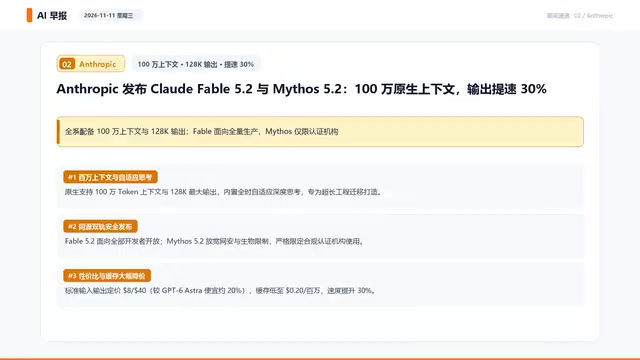
Google launches Gemini 4 Carbon and multi-agent tool Swarm; Anthropic debuts million-context Fable 5.2 and Mythos 5.2; OpenAI releases security-focused GPT-6 Cyber; Mistral and Kimi open-source trillion-parameter models — the LLM race accelerates across the board.