Copilot Retires Three Models: Pro Users Left With Only One Alternative
Copilot retires three models, with alternatives hiding plan entitlement mismatches and migration risks
GitHub Copilot will retire Claude Opus 4.8, Claude Opus 5, and GPT-5.6 Tera on Nov 16 across Chat, code completion, and Agent mode, recommending Opus 5.5, GPT-6.1 Sol, and GPT-6 Luna as alternatives. The real issue isn't price—replacements aren't costlier per unit—but plan entitlement mismatches: Legacy annual users keep Opus 4.8 but miss new models, Pro users have only GPT-6 Luna available, and Opus 4.8 carries a 27x Premium Request multiplier. This is a product-side retirement, not a model retirement; Business/Enterprise admins must enable replacements manually or teams may have no usable models.
GitHub Copilot has announced that as of November 16, three models will be removed across its entire product line: Claude Opus 4.8, Claude Opus 5, and GPT-5.6 Tera. The removal covers Chat, code completion, and Agent mode. The officially recommended alternatives are Claude Opus 5.5, GPT-6.1 Sol, or GPT-6 Luna. According to the pricing page, none of the replacement models cost more per unit than the ones being retired—but the real trouble isn't price, it's the mismatch in plan entitlements.
Who Loses What: Three Different Situations for Annual, Monthly, and Pro Subscribers
The impact of this retirement varies widely depending on subscription type, and the official line of "recommended alternatives" glosses over the fragmentation at the entitlement level.
Annual Subscribers: Old Models Retained, New Models Out of Reach
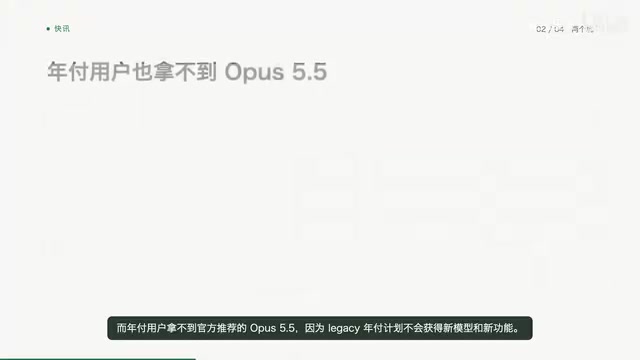
Opus 4.8 is retained only for individual annual subscribers; monthly subscribers lose it all the same. On the surface, annual subscribers come out ahead—but conversely, Legacy annual plans will not receive new models or new features, meaning annual subscribers cannot get the officially recommended Opus 5.5. Keeping an old model that's about to be marginalized and gaining access to new model capabilities are two very different trade-offs.
Pro Users: Only One of Three Alternatives Is Actually Available
Neither Opus 5.5 nor GPT-6.1 Sol is included in the $10 Copilot Pro plan. Of the "three alternatives" Pro users are presented with, only GPT-6 Luna is actually usable. This point isn't highlighted in the announcement, but it has the most direct impact on budget-conscious individual developers.
The Hidden Cost of the Legacy Multiplier Table
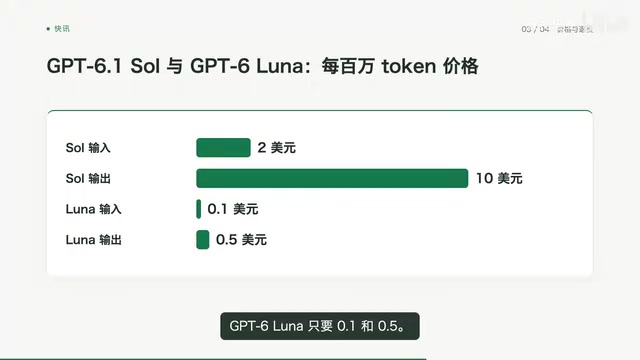
In the Legacy multiplier table, Opus 4.8 is rated at 27x Premium Requests. According to the pricing page, Opus 5.5 costs $4 per million input tokens and $20 per million output tokens—cheaper than Opus 5; GPT-6.1 Sol is $2 and $10—cheaper than Tera; and GPT-6 Luna is just $0.1 and $0.5. Comparing unit prices, the retained old model may actually be the most expensive option.
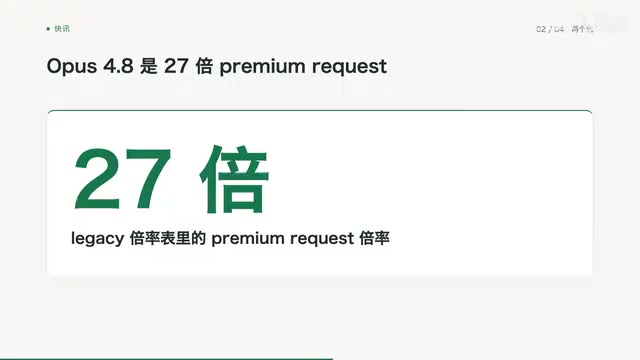
Premium Request is a usage metering unit that GitHub Copilot designed for individual subscriptions (Pro, Pro+): each request to a "premium model" consumes quota at a multiplier rate, while non-premium models are either not counted or counted at a lower multiplier. The so-called "multiplier table" refers to how many Premium Requests each model's request consumes—the higher the multiplier, the fewer calls you can make within the same quota. Different plan tiers come with different monthly Premium Request allowances, and exceeding them requires extra payment or waiting for a reset. Because multipliers do not correspond linearly to actual token prices, a model with a lower unit price may still drain your quota faster within a plan due to a high multiplier—this is exactly the cost structure revealed by Opus 4.8's 27x rating in this article: it looks cheap when billed by tokens, but it's an expensive option when billed by "number of requests." When evaluating plan costs, consider both the multiplier and the average token consumption per conversation.
A Product-Side Retirement Is Not a Model Retirement
To be clear, this is a retirement on the Copilot product side, not a model retirement by the model vendors. Anthropic's official retirement page shows that Opus 5 and Opus 4.8 remain Active; OpenAI has also not listed GPT-5.6 Tera as deprecated.
This distinction matters in practice: the models remain available on the vendor side, which means the retirement is a choice GitHub made based on cost, routing, or product strategy—not the termination of upstream capabilities. For teams calling these models directly via API, service is unaffected; for workflows that depend on Copilot integration, migration is needed.

Model lifecycle typically goes through several stages: Preview/Experimental (Preview), Generally Available (GA/Active), Deprecation Notice (Deprecated), and Official Retirement (Retired). Anthropic's model retirement page and OpenAI's deprecations page each publish the current status and planned shutdown dates of their models, and they are the authoritative basis for determining whether a given model can still be called through the official API. Product-side retirement and model retirement belong to two different levels: the former is when an integrator (such as Copilot) removes the model from its own interface and routing, while the latter is when the model provider stops offering the service. This also means that even if Copilot retires a model, as long as it remains Active on the provider side, developers calling it directly through the official SDK or API will not be interrupted; conversely, if a model enters its retirement period, all downstream integrations must migrate. When assessing migration urgency, rely on the upstream vendor's status page rather than a single product's announcement.
One Thing Administrators Need to Do Right Now
Business and Enterprise administrators should note: if a model is officially retired, the global default enablement does not mean the replacement model will appear automatically—it needs to be enabled manually, or the team may find itself with no usable models. During the retirement window, this rule is worth checking in advance.
You can log into Copilot right now, check the model selector you commonly use, and confirm that the replacement models are available in your current plan. Pro users in particular should directly verify whether GPT-6 Luna has appeared in the options. For team administrators, it's advisable to review members' default model configurations at the same time to avoid workflow interruptions after November 16.
From a broader perspective, this round of adjustments reflects Copilot tightening its plan tiers: the range of models available in lower-priced plans is narrowing, Legacy annual plans are excluded from new models, and higher-priced models continue to concentrate in higher tiers. For developers, choosing a plan now requires evaluating "model availability" together with "unit price," rather than looking only at the monthly fee figure.
Copilot Business/Enterprise model policy uses a two-layer configuration of "organization policy + member defaults": administrators must explicitly enable or disable each model category (such as the Anthropic and OpenAI series) in organization settings, and then set default models for members. Models that were previously disabled or never enabled will not automatically become available just because upstream adds a replacement; at the same time, when a model is removed, default configurations that pointed to it may become invalid, causing members to see no suitable options in the model selector. Therefore, the correct order of operations during a retirement window is: first enable the replacement models in organization policy, then update member default models and team-level configurations, and finally verify whether usage and billing rules change with the new models. For enterprises subject to compliance or data residency constraints, it's also necessary to confirm whether the replacement models meet existing data retention and regional requirements.
One-line Summary
Copilot retires three models, and the alternatives conceal plan entitlement mismatches and migration risks
Paragraph Summary
GitHub Copilot announced that as of November 16, it will retire Claude Opus 4.8, Claude Opus 5, and GPT-5.6 Tera in Chat, code completion, and Agent mode, with Opus 5.5, GPT-6.1 Sol, and GPT-6 Luna recommended as replacements. The article points out that the real problem isn't price—replacement models all cost no more per unit than the retired ones—but plan entitlement mismatches: Legacy annual subscribers keep Opus 4.8 but can't get new models, Pro users have only GPT-6 Luna available out of three alternatives, and Opus 4.8 is rated at a hefty 27x Premium Requests in the multiplier table, potentially making it the most expensive option. The article stresses that this is a product-side retirement rather than a model retirement, as upstream vendors still list them as available; Business/Enterprise administrators need to manually enable replacement models, or teams may find themselves with no usable models.
Related articles

How Do Cursor, Devin, TRAE, and Copilot Compare on Price? Calculate Your Credits Before You Compare Monthly Fees
Side-by-side comparison of individual and team pricing for Cursor, Devin Desktop, TRAE, and Copilot, breaking down credit rules, third-party model inclusion, overage billing, and practical methods for measuring usage before paying, setting spending caps, and choosing the right tool.
Gemini 4 Carbon Arrives: The LLM Race Enters the Era of Million-Token Context and Trillion-Parameter Open Source
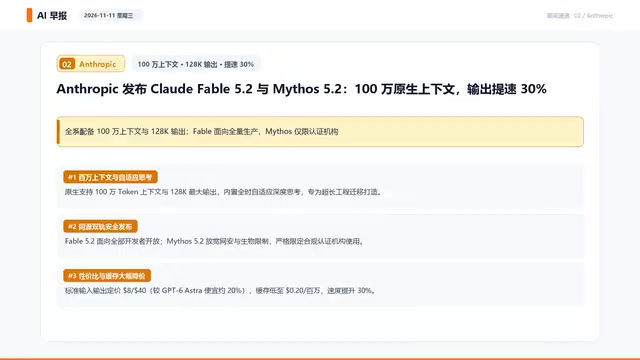
Google launches Gemini 4 Carbon and multi-agent tool Swarm; Anthropic debuts million-context Fable 5.2 and Mythos 5.2; OpenAI releases security-focused GPT-6 Cyber; Mistral and Kimi open-source trillion-parameter models — the LLM race accelerates across the board.

What Is DeepSeek Harness? The Entire Engineering Layer Beyond the Model
What is DeepSeek Harness? Starting from the horse-tack metaphor, this article explains that Harness is the engineering system beyond the model—covering prompts, tool calls, memory, sandbox, and orchestration—and analyzes its open-source "everything is a plugin" architecture along with the significance of its four operating modes.