100 Million Rollouts: The Explosive Expansion of Reinforcement Learning's Exploration Space

100M RL rollouts expand the exploration space explosively, making 'lucky explorations' a key driver of model capability gains.
This article unpacks the significance of "100 million rollouts" from a Reddit discussion, exploring how large-scale RL sampling enhances model capabilities. RL's essence is redistributing a model's probability mass based on reward signals. At 100M rollouts, even extremely rare high-quality trajectories are virtually guaranteed to be sampled — these 'lucky explorations' become the core fuel for capability gains. Behind this scale lies enormous distributed compute cost, and the key question remains: is the true capability ceiling set by sampling scale, or by the base model's latent strategy space?
When Exploration Scale Breaks the 100 Million Mark
A discussion in the Reddit community zeroed in on a striking number — 100 million rollouts (i.e., sampled trajectories in reinforcement learning). The original poster described the phenomenon with "damn the exploration space goes boom," vividly capturing the order-of-magnitude shift that large-scale sampling brings to RL training.
In the RL context, a rollout refers to the process of an agent executing a complete pass through an environment or policy to generate a single trajectory. When that number reaches the 100-million scale, it means the training system has explored an enormous range of possible paths, covering a state-action space far larger than anything seen before.
What Expanding the Exploration Space Actually Means
One of the core tensions in reinforcement learning is the balance between exploration and exploitation. The larger the sampling scale, the broader the exploration space an agent can reach — and the higher the probability of discovering rare but high-value strategies.
The original poster raised a thought-provoking point: when you enhance a model's capabilities through exploration at this scale — essentially redistributing probability mass via RL — you end up with a large number of "lucky explorations."
The logic behind this isn't hard to follow. The essence of RL training is gradually concentrating the model's probability, originally spread across a wide range of outputs, onto the behavioral paths that yield higher rewards. When the number of samples is large enough, even paths with extremely low individual sampling probabilities become virtually certain to be reached across 100 million attempts. These serendipitously discovered high-quality trajectories serve as the "fuel" for subsequent probability mass redistribution.
Redistributing probability mass is the key lens through which to understand this process. A language model is fundamentally a probability distribution, assigning a probability value to every possible output sequence. At the end of pretraining, the model already possesses the "potential" to generate a wide variety of text — but that potential is unevenly scattered across a vast output space. RL training, through methods like policy gradients, iteratively adjusts model parameters based on reward signals, raising the probability of high-reward trajectories and lowering that of low-reward ones. This process doesn't create entirely new capabilities; it transfers probability mass from "ordinary" outputs to "high-quality" ones. The significance of 100 million rollouts is that it makes even extremely low-probability trajectories (say, one in ten million) highly likely to be sampled, providing signal for gradient updates. With insufficient sampling, these rare but valuable paths remain permanently "invisible" — and the model has no way to learn from them.
The Engineering and Computational Cost Behind the Scale
100 million rollouts represent not just an algorithmic milestone, but a demonstration of engineering capability. Sampling at this scale requires a massive distributed computing infrastructure, encompassing efficient parallel inference, trajectory storage, and reward signal computation.
Looking at recent trends in RL training for large models — particularly the post-training phase focused on reasoning capabilities — continuously scaling up sampling has become a key lever for improving model performance. More exploration means richer training signal, but it also brings linearly or even super-linearly growing compute costs. Finding the right balance between exploration scale and computational efficiency is a central challenge in designing modern RL systems.
In the post-training phase of large models, RL typically appears in the form of RLHF (Reinforcement Learning from Human Feedback) or algorithms like GRPO and PPO, specifically aimed at improving reasoning ability, instruction-following, or safety. Unlike the one-pass forward propagation of pretraining, every step of RL training requires a full inference rollout, reward computation, and backpropagation — and the rollout itself is the most time-consuming part. For reasoning models in particular, a single rollout may produce a chain-of-thought spanning thousands of tokens; 100 million rollouts can easily generate more total tokens than the entire pretraining corpus. The industry currently tends to adopt architectures that decouple the async inference cluster from the training cluster (e.g., vLLM + training framework separation) to alleviate throughput bottlenecks — but resource consumption remains the primary constraint on exploration scale.
A Sober Look at "Lucky Explorations"
The "lucky explorations" the poster described reveal a subtle characteristic of large-scale RL: capability improvements depend to a significant degree on probabilistic coverage. When exploration is sufficiently thorough, the model hasn't so much "learned" new capabilities as it has filtered and reinforced high-quality behaviors that were already lurking in the tail of the policy distribution.
This raises a deeper question: if capability gains depend heavily on the luck brought by brute-force sampling, where does the model's true generalization boundary actually lie? Does the sampling scale determine the capability ceiling, or is the true upper bound set by the latent strategy space of the base model itself? These questions remain unsettled in this brief community thread — but they are precisely the core issues being fiercely debated across the RL research community.
Summary
Despite its brevity, this post highlights two key facts about large-scale reinforcement learning: the explosive expansion of exploration space as sampling scale grows, and the real contribution that resulting "lucky explorations" make to capability enhancement. As compute investment continues, 100 million rollouts may soon become the new norm. The next frontier won't be about stacking more scale — it will be about how to make better use of those explorations, rather than relying on brute-force volume alone.
Related articles
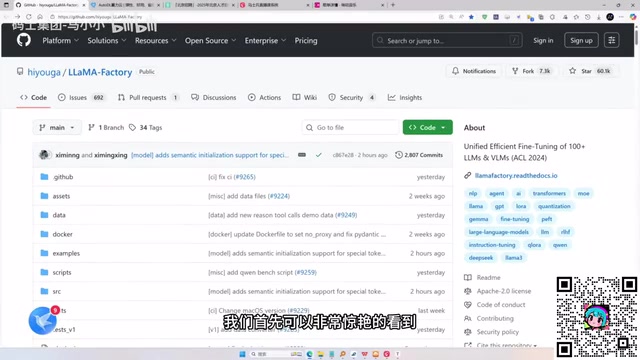
LLaMA-Factory in Practice: A Complete No-Code Guide to Fine-Tuning Large Models
An introduction to LLaMA-Factory, the open-source fine-tuning tool: its 60.1K-star background, supported models and algorithms, local vs. cloud deployment, and CUDA setup steps.

Zeng Ming's Deep Retrospective: Why OpenAI May Not Be the Ultimate Winner — and Why the Corporate System Will Disappear
Zeng Ming's deep retrospective on the AI endgame: model companies are just infrastructure, OpenAI and Anthropic won't be the final winners; the next battle is the Agent entry point standard; the corporate system will disappear as AI restructures collaboration, and only mission-driven companies can survive the cycle.

OpenHands v1.28.0: OpenCode and PI Added as Built-in Agents, API Keys Requestable In-Conversation
OpenHands ships 5 releases in 21 days: v1.27.0 adds OpenCode and PI as built-in agents, v1.28.0 enables in-chat key requests. ACP integration, credential reuse, model list changes, and upgrade advice.