150+ Free AI Agent Prompts: Build Your AI Team for Claude Code and Cursor

150+ role-based AI prompts, free and MIT licensed, ready to plug into Claude Code, Cursor, or Copilot.
A widely starred open-source GitHub project presents itself as an "AI agency" but delivers a library of 150+ professional persona prompts organized as Markdown files. Covering roles from front-end developer to reality checker, it lowers the barrier for anyone who struggles with prompt engineering. The library integrates seamlessly into Claude Code, Cursor, and GitHub Copilot without changing your workflow, and its MIT license makes it completely free for personal and commercial use. The bottom line from the author: these are well-crafted prompts, not autonomous digital employees — useful tools, but not a replacement for human judgment.
An "AI Agency" on GitHub
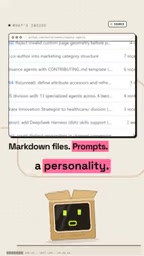
An open-source project that has racked up an impressive number of GitHub stars is turning heads — it presents itself as a complete "AI agency," but what it actually delivers is a structured library of prompts. The entire repository contains over 150 preset AI Agents, each one a Markdown file at its core — essentially a prompt with a distinct "persona" baked in.
The design philosophy here is worth appreciating: this isn't yet another complex framework that needs to be installed. Instead, it breaks each professional role down into a readable, editable, copy-paste-ready text file. Whatever kind of assistant you need, you simply pull up the corresponding prompt.

Every Agent Is a "Professional Persona"
The range of preset roles is impressively broad. A few standout examples: a Front-end Dev, a Reddit Ninja (a community growth specialist), and a role called the "Reality Checker" — whose job is clearly to poke holes in unrealistic plans and offer grounded, sober judgment.
Organizing prompts around "professional personas" significantly lowers the barrier for everyday users. You don't need to craft a high-quality system prompt from scratch — just pick the role file that best fits your task. For anyone who isn't fluent in prompt engineering, this is essentially a curated, battle-tested collection of ready-to-use templates.
Compatible with Major AI Coding Tools
Another key selling point is broad compatibility. Since every Agent is, at its heart, plain text, it can be plugged directly into today's mainstream AI coding assistants — Claude Code, Cursor, GitHub Copilot, and more are all supported.
In other words, you don't need to overhaul your existing workflow. If you're already using one of these AI tools, just feed in the relevant prompt and it works immediately. This "zero-friction" integration is a natural advantage that pure-prompt solutions have over heavyweight agent frameworks.
A quick note on these tools: Claude Code is Anthropic's command-line AI coding assistant, which lets users customize its behavior via system prompts. Cursor is an AI-native code editor that supports injecting custom instructions at the project level (typically via .cursorrules files). GitHub Copilot is Microsoft's AI-powered developer tool, and recent versions have also opened up a custom instructions configuration entry. All three support the concept of "system prompts" or "custom instructions," which means a plain-text prompt library like this integrates seamlessly — no additional development work required.
Completely Free, MIT Licensed
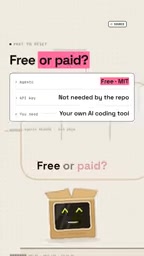
On cost, the answer is simple: it's entirely free, released under the MIT open-source license. That means you can not only use it at no charge, but also freely modify it, redistribute it, and even use it in commercial projects — with virtually no licensing concerns.
The only prerequisite is that you bring your own AI tool that supports prompt injection. The project itself provides no model and no compute; it serves purely as a "prompt resource library," not an all-in-one platform.
The MIT License is one of the most permissive in the open-source world. Unlike licenses such as the GPL, MIT does not require derivative works to also be open-sourced, nor does it restrict commercial use — you simply need to retain the copyright notice. This is particularly friendly for enterprise users: you can integrate these prompt templates directly into internal tools or commercial products without worrying about licensing compliance. Compared to some prompt products that operate on a subscription or pay-per-call model, the MIT open-source distribution model dramatically lowers the cost of evaluation and adoption.
A Grounded Take: These Are Good Prompts, Not Employees
The video's author offers a notably restrained assessment: "Good prompts, not employees." It's a line worth keeping in mind before you dive in.
No matter how convincingly it's packaged as "an AI company," these Agents are still, fundamentally, prompts. They can improve the quality of output on a given task and help you quickly step into a specialized frame of mind — but they won't truly replace human judgment, collaboration, or accountability. Treating them as high-quality assistance tools, rather than digital workers who can autonomously handle everything on your behalf, is the right way to set expectations.

Who Should "Hire" First?
For developers, content creators, and anyone who collaborates with AI on a regular basis, a free prompt library like this offers exceptional value. Frontend developers will probably reach for the "Front-end Dev" agent first. Community managers will gravitate toward the "Reddit Ninja." And those who tend to make decisions in isolation might find that the "Reality Checker" is exactly the calm, critical counterpoint they've been missing.
At the end of the day, this project's value lies in productizing and personalizing the results of prompt engineering — giving more people access to high-quality prompts at near-zero cost. If you're already using Claude Code or Cursor, it's worth browsing the library and trying out whichever role fits your current needs.
Related articles

Free Unlimited Claude Code Solution: Agnes AI + CC Switch Setup Guide
No paid subscription needed — pair the free AI platform Agnes AI with the open-source tool CC Switch to provide a backend for Claude Code, enabling unlimited free calls to text, image, and video models. This guide covers the full setup, test results, and usage boundaries.

A Complete Zero-Cost Guide to Getting Started with Claude Code for Beginners in China
A beginner's guide to Claude Code for users in China: two installation methods (command line and IDE plugin), full configuration steps for replacing the official API with the free domestic LongCat model, and a hands-on demo of building a small tool with natural language, plus tips.

When the NSA Gets Involved: The AI Supply Chain Crisis Behind Open-Source CVEs and API Key Hijacking
Multiple open-source projects disclosed severe CVEs in one day, PHP flaws alarmed the FBI, and Railway and OpenCode were breached with API keys stolen. This article breaks down the vulnerability window, AI-accelerated exploitation, and the AI supply chain crisis behind the API key black market, with a developer defense checklist.