168 Men, One Emperor: The Power Logic Behind the Ambush at Cajamarca

How 168 Spaniards captured an Inca emperor using borrowed strategy, psychological warfare, and structural insight.
In 1532, Francisco Pizarro led just 168 men to capture Inca Emperor Atahualpa at Cajamarca — a victory determined not by numbers but by strategy. Drawing on Cortés's conquest of the Aztecs, Pizarro wielded horses and firearms as psychological weapons, set an ambush in a confined courtyard, and exploited the fatal vulnerability of a hyper-centralized empire: seize the man at the apex, and the entire structure collapses. This episode reveals a universal truth — the most dangerous weakness of a powerful system often lies not at its periphery, but at its single, indispensable core.
In 1532, Spanish adventurer Francisco Pizarro led a force of just 168 soldiers to Cajamarca, high in the Peruvian highlands, where he captured Atahualpa — the Inca emperor who ruled over millions. This was no evenly matched contest. It was a masterclass in psychological maneuvering, borrowed intelligence, and the exploitation of structural weaknesses in an enemy's power system. Historian Si Sheppard reconstructs the logic behind this staggeringly lopsided encounter.
A Playbook Borrowed from Cortés
Pizarro was a distant cousin of Hernán Cortés, the man who had conquered the Aztec Empire. Before setting out on his expedition, Pizarro met with Cortés in person and obtained the operational blueprint for "how to conquer an empire."
This detail is often overlooked, yet it is essential to understanding the entire conquest. Cortés's success in Mexico was not an isolated event — Pizarro arrived carrying the lessons of his predecessor, fully aware of where the real leverage point lay when facing a highly centralized empire. In other words, the outcome at Cajamarca already had its methodological foundations before Pizarro ever departed.
At the time, the Inca Empire had just emerged from a civil war. Atahualpa had defeated his rival and was preparing to travel to the capital, Cuzco, to formally assume the title of Sapa Inca — the supreme ruler. It was at this sensitive moment of political transition that word reached him: a group of strangers had entered his territory.
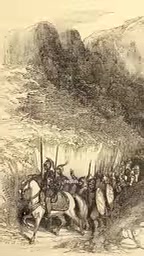
Cortés had conquered the Aztec Empire between 1519 and 1521 using a strategy nearly identical to Pizarro's: exploiting indigenous political divisions to win allies, directly capturing the supreme ruler Montezuma II, and leveraging European diseases like smallpox to erode resistance. Historians refer to this pattern as the "conquistador paradigm" — achieving control over a vast polity with minimal force by bypassing direct military confrontation and instead dismantling the political structure. Crucially, thousands of years of interstate warfare in Eurasia had produced a mature body of knowledge on how to defeat centralized states, while the polities of the Americas had never faced such challenges and were therefore institutionally unprepared. Pizarro's true advantage lay not only in firearms and horses, but in arriving with an entire battle-tested cognitive framework.
Horses, Intimidation, and a Failed Show of Force
When Atahualpa first heard reports of these 168 strangers, he saw not a threat but an opportunity. He had already witnessed the Spanish horses — animals that had never existed in the Americas.
Pizarro deliberately exploited this. He sent a key lieutenant to demonstrate horsemanship before the Inca emperor, riding directly at Atahualpa and his entire court, pulling the horse to a stop just inches from the emperor's face, the animal snorting and heaving.
It was a carefully staged act of psychological intimidation. Yet Atahualpa remained expressionless. He declared himself completely unmoved and replied: "I will meet with your master at a time of my choosing."

What followed is perhaps the most revealing detail of all. After the Spanish departed, Atahualpa ordered the execution of every courtier and general who had flinched or shown fear during the display — with one purpose: to make clear to everyone that they would not be intimidated.
The gesture projected the authority of a ruler who had just won a civil war, but it also exposed a fatal characteristic of Inca power: everything depended on the will of a single man at the apex.
The Cajamarca Ambush: The Metaphor of Breakfast and Lunch
Atahualpa decided to attend the meeting on his own terms. He arrived with an enormous retinue, looking down on this small band of men with supreme confidence.
There is a Peruvian saying that Atahualpa came to eat Pizarro for lunch — and ended up as Pizarro's breakfast. The expression neatly captures both sides' miscalculations and the ultimate outcome.

Pizarro had chosen the meeting site carefully: a narrow, enclosed courtyard. Once the Inca emperor and his retinue entered this confined space, the ambush was triggered. Pizarro ordered all cannons and arquebuses to fire simultaneously — not merely to inflict casualties, but to generate an overwhelming shock effect. In the deafening roar and chaos, Atahualpa himself was subdued and captured.

The true value of firearms at that moment was not firepower but psychological impact. For Inca warriors who had never encountered gunpowder weapons, the sudden violent explosion of sound and light was enough to shatter order and create a window in which a handful of men could control thousands.
Cut Off the Head: The Achilles' Heel of Centralized Power
The deepest lesson of the entire episode, as Sheppard summarizes it, is this: go straight for the top. Seize the person at the very apex of the social hierarchy, and you control the entire structure.
The Inca Empire was a highly centralized polity in which the emperor was regarded as a near-divine figure, with the entire administrative, military, and religious apparatus revolving around his person. This structure was efficient and stable in peacetime, but it proved strikingly vulnerable to a precise decapitation strike. The moment Atahualpa was captured, the vast Inca army and bureaucratic machinery lost their operational center.
How did 168 men capture an emperor and shake an entire empire? Not through overwhelming military force, but through the convergence of three factors: a mature conquest playbook inherited from Cortés, the precise deployment of horses and firearms as psychological weapons, and a clear-eyed understanding of the critical vulnerability in the enemy's power structure.
This episode reminds us that the true weakness of an apparently powerful system often lies not at its edges, but at that singular core node upon which everything depends.
The Inca Empire (Quechua: Tawantinsuyu, meaning "Land of the Four Quarters") was the largest state in the history of the Americas during the 15th and 16th centuries, stretching more than 4,000 kilometers from north to south and maintained through an extensive road network and relay-runner system (chasquis). The Sapa Inca was not only a secular monarch but was regarded as the son of the sun god Inti — his divine status was the source of legitimacy for the entire bureaucratic and military order. When this sacred figure was captured by foreigners in such dramatic fashion, the impact for the Inca people was not merely a political loss of command; it was a collapse at the level of religious cosmology. If the son of the god could not protect himself, the entire ideological order was shaken. This tight fusion of political and religious authority amplified the consequences of "decapitation" far beyond anything that could be measured in military terms alone.
Related articles

Cursor AI Programming in Practice: Build a Student Management System from Scratch in 30 Minutes
A Bilibili creator demonstrates Cursor AI programming: generating a student management system in 30 minutes with natural language. Details on Agent mode, Claude selection, prompt techniques, and thresholds.

Top 20 AI Coding Tools Ranking: From Rock-Solid to Lackluster, a Scored Matrix
Bilibili creator releases top 20 AI coding tools ranking, tiered T0–T4 from rock-solid to lackluster, with Claude Code and Codex tied at T0. This article details the scoring dimensions (capability, reliability, robustness, durability, cost, domestic availability) and tool performances to help developers choose the right AI coding assistant.

Vibe Coding Systematic Tutorial: Master AI-Assisted Programming from Zero
A three-month Vibe Coding tutorial from a Bilibili creator covering Codex, ClaudeCode, and Cursor, from core logic to commercial project practice for beginners.