2026 CNN Project Ideas: A Practical Guide to Building Your Portfolio

A systematic overview of four differentiated CNN portfolio project directions for 2026 and three engineering habits to stand out.
The article addresses the dilemma of a Reddit user lacking guidance and needing to build a portfolio-grade CNN project for 2026-27, pointing out that the value of CNN projects lies in demonstrating a complete engineering loop rather than model novelty. It presents four directions in increasing difficulty: agricultural disease detection (transfer learning plus edge deployment), medical image classification and interpretability (Grad-CAM analysis and cross-dataset generalization), video action recognition and lightweight deployment (temporal modeling and FPS-accuracy trade-offs), and hybrid CNN plus traditional CV pipelines (architecture trade-off capability). Finally, it distills three habits to enhance persuasiveness: weave data work into the story, conduct ablation experiments and honestly report failures, and provide a reproducible inference entry point that runs within five minutes.
Why CNN Projects Are Still Hard Currency in a Portfolio
With Transformers and diffusion models grabbing headlines these days, convolutional neural networks (CNNs) remain the ideal project type for demonstrating computer vision engineering skills. A Reddit user posted for help, saying they lacked guidance and needed to build a portfolio-grade CNN project for 2026-27. This post reflects a common dilemma: the MNIST and CIFAR-10 tutorials are everywhere, yet few people systematically organize truly differentiated project directions.
The value of a CNN project isn't about how novel the model is—it's about whether you can demonstrate a complete problem definition, data engineering, architecture selection, and deployment capability. The following directions progress in difficulty and differentiation, suitable for developers at different stages.
Direction 1: CNN for Agricultural Disease Detection (Low Cost, High Story Value)
Plant leaf disease recognition is an underrated portfolio topic. Public datasets like PlantVillage contain tens of thousands of labeled leaf images, covering multiple crops and diseases. On the tech stack side, you can start with ResNet-50 transfer learning, then gradually introduce data augmentation (rotation, color jitter, CutMix) and class imbalance handling.
The differentiation here lies in "deployability": train a lightweight model (like MobileNetV3), export it to TFLite or ONNX, and pair it with a simple mobile inference demo. What interviewers see isn't just accuracy numbers, but a complete pipeline from data to edge deployment. If you can run a round of domain adaptation testing on real field images, the project's persuasiveness will increase significantly—because the distribution gap between lab data and field data is itself an engineering problem worth discussing.
Transfer Learning refers to transferring model weights pretrained on large-scale datasets (like ImageNet's 1.2 million images) to a target task for fine-tuning. For scenarios like agricultural disease detection where labeled data is limited, training a CNN from scratch easily leads to overfitting, while transfer learning can reuse the general visual features (edges, textures, shapes) learned by pretrained models, achieving good results with only a small amount of data. There are two common approaches: one is feature extraction, freezing all parameters of the backbone network and only training the final classification head; the other is fine-tuning, unfreezing some deep parameters and continuing training with a lower learning rate. ResNet-50 and MobileNetV3 are both commonly used ImageNet-pretrained backbones—the former for high accuracy, the latter for edge deployment. Understanding the trade-offs between frozen layers, learning rate settings, and data volume is the core of transfer learning engineering practice.
Direction 2: Medical Image Classification and Interpretability
Medical imaging (like chest X-rays, dermatoscopic images) is a high-value area for CNN projects, but also the easiest place to stumble. Public datasets like CheXpert and ISIC Archive provide compliant research entry points. The key is: don't just report AUC—show what the model is focusing on.
Use Grad-CAM or Score-CAM to generate heatmaps and analyze whether the model focuses on lesion areas rather than artifacts—this demonstrates your understanding of model reliability. Going further, you can conduct cross-dataset generalization experiments—train on data from one hospital, test on data from another source, and discuss the reasons for performance degradation. This type of analysis is essential in medical AI, and it's the watershed between "package tinkerers" and "people with engineering judgment."
Grad-CAM (Gradient-weighted Class Activation Mapping) is a technique for visualizing CNN decision basis: it computes gradients of the target class score with respect to the last convolutional layer's feature maps, uses the gradients as weights to perform a weighted sum of the feature maps, and generates a heatmap the same size as the input image, highlighting the regions the model focuses on most when making judgments. Score-CAM abandons gradients and instead uses the score gain for the target class after masking feature maps as weights, avoiding noise from gradient saturation and typically producing smoother, more focused heatmaps. In medical imaging tasks, heatmaps help determine whether the model focuses on the lesion itself or is misled by artifacts like scanner markers or text annotations—this type of analysis is called model interpretability (Explainability), a necessary review step before model deployment in high-risk domains like healthcare, and an important marker distinguishing package tinkering from truly understanding model behavior.
Direction 3: Video Action Recognition and Lightweight Deployment
If you want your project to stand out more in the 2026 job market, you can step beyond static images and move toward video understanding. CNN-based action recognition (like using a subset of the Kinetics dataset with architectures like SlowFast or TSM) involves temporal modeling and computational trade-offs, with significantly higher technical depth.
A pragmatic approach is to choose a constrained scenario, like "gym exercise form assessment" or "kitchen operation step recognition," build a small-scale dataset yourself (a few hundred short videos), fine-tune with pretrained models, and focus on solving frame sampling strategy and inference latency issues. Including an inference speed comparison table in the project report (FPS vs. accuracy trade-offs under different input resolutions and backbones) is more compelling to engineering teams than simply piling on accuracy numbers.
SlowFast is a dual-pathway video understanding architecture proposed by Facebook: the Slow pathway samples at low frame rates with larger channel counts to capture spatial semantics; the Fast pathway samples at high frame rates with fewer channels but high temporal resolution, specifically capturing fast motion. The two pathways are fused through lateral connections, balancing accuracy and efficiency. TSM (Temporal Shift Module) is a zero-parameter, zero-computation temporal modeling trick: it shifts some feature channels forward or backward along the temporal dimension, allowing the current frame's convolution to "see" adjacent frame information, thereby achieving temporal modeling capability close to 3D convolution while maintaining 2D CNN computational cost—very suitable for edge lightweight deployment. Understanding the trade-offs between these two architecture types—the balance between computation and accuracy—is exactly the core engineering judgment that video action recognition projects should demonstrate.
Direction 4: Hybrid Pipeline of CNN + Traditional CV
Pure end-to-end CNNs aren't the optimal solution for all scenarios. An approach that demonstrates engineering maturity is building hybrid pipelines: use traditional methods (edge detection, morphological operations) for preprocessing and candidate region generation, with CNNs responsible for fine-grained classification. For example, document layout analysis and scratch identification in industrial defect detection can both adopt this structure.
This type of project has a strong narrative logic: you prove that you're not blindly chasing novelty, but making architecture trade-offs based on data characteristics and computational budget. It's recommended to explicitly write in the project README the decision process of "why not use a pure end-to-end approach," including specific constraints like insufficient data volume, interpretability requirements, or inference resource limitations.
Three Habits to Make Your Project Stand Out
Regardless of which direction you choose, three things determine the final quality of your portfolio. First, weave data work into the story—cleaning rules, annotation strategies, and the rationale for augmentation choices—these details reflect real capability more than model architecture. Second, conduct ablation experiments and honestly report failure cases—one image showing "where the model goes wrong" beats ten pages of accuracy curves. Third, provide a reproducible inference entry point—a Colab notebook or Docker image—so reviewers can run your model within five minutes.
Back to that Reddit user's question: the core of a portfolio project isn't finding a topic "no one has done before," but demonstrating a complete engineering loop on a specific problem. Choose a direction where you're willing to dive into data details, and clearly document your decision process and failure analysis—this wins interviewers' trust more than chasing the latest architecture.
One-line Summary
A systematic overview of four differentiated CNN portfolio project directions for 2026 and three engineering habits to make them stand out.
Paragraph Summary
The article addresses the dilemma of a Reddit user lacking guidance and needing to build a portfolio-grade CNN project for 2026-27, pointing out that the value of CNN projects lies in demonstrating a complete engineering loop rather than model novelty. The article presents four directions in increasing difficulty: agricultural disease detection (transfer learning plus edge deployment, low cost high story value), medical image classification and interpretability (using Grad-CAM to analyze model focus and conducting cross-dataset generalization experiments), video action recognition and lightweight deployment (temporal modeling and FPS-accuracy trade-offs), and hybrid pipelines of CNN plus traditional CV (demonstrating architecture trade-off capability). Finally, it distills three habits to enhance persuasiveness: weave data work into the story, conduct ablation experiments and honestly report failure cases, and provide a reproducible inference entry point that runs within five minutes.
Related articles

One Person Producing 90 Episodes of AI Anime Shorts: The Complete Production Workflow in 10 Hours for 10 Yuan
No screenwriting experience needed for AI anime shorts: 10 hours and 10 yuan in costs, 4,200 yuan earnings per work on Hongguo. This article breaks down the complete six-step workflow from AI-generated scripts and storyboard scripts to the finished film, with a universal questioning formula and beginner pitfall guide.
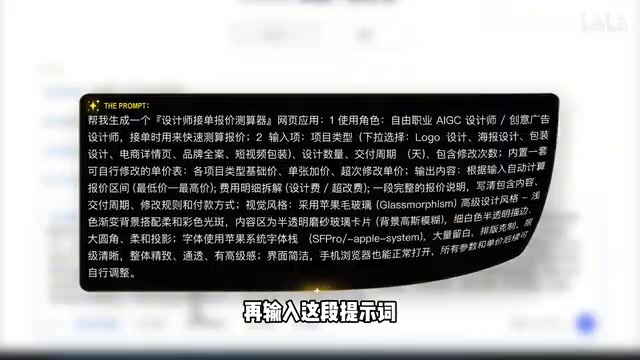
Build a Quote Calculator with Doubao Agent: Stop Guessing Your Freelance Rates
A Bilibili creator uses Doubao Agent to build a no-code quote calculator that auto-generates itemized quotes with rush and copyright buyout rates, one-click copy, and mobile quoting.

WorkBuddy Hands-On Tutorial: 10 Agent Projects from Beginner to Resume-Worthy
WorkBuddy tutorial: a Chinese-language AI work assistant with simpler setup than Codex or Claude Code. 10 hands-on Agent projects for beginners, resume-ready.