25-Second Sales Brief Generation: An n8n Automation Workflow Breakdown

An n8n-based automation workflow that aggregates CRM and public data in 25 seconds to generate a seven-module demo brief for sales.
The article introduces an n8n-based sales brief automation workflow: when a new demo request triggers it, the workflow first performs a web search to gather public information about the customer and their company, then aggregates historical data from HubSpot. Both streams converge and are passed to an AI agent to generate a seven-module sales brief—prospect and company snapshot, CRM history, company intelligence, product use cases, unanswered questions, likely objections and responses, and suggested opening and discovery questions. The core value is freeing sales reps from repetitive pre-meeting research and shifting their time to closing, while standardizing the brief structure to reduce inconsistency in team process management. The article also notes that implementation risks center on data quality: incomplete CRM records or outdated public information directly affect the accuracy of AI predictions, so the brief should be treated as a high-quality starting point rather than a directly reliable answer.
What is the most time-consuming part of a sales rep's prep before a demo call? It's not the call itself—it's digging through the CRM, search engines, and scattered documents to piece together who the customer is, what their company does, and what was discussed previously. An n8n-based automation workflow aims to compress this into 25 seconds.
The Problem: Customer Data Is Inherently Fragmented
According to the video's author, when a prospect books a demo, information about that person and their company is "completely scattered across the internet." If they're an existing customer, historical data is also scattered across the CRM (HubSpot in the video's example).
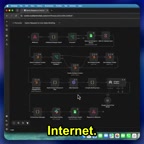
This means sales reps have to manually perform a fixed set of actions before every meeting: research the company background, dig through HubSpot records, recall the context of the last conversation, and guess what the prospect might care about. The video author's assessment is blunt—without this system, the sales agent "has to do the entire process completely manually."
The essence of the problem isn't that the information doesn't exist—it's that it's distributed across multiple silos and has to be reassembled every single time. This kind of repetitive cognitive labor is exactly what automation tools excel at.
How the Workflow Operates: Trigger, Retrieve, Aggregate, Generate
The trigger condition for this n8n workflow is clear: whenever a new demo request comes in, the process starts automatically.
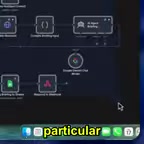
The next steps fall into two stages. First, it performs a web search to gather public information about the customer and their company. Second, it aggregates all relevant data for that customer from HubSpot. Once both streams of information converge, they're passed to an AI agent to generate a complete summary.
This "retrieval-augmented" structure isn't complex, but the order matters: by aggregating internal CRM data first and then layering on external public intelligence, the AI can produce a brief that has both historical depth and current context. If you only did web search, the output would devolve into a compilation of public materials; if you only looked at the CRM, you'd miss the latest developments at the customer's company.
n8n is an open-source visual workflow automation tool, often compared to Zapier and Make, but its core advantages lie in self-hosting and node-level programmability. In n8n, each node represents an action (such as an HTTP request, database query, or AI call), and connections between nodes define the data flow. This sales brief workflow can be built with n8n because it's naturally suited to "multi-source data aggregation + sequential processing" scenarios: a trigger node listens for demo requests, search and CRM queries execute in parallel or sequentially, and finally both data streams are fed into an AI Agent node. n8n's AI Agent node supports attaching tools (such as search engines and CRM connectors), allowing the model to actively call external data when generating summaries rather than simply summarizing from a one-time input. For sales operations staff who don't write code, n8n's template library and visual interface significantly lower the automation barrier, but complex logic (such as conditional branching and error retries) still requires some learning investment.
What's Actually in the Brief: Seven Modules
The video author emphasizes that the output is "not your basic" summary. Based on the description, the AI-generated sales brief contains seven parts:

- Prospect and Company Snapshot: Who they are, and the company's fundamentals
- HubSpot History: Past interaction trail
- Company Intelligence: Background information gathered externally
- Potential Product Use Cases: Mapping customer needs to your product
- Unanswered Questions: Open items left over from the last conversation
- Likely Objections and Responses: Anticipated customer pushback and response approaches
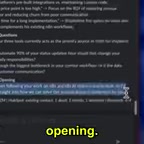
- Suggested Opening and Discovery Questions: A ready-to-use question list
The "Discovery Questions" item deserves special mention. It pushes the AI's output from "information summary" to "action directive"—the sales rep doesn't need to come up with questions themselves; they just follow the list. This lowers the onboarding barrier for new sales reps and transforms pre-meeting prep from "reading materials" to "executing a script."
The objection anticipation section works the same way. It essentially codifies the experience patterns of senior salespeople: at what stage, based on what background, a customer is most likely to raise which type of concern. AI's ability to make such inferences based on CRM history and company intelligence is reasonable, but accuracy depends on the quality of the input data.
Discovery Questions is a core concept in sales methodology, referring to open-ended questions used in initial or early-stage conversations to uncover a customer's true needs, pain points, decision-making chain, and budget range. It's the opposite of a "sales pitch"—the goal isn't to introduce your product but to get the customer talking. Classic Discovery question frameworks include: current state (how it's done now), problem (what's unsatisfactory), impact (what consequences the problem causes), and payoff (what value solving it would bring). The value of AI-generated Discovery questions lies in its ability to transform scattered information from CRM history (such as a pain point the customer mentioned) into targeted questions, preventing sales reps from asking ineffective questions like "What are your needs?" But note: questions inferred by AI from historical data may deviate from the customer's current real priorities, and sales reps still need to adjust flexibly during the conversation rather than mechanically reading from the list.
The Value: Shifting Time from Preparation to Closing
The real benefit of this system isn't saving those 25 seconds—it's reallocating the structure of a salesperson's time.
In the video author's words, the sales team can "focus their energy on closing the deal." The logic holds up: pre-meeting research is necessary but low-output work—it doesn't directly drive closing, it's merely a prerequisite for it. Handing this part to a workflow frees up the sales rep's attention for conversation quality, real-time judgment, and relationship building.
For the team, there's also a hidden benefit—the brief's structure is standardized. No matter which salesperson takes on which customer, they get the same seven modules of information, with no key items missed due to personal habits. This matters more for scalable sales process management than saving time on any single instance.
A Few Practical Concerns to Keep in Mind
The video shows the ideal path, but several variables remain undiscussed for real-world implementation.
Data quality determines the output ceiling. If HubSpot records are themselves incomplete or outdated, the AI's aggregated history will be distorted, and objection anticipation and suggested questions will go off track accordingly.
The timeliness of public information can't be guaranteed. Company intelligence captured by web search may be news from months ago. If the customer's company has just gone through funding, layoffs, or a strategic shift, the brief could actually mislead the sales rep.
AI-predicted objections aren't the same as real objections. They're pattern-based inferences, and sales reps still need to verify them during the conversation rather than reciting them verbatim.
These aren't reasons to dismiss this workflow—they're mental expectations users need to establish: it's a high-quality starting point, not an answer you can rely on directly.
Retrieval-Augmented Generation (RAG) is the core technical paradigm behind this workflow. Simply put, RAG has the large language model retrieve relevant information from external knowledge sources (here, web search and the HubSpot database) before generating a response, then feeds the retrieved results as context to the model for summary generation. Compared to having the model "recall" from training data alone, RAG can significantly reduce hallucinations, improve factual accuracy, and keep output in sync with the latest data. This sales brief workflow is essentially a practical variant of RAG: two retrieval paths (public web + internal CRM) form the "augmentation" part, and the AI agent handles the "generation." RAG's effectiveness depends heavily on retrieval quality—if the search captures irrelevant information, or CRM records are missing key fields, no matter how powerful the model is, it can't produce a reliable brief. This is why the article emphasizes that "data quality determines the output ceiling": in a RAG system, defects on the retrieval side propagate directly to the generation side and are often difficult for the model itself to detect and correct.
Who Should Borrow This Approach
The thinking behind this n8n workflow can be transferred to multiple scenarios: B2B sales teams, customer success roles that require pre-meeting preparation, and any repetitive work where "information is scattered across the CRM and public channels and has to be reassembled every time."
Its technical barrier is low—n8n itself is a visual orchestration tool, and the core effort lies in designing the brief's module structure and prompts. The real challenge isn't in building it, but in thinking clearly: what exactly should a good sales brief contain? The seven modules the video author provides can serve as a ready-made starting point.
Related articles

Uber Deploys ChatGPT Work Company-Wide: AI in the Workplace Enters the Scaled Implementation Phase
Uber deploys ChatGPT Work to 30,000+ employees, extending it from engineering to all roles. We analyze its expert-engineer pairing, end-to-end automation, and questions of AI control and power concentration—insights for scaling AI in the workplace.

Shift at Midnight Hands-On: When "ID Verification" Becomes Alien Hunting
Shift at Midnight blends ID verification with horror survival in a four-player co-op game. We break down its inspection mechanics and chaotic humor.

Zelensky Recounts the Outbreak of War: I Need Ammunition, Not a Ride
Zelensky recalls the first day of war in a YouTube interview: farewell to family, rejecting Biden's evacuation offer with "I need ammunition, not a ride," and how Bucha shaped his stance on compromise and peace talks.