Uber Deploys ChatGPT Work Company-Wide: AI in the Workplace Enters the Scaled Implementation Phase

Uber deploys ChatGPT Work to 30,000 employees, revealing the organizational playbook for scaling AI in the workplace.
Uber extended ChatGPT Work to over 30,000 employees, from engineering to product, operations, and marketing—a "step change." The article notes that OpenAI's highest token consumers are not engineers, overturning the assumption that AI tools are only for technical roles. Uber paired functional experts with engineers to automate complete workflows end-to-end rather than stacking tools piecemeal. The speaker also stressed AI alignment and avoiding excessive power concentration, arguing AI should empower everyone. The takeaway: as AI in the workplace scales from pilot to company-wide, the real challenge is redesigning collaboration around AI.
Uber Deploys ChatGPT Work Company-Wide: AI in the Workplace Enters the Scaled Implementation Phase
What happens when OpenAI's ChatGPT Work moves from the engineering team to the entire company? Uber offers a valuable reference answer: opening ChatGPT Work to more than 30,000 employees, bringing non-engineering roles into the AI workflow as well. According to an on-site sharing published on YouTube, this is not merely a tool purchase but an experiment in re-architecting the way work gets done.
From Engineers to Everyone: The Boundaries of AI Tools Are Dissolving
For a long time, the primary users of AI coding assistants and generative tools have been engineers. But according to the speaker's observation, some of OpenAI's earliest power users and highest token consumers were in fact not engineers. This detail overturns the habitual assumption that "AI tools belong only to technical roles."
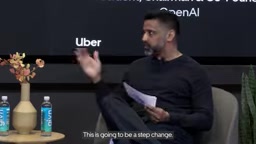
Uber's rollout of ChatGPT Work across the entire New Work community means that product, operations, marketing, and other functional roles will also gain access to AI support of equal capability. The sharing noted that engineering has already been the first to adopt these tools and has thereby changed the workflow itself; now other teams are "full of anticipation," and this is regarded as a "step change."
The Key Playbook: Pairing Functional Experts with Engineers
When deploying AI tools at scale, the hard part is often not procurement but implementation. One practice Uber shared is worth noting: pairing functional experts with engineers to examine the complete workflow together, rather than letting each team figure things out on its own.
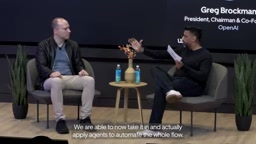
The logic behind this pairing model is that functional experts know best where the business pain points are, while engineers know how to break a process down into automatable steps. Combined, teams can "bring in" the entire process and achieve true end-to-end automation, rather than stopping at isolated point improvements. The speaker said plainly that it was at this step that they saw tangible benefits.
AI Alignment is the core technical topic behind the speaker's mention of "ensuring humans retain control through alignment." It refers to the research direction of making AI systems' goals and behaviors consistent with human intentions and values. It is not concerned with whether a model "can do" something, but with whether what it does matches the outcomes we actually want. In enterprise settings, alignment issues manifest as: whether automated processes deviate from business goals, and whether agents take unauthorized actions in multi-step tasks. Current mainstream methods include reinforcement learning from human feedback (RLHF), Constitutional AI, and explainability and red-teaming. For enterprises deploying AI in the workplace at scale, alignment is not only a research topic but is directly tied to the design of permission boundaries, audit traceability, and accountability.
Beyond Efficiency: Reflections on Control and Concentration of Power
The conversation did not stop at efficiency. The sharing proposed a broader framework: build intelligent machines with astonishing capabilities while ensuring, through alignment, that humans retain control. In addition, the speaker explicitly expressed wariness of "excessive concentration of power," arguing that AI should empower everyone rather than become a capability exclusive to a few institutions.
This stance echoes a common concern in enterprise AI procurement today—as more and more core workflows depend on a small number of AI vendors, how enterprises balance efficiency and autonomy will be a long-term issue.

Redefining Human-Machine Relations: From "Hunching Over a Keyboard" to More Valuable Work
The sharing included a vivid rhetorical question: how much of our time do we spend hunched over a machine, typing away—is that really what we came here to do? In the speaker's view, that doesn't make sense.
This leads to a deeper value proposition of AI in the workplace: hand repetitive, mechanical labor to machines and shift people toward judgment, collaboration, and creative work. Of course, the speaker also acknowledged candidly that this is a "change," a process everyone will need to go through, with both opportunities and growing pains.

Implications for Enterprises: Scaled AI Implementation Requires Organizational Design
Uber's case offers several reusable lessons: first, don't limit AI tools to technical teams—non-engineering roles often have greater room for process optimization; second, use pairing mechanisms to bridge the gap between business understanding and technical implementation; third, design automation starting from the complete workflow rather than stacking tools piecemeal.
As AI in the workplace moves from "pilot" to "everyone," the real challenge is no longer model capability but whether organizations can redesign collaboration around AI. Uber's 30,000-person deployment may be just the beginning of this organizational transformation.
Note: This article is based on publicly shared content on YouTube. Some phrasing is paraphrased from spoken remarks; specific deployment details should be based on official Uber information.
One-line Summary
Uber deployed ChatGPT Work to 30,000 employees, revealing the organizational methodology for scaling AI in the workplace.
Paragraph Summary
Uber rolled out ChatGPT Work to more than 30,000 employees, extending it from engineering to product, operations, marketing, and other functions—a move described as a "step change." The article notes that OpenAI's highest token consumers are not engineers, overturning the assumption that AI tools belong exclusively to technical roles. On implementation, Uber paired functional experts with engineers to achieve end-to-end automation around complete workflows rather than stacking tools piecemeal. The speaker also emphasized AI alignment and avoiding excessive concentration of power, arguing that AI should empower everyone. The article's conclusion: as AI in the workplace moves from pilot to company-wide adoption, the real challenge is no longer model capability but whether organizations can redesign collaboration around AI.
Related articles

AI Compute Is the New Oil, But the Market Mechanism Has Yet to Take Shape
Hacker News compares AI compute to the new oil, noting the lack of price discovery, concentrated supply, and no hedging tools. The article analyzes structural issues in compute trading and explores a possible three-tier market of spot, contracts, and derivatives, plus the real impact on AI practitioners' cost management.

Running Full iOS 16.5 Firmware on Android Devices: Technical Demo or Marketing Gimmick?
A Hacker News post claims full iOS 16.5 firmware can run on Android, with 315 upvotes. This analysis argues it is more likely a web UI simulation than a true firmware port, and explores the value and risks of such projects.

Etsy Cracks Down on AI Slop: Addressing Buyer and Seller Anxieties
Etsy introduces stricter rules limiting AI-generated content in listings, addressing buyer confusion over AI products and seller fears of original work being diluted by AI slop.