Zelensky Recounts the Outbreak of War: I Need Ammunition, Not a Ride

Zelensky's interview recalls refusing evacuation on the war's first day and the trauma of Bucha, revealing the moral logic behind his refusal to compromise.
This article reviews a Zelensky interview clip focusing on his recollections of the war's earliest moments. On the day war broke out, he farewelled his family and rejected the U.S. evacuation offer, stating "I need ammunition, not a ride." Facing 200,000 Russian troops and a 64-kilometer convoy, he called defense "almost impossible" but chose to stay, after which the Ukrainian army grew from 200,000 to 800,000. The heaviest part is the Bucha incident, which he uses to counter the idea of "peace through compromise," arguing not everything can be forgiven. The article notes Bucha was his hardest day and that moral trauma continues to shape his negotiating stance, while cautioning that the clip was edited and some figures are statements by the person involved.
A YouTube interview clip has once again drawn attention to Ukrainian President Zelensky's recollections of the war's earliest moments. From the family farewell in the early hours of February 24, to rejecting the U.S. offer of evacuation, to the anger and unresolved grief after Bucha, this conversation is densely packed with information and offers a window into the psychological state of a wartime leader.
The Decision on the First Day of War: Farewell to Family, Refusal to Evacuate
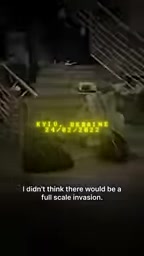
According to the interview, Zelensky recalled that on the day the war broke out, he did not believe a full-scale invasion was coming. He was with his family at the time, told his wife and children that the war had begun, and then left with the words "I love you, I'll call." Satellite imagery showed a 64-kilometer-long Russian convoy advancing toward Kyiv, with roughly 200,000 troops bearing down. He admitted that, faced with such numbers, defense was "almost impossible."
The moment the missiles struck he described as a "moment of absolute horror." He was in a bunker built inside his office when he received a call from Biden. The U.S. side offered to help him evacuate, and his response became the most frequently quoted line of the entire interview: "I need ammunition, not a ride."

The logic behind this choice is not complicated: the other side expected people to flee, including him, but he could not abandon the people. What followed confirmed this judgment—volunteers poured in, and the Ukrainian army expanded from 200,000 to 800,000.
The Bucha incident is one of the most contentious war crimes allegations of the Russia-Ukraine war. In April 2022, after Russian forces withdrew from the outskirts of Kyiv, a large number of civilian bodies were found in the town of Bucha, some with their hands bound and killed by close-range gunfire. Ukraine accused Russian forces of carrying out a massacre, while Russia claimed the bodies were fabricated after the withdrawal. The International Criminal Court subsequently issued arrest warrants for Russian officials on war crimes charges, and a UN commission of inquiry also found that Russian forces committed multiple crimes in Bucha, including unlawful killings. Bucha thus became an important turning point for escalated Western sanctions on Russia and increased military aid, and it is also a core basis for Ukraine's insistence on accountability in negotiations.
After Bucha: "How Can You Forgive"
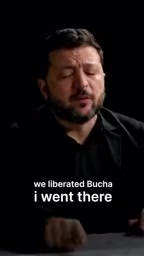
The heaviest part of the interview was when Zelensky spoke about Bucha. He said that after the town was liberated, he went to the site and saw bodies everywhere—children, adults, the elderly—some with their hands bound, tortured, and then buried in pits. He described what he saw as "butchered meat," visibly emotional.
The host pressed: if a mass grave of 500 tortured people were found in the United States or Britain, how would people react? Zelensky used this to respond to Trump's statement about the "need to find a compromise"—arguing that not everything can be easily forgiven.

The significance of this statement is that it pulls the concept of "compromise" at the negotiating table back to specific victims. For a wartime leader, compromise is not only a geopolitical calculation but also a test of domestic moral legitimacy.
Trump's statement about the "need to find a compromise" reflects doubts among some U.S. political forces about the policy of aiding Ukraine. Since 2023, divisions have emerged in the United States over the sustainability of aid to Ukraine, and Trump has repeatedly claimed that if elected he would quickly push for peace talks. Zelensky's response logic is that territorial and accountability issues cannot be simply traded away, and incidents such as Bucha create moral obstacles to "compromise" domestically. This divergence directly affected U.S.-Ukraine relations and the peace negotiation process around 2025, and is key background for understanding the current impasse.
From "Almost Impossible" to a Protracted War: A Leader's Four Years
When asked about the hardest day of the past four years, Zelensky's answer was not the day the war began, but Bucha. This detail is worth noting: the fear at the start of the war was immediate and physiological, while Bucha brought lasting moral trauma.
The interview also reveals the trajectory of the war—from initial passive defense to "day after day, we hit back harder." The expansion of the Ukrainian army is both the result of military mobilization and a reflection of society-level will to resist.
The question raised at the end of the interview—"Is there a realistic path to ending this war?"—is not answered in the clip. But from Zelensky's remarks, he remains reserved about the framework of "peace through compromise," which offers a perspective from a party involved for understanding the current negotiating impasse.
Editor's Note: The Value and Limits of the Interview as a Source
It should be noted that this article is based on a YouTube interview clip. The advantage of such material lies in first-hand emotions and details—such as the specific phrasing "ammunition, not a ride" and the description of the Bucha site—which are important materials for understanding decision-making motives. The limitations are equally obvious: the clip was edited and lacks full context, and some figures (such as the 64-kilometer convoy and the army size of 200,000 to 800,000) are statements by the person involved and were not independently verified in the clip. Readers should retain this layer of judgment when citing.
For those following the Russia-Ukraine situation and wartime leadership, this interview offers an observational dimension different from battle reports: the decision-making logic of leaders under extreme pressure, and how moral trauma affects negotiating positions.
One-line Summary
Zelensky's interview recalls refusing evacuation on the first day of war and the trauma of Bucha, revealing the moral logic behind his refusal to compromise.
Paragraph Summary
This article reviews a Zelensky interview clip, focusing on his recollections of the war's earliest moments. On the day the war broke out, he said farewell to his family and rejected the U.S. offer of evacuation, stating his position with "I need ammunition, not a ride." Facing 200,000 Russian troops and a 64-kilometer convoy, he called defense "almost impossible" but chose to stay, after which the Ukrainian army expanded from 200,000 to 800,000. The heaviest part of the interview is the Bucha incident, where he describes the scene and uses it to respond to the idea of "peace through compromise," arguing that not everything can be forgiven. The article notes that Bucha was the hardest day of his four years, and that moral trauma continues to shape his negotiating position. It finally reminds readers that the clip was edited and some figures are statements by the person involved, so caution is needed when citing.
Related articles

AI Digital Twin in Action: Using DOT to Automatically Track Bugs and User Feedback
DOTS engineers demonstrate how AI digital twin DOT collects cross-platform user feedback, categorizes issue themes, opens threads to investigate bug root causes, and submits PRs—showcasing a complete AI agent workflow for defect triage with auditable design.

Why Transistors Are No Longer Flat: The Evolution from Planar to Gate-All-Around
Transistor evolution from planar to FinFET to gate-all-around: why gates went from three-sided to four-sided wrapping to suppress short-channel effects and leakage current, extending Moore's Law.

Swarm Intelligence = a Single RL Agent? A Proof of Multi-Armed Bandit Equivalence
A paper proves that collective decision-making through local imitation in swarms is mathematically equivalent to single-agent reinforcement learning: N blind imitators act as N parallel environment samples, with an effective learning rate of 1/N. This article explains the derivation and implications of the Maynard-Cross Learning algorithm.