3way.Social MCP: Let AI Find Backlink Opportunities, You Make the Final Call

3way.Social MCP uses a credit-based marketplace and MCP integration to let AI find backlink partner pages directly in your conversation.
3way.Social MCP is a backlink trading tool launched on Product Hunt, with the core idea of bringing backlink purchasing into AI conversations. It uses credit-based marketplace rules: no cold outreach, link prices calculated from public metrics like DR, traffic, and spam score, and credits refunded if a link later disappears, forming escrow-like protection; sites can sell links for credits and buy with credits, creating a two-sided closed loop. Its differentiator is MCP integration — users can describe needs directly in Claude, Cursor, or ChatGPT, and the AI returns specific partner pages and deal terms for user approval, with recommendations at the page level rather than just domains. The article notes that the product lowers the barrier to backlinks, but credit market liquidity, metric inflation, and search engine link guideline risks still warrant caution.

Link building has long been one of the most relationship- and luck-dependent parts of SEO: sending cold emails, comparing prices, negotiating — long cycles and plenty of uncertainty. 3way.Social MCP, launched on Product Hunt, tries to hand this part of the process over to AI — you simply describe your needs to Claude, Cursor, or ChatGPT, the AI finds specific pages and proposes a deal, and you give the final approval.
A Credit-Based Backlink Marketplace
3way.Social positions itself as a "fair, credit-based link insertion and guest post marketplace," with a core rule of no cold outreach. Each site decides for itself what to buy and what to sell, and link prices are calculated based on industry-standard metrics: DR, traffic, and spam score.
This design addresses the two most sensitive issues in backlink trading: pricing transparency and delivery risk. Prices are no longer haggled over via email threads but anchored to public metrics; if a link disappears later, the credits you paid are refunded. For buyers, this amounts to an escrow-like layer of protection on the transaction.
The other side of the credit system is a two-sided market: your site can sell links to earn credits, then use those credits to buy links on others' sites, forming a closed loop without cash settlement on every deal.
DR (Domain Rating) is a domain authority metric introduced by the SEO tool Ahrefs, ranging from 0 to 100, measuring the strength of a website's backlink profile based on the number and quality of unique domains linking to it. It is one of the most frequently cited third-party authority references in the industry, often used alongside Moz's DA (Domain Authority) and Semrush's Authority Score. Note that DR is calculated by a third party using its own crawler data — it is not an official search engine metric and does not directly reflect Google rankings. Precisely because DR is widely used as a pricing and comparison benchmark, it has also become a prime target for "metric inflation" — the practice of artificially boosting DR by buying low-quality backlinks or through site networks has long existed, which is why the article notes the need for manual verification of metric credibility.
MCP Brings the Marketplace into the AI Conversation
The real differentiator of this product is its MCP (Model Context Protocol) integration. Traditional backlink tools require you to log into a dashboard, filter domains, and export lists; 3way.Social instead exposes its capabilities to AI clients, so you can ask directly within Claude, Cursor, or ChatGPT:
- "Help me find partners for relevant pages for the article I just published"
- The AI returns specific partner pages and deal terms, and the deal closes once you confirm
The company emphasizes that its AI discovery capability targets specific pages, not just domains. This is a key distinction in backlink practice — under the same domain, the link value of the homepage, a category page, and a particular long-tail article can differ by an order of magnitude, and recommendations that only give domains usually require manual secondary filtering.
From a workflow perspective, the value of MCP is compressing "find resources — evaluate — order" into a single conversation, reducing the friction of switching between multiple tools.
MCP (Model Context Protocol) is an open protocol released by Anthropic in late 2024 for establishing standardized connections between AI assistants and external data sources and tools. Think of it as the "USB-C port" of the AI world: a service provider only needs to implement a single MCP Server to let any client supporting the protocol (such as Claude Desktop, Cursor, and some ChatGPT integration environments) directly invoke its capabilities, without building custom integrations for each client. MCP uses a client-server architecture, passing messages such as tool calls, resource reads, and prompt templates via JSON-RPC. For third-party products, this means the development cost of integrating into AI workflows drops dramatically, and "operating an external marketplace directly within a conversation" becomes a viable path.
Who Should Use It, and Who Should Be Cautious
For indie developers, content site owners, and small SEO teams, this type of tool lowers the barrier to backlink purchasing: you can access tradeable site resources without a sales team, prices are grounded in data, and there is a refund mechanism for dead links.
The reasons for caution are equally clear. The liquidity of a credit-based marketplace depends on activity at both ends — when there are more buyers than sellers, credits pile up and become hard to spend. Link prices are tied to metrics like DR and traffic, which means the metrics themselves may be optimized or even inflated, and the quality of AI-recommended pages still requires manual verification. Moreover, link insertion and guest posts have always existed in a gray area of mainstream search engine link guidelines; the tool solves transaction efficiency, not compliance risk.
On Product Hunt, the product received 78 votes and 7 comments, ranking 9th for the day, published by Ian Naylor. The reception is moderately positive, suggesting there is demand for the "AI + backlinks" combination, but trust in this type of product will take time to build.
A guest post refers to an article written by an external author and published on someone else's site, usually accompanied by a link back to the author's or sponsor's website, and is a common form of link building. Search engine link guidelines (such as Google's link spam policies) explicitly treat "links exchanged or paid for ranking purposes" as behavior subject to manual or algorithmic penalties, and require such links to be marked with rel="sponsored" or rel="nofollow". Link insertion refers to inserting links to other sites into existing articles, which can also cross this line. Therefore, no matter how efficient the transaction matching is, both buyers and sellers still need to assess compliance risk themselves; the tool itself does not change how search engines judge link value.
Conclusion
3way.Social MCP's approach is worth noting: it does not try to replace SEO judgment with AI, but places AI in the role of "discovery and matchmaking," leaving decision-making to the user. Credit escrow and dead-link refunds are direct responses to the pain points of backlink trading, while MCP integration rides the trend of SEO tools embedding into AI workflows. Whether it succeeds will ultimately depend on activity at both ends of the market and the verifiability of link quality.
Related articles

GLM-5.4 Coding Test 4.6x Slower? Unpacking the Loop Transformer Architecture
GLM-5.4 coding test took 431 minutes vs. competitor's 109, 4.6x more steps. We analyze its Loop Transformer architecture, KingBench4 score of 55.3, Max tier's 1.04M token cost, and tier selection advice.

Zhipu GLM-5.4 Quietly Released: A Debut for Loop Transformer Architecture
Zhipu GLM-5.4 quietly lands in coding plans: first Loop Transformer flagship with 750B params, 1M token context, AIM math up from 19.2 to 30.4, and native vision for coding from screenshots.
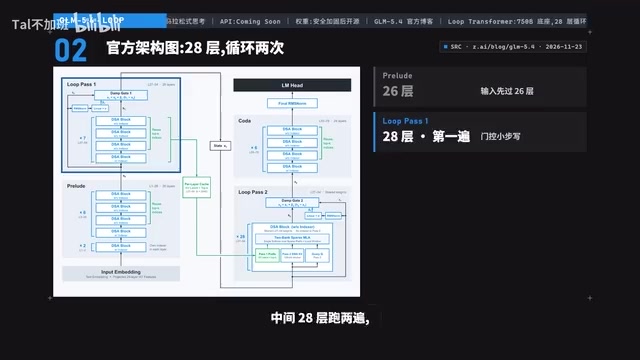
GLM-5.4 Releases 750B Model: Recurrent Transformer Architecture and the 30B Benchmark Controversy
GLM-5.4 releases a 750B model with a recurrent Transformer architecture that runs the same layers twice, claimed to match 2T–3T scale. But the benchmark table tests a 30B small model, not the main model. We break down the architecture changes, benchmark data, four demos, and open-source timeline.