6 High-Paying AI Career Paths: A Beginner's Shortcut and Salary Guide

6 high-paying AI career paths for beginners, with salary ranges, core skills, and who they suit.
This article breaks down 6 high-paying AI career paths worth pursuing: LLM application development, AI agents, computer vision, AI infrastructure, AIGC content generation, and embodied AI. It covers salary ranges, core skills, and suitable backgrounds to help you find the best entry point into AI.
The AI wave is sweeping through every industry, but for ordinary people, the biggest question remains: which directions are actually easy to break into, pay well, and offer long-term growth potential? By reviewing the job demand and salary levels across today's major recruitment platforms, we can see that the AI career paths truly worth focusing on are actually quite few—narrowing it down, there are just 6. This article breaks down the job composition, salary ranges, and core skill requirements of these 6 directions one by one, helping you find the entry point that best fits you.
Direction 1: LLM Application Development — The Top Choice for Beginners
If you had to pick one AI direction most suitable for ordinary people to start with, LLM application development is undoubtedly the answer. This direction has the strongest demand, with salary ranges typically between 25K–40K.
The core work is connecting mature LLM service platforms—like Bailian—to existing business systems across various industries. In other words, you don't need to train models from scratch; instead, you play the role of a "connector" and "integrator," bringing LLM capabilities into real business scenarios.
The corresponding popular positions include LLM application development engineer, Prompt engineer, and AI product full-stack engineer. This direction has a relatively friendly barrier to entry, with a tech stack focused on engineering integration and prompt engineering—making it the best springboard for transitioning from traditional development into AI.
Direction 2: AI Agent Development — A New Blue Ocean with Surging Demand
Close behind is the AI Agent development engineer, currently experiencing a surge in demand, with monthly salaries generally between 20K–35K.
Unlike LLM application development, the core of agent development is building complex agents capable of thinking autonomously, calling tools, and completing tasks independently—making AI truly "get things done" for you, rather than just chatting and giving answers. This is also the key stage in the entire industry's evolution from "conversational AI" to "action-oriented AI."

Popular positions in this direction include AI Agent development engineer, automation process engineer, and RPA+AI solution expert. Core skill requirements include:
- Agent collaboration frameworks
- Task planning algorithms
- Tool-calling interfaces
As enterprises' demand for automation, cost reduction, and efficiency improvement continues to heat up, the imaginative space for agent development is far from reaching its ceiling—making it one of the most noteworthy growth directions right now.
Direction 3: Computer Vision and Industrial Quality Inspection — An Underrated, Stable Track
Many people think computer vision (CV) is already outdated, but the truth is, only the pure research direction has been phased out—CV talent for industrial deployment has always been in short supply. The median salary for this direction is 18K–30K.
The core work is using image recognition technology to solve real pain points in manufacturing. For example, factory defect detection used to rely entirely on manual visual inspection; now it can be replaced by AI vision systems for efficient, 24-hour quality inspection. This kind of demand is enormous and genuine in the manufacturing sector.

Popular positions include machine vision algorithm engineer, industrial AI quality inspection engineer, and image processing engineer. The tech stack you need to master includes:
- OpenCV
- PyTorch
- YOLO (object detection)
- Traditional image algorithms
It's worth mentioning that students with a mechanical engineering background have a natural advantage transitioning into this field. There are plenty of deployment scenarios in manufacturing, so there's no need to worry about finding a position.
Direction 4: AI Infrastructure and Engineering Architecture — The Enterprise "Iron Rice Bowl"
The fourth direction is AI infrastructure and engineering architecture, with a relatively high salary range, typically 25K–50K. This direction is called the enterprise "iron rice bowl"—it doesn't compete on algorithms themselves, but on stability and deployment capability.
The main work includes model training and deployment, launch optimization, compute management, and data assurance, ensuring all of a company's AI operations run stably and efficiently. It can be understood as the "foundation" and "operations hub" of the entire AI system.

Popular positions include AI platform engineer, machine learning operations (MLOps) engineer, and high-performance computing engineer. This direction leans toward engineering and operations, with two notable characteristics:
- Relatively low educational barriers—practical engineering ability matters more;
- The more experience, the more valuable—it's a classic accumulation-based technical role where seniority pays off.
For developers who want long-term, stable growth and don't want to be swept up in the algorithm rat race, this is an extremely dependable choice.
Direction 5: AIGC and Digital Content Generation — Opportunities for Those with an Art Background
The fifth direction is AIGC and digital content generation, with salaries generally between 15K–25K, especially suited for students with an art background to focus on.
Virtual streamers, commercial posters, finished short videos, and 3D modeling all fall within this direction's scope of work. The greatest appeal of AIGC is: as long as you have creativity, with the help of AI tools, one person can do the work of an entire team.
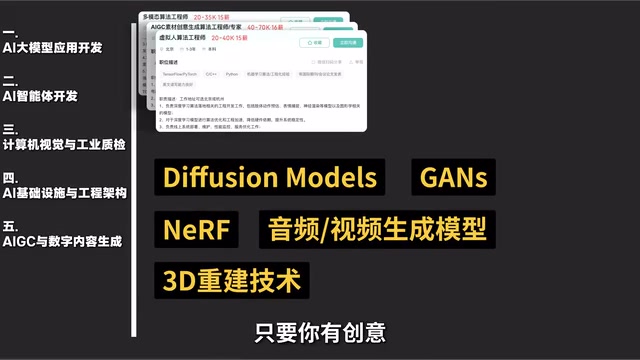
Common positions include multimodal algorithm engineer, AIGC creative technology expert, and virtual human driving engineer. Note that this direction demands high creativity and aesthetic sense—students with a purely technical background may need to supplement their artistic perception.
Direction 6: Embodied AI — A High-End Track Combining Software and Hardware
The last direction is Embodied AI. The robots dancing at the Spring Festival Gala and household robot vacuum cleaners all belong to this category. The salary range is 25K–45K, and with enough experience and strong ability, there's no salary cap.
This is a high-end direction combining software and hardware, with extremely scarce talent. Compared to purely software directions, it requires understanding both algorithms and hardware systems—a higher barrier, but also a higher ceiling and greater long-term growth potential.
Common positions include robotics algorithm engineer, SLAM engineer, and reinforcement learning engineer. Core skills include:
- ROS2 system
- Motion control
- Sensor fusion
As the humanoid robot industry enters the eve of an explosion, the long-term potential of embodied AI is, so to speak, "maxed out"—ideal for developers aspiring to deeply cultivate hardcore technology.
How to Choose the AI Career Path That Fits You
Overall, these 6 directions cover the complete spectrum from low barrier to high barrier, from pure software to software-hardware combined:
| Direction | Salary Range | Suitable For |
|---|---|---|
| LLM Application Development | 25K–40K | Top choice for ordinary developers |
| AI Agent Development | 20K–35K | Developers focused on automation |
| CV & Industrial Inspection | 18K–30K | Mechanical/engineering background |
| AI Infrastructure | 25K–50K | Operations/engineering background |
| AIGC Content Generation | 15K–25K | Art/creative background |
| Embodied AI | 25K–45K | High-end software-hardware talent |
Aside from AIGC having a certain preference for an art background, ordinary developers can break into the other 5 directions. When choosing, consider your own situation: mechanical majors should prioritize industrial inspection, those with an operations background should aim for infrastructure, creative talent should turn to AIGC, and those wanting to enter quickly should start with LLM application development.
AI's job opportunities remain vast, but the key is to find a track that matches your abilities and deeply cultivate one core skill—only then can you truly reap the benefits of this wave.
Related articles
Recurrent Looped Transformers: A New Architecture That Teaches Models to "Think Again"
Recurrent Looped Transformers repeatedly apply the same Transformer block to decouple compute from parameters, enabling variable reasoning depth without scaling model size.
"Everyone Else Should Slow Down AI — Except Me": The Double Standard Trap in Big Tech
A viral Hacker News quip — "Everyone should slow down AI, except me" — exposes the double-standard at the heart of the AI race. We unpack why it's a Prisoner's Dilemma, not mere hypocrisy, and why institutions matter more than moral self-discipline.
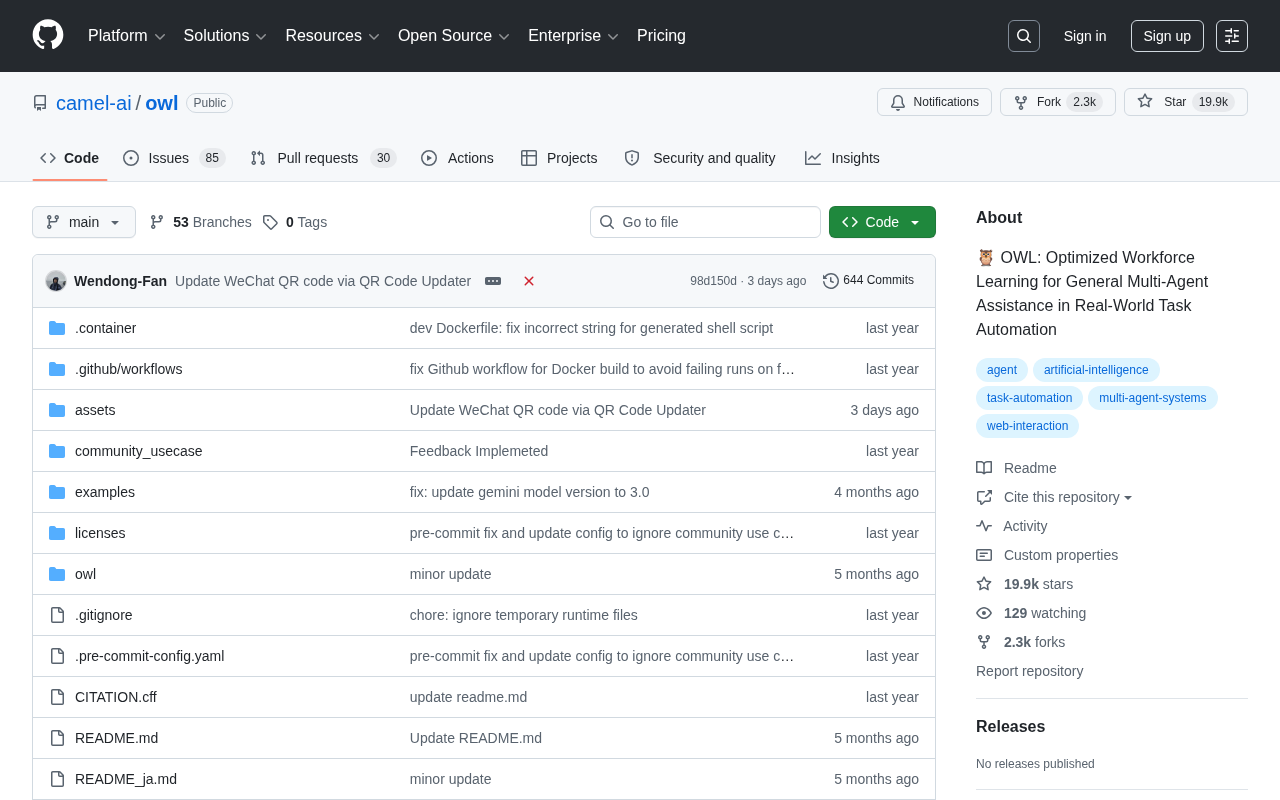
OWL: An Open-Source Multi-Agent Framework for Real-World Task Automation
OWL (Optimized Workforce Learning) is an open-source multi-agent framework by camel-ai for real-world task automation, with 19K+ GitHub Stars. Learn how it works.