6 Months Left for Open Source AI? A Deep Dive into the Survival Crisis and the Path Forward
6 Months Left for Open Source AI? A De…
A viral warning about open source AI's survival prompts a deep look at its real challenges and resilience.
A post titled "6 months to live for open models" sparked debate about whether open source LLMs can survive rising compute costs, widening capability gaps, and murky licensing. This article analyzes the three core pressures on open source AI, the countervailing forces — including China's rising open source ecosystem and the small-model efficiency revolution — and what it would take to build a truly sustainable open source AI future.
Introduction: A Warning About the Fate of Open Source AI
A post titled "6 months to live for open models" recently sparked discussion on Hacker News and other tech communities. The slightly apocalyptic headline reflects an increasingly sharp reality in the open source AI space: with closed-source giants doubling down, compute costs soaring, and regulatory pressure mounting, how much room is left for open source large language models to survive?
The "6 months" framing is more of a rhetorical warning than a precise prediction. But it does touch on the structural challenges facing the entire open source AI ecosystem. This article takes a deep look at where open source models stand today, the core threats they face, and the possible paths forward.
Three Mounting Pressures on Open Source LLMs
1. The Widening Compute and Funding Gap
The most immediate threat to open source models is the relentless rise in training costs. While open source efforts like Meta's Llama series, Mistral, and DeepSeek have made significant strides in recent years, training a truly frontier model now routinely requires tens of millions — or even hundreds of millions — of dollars in compute.
The technical reasons run deep: the self-attention mechanism in the Transformer architecture scales quadratically with sequence length, and the widely accepted Scaling Laws show that model performance improves as a predictable power law with increases in parameter count, data volume, and compute. Training a GPT-4-class model is estimated to cost over $100 million, and the bill for next-generation models keeps climbing. This dynamic objectively creates a capital barrier that gives well-funded closed-source players a systemic advantage.
By contrast, closed-source labs like OpenAI, Anthropic, and Google are backed by cloud giants — Microsoft, Amazon, and Google — providing both funding and compute at scale. In this "arms race," if the open source community cannot secure sustained commercial or institutional funding, it will struggle to go head-to-head with closed-source incumbents on frontier model capabilities.
2. The Capability Gap Could Widen Again
There was a moment of genuine optimism when it seemed open source was catching up to closed source — DeepSeek, Qwen, and others posted impressive results on major benchmarks, suggesting the gap was closing. But as closed-source labs continue to push boundaries in reasoning (e.g., OpenAI's o-series), multimodality, and agentic AI, that gap may open up again.
The "6 months" warning is, in part, an expression of this fear: if closed-source labs achieve a qualitative leap with their next generation of models while the open source community lacks the resources to keep up, open source models could quickly go from "good enough" to "a generation behind."
3. The Gray Zone of Open Source Licensing and Commercialization
You may not have noticed, but many so-called "open source" models actually use restrictive licenses — such as Llama's community license — that don't qualify as open source under the OSI (Open Source Initiative) definition. OSI-certified open source requires that a license permit free use, modification, and distribution without restrictions on specific fields or use cases. Meta's Llama licenses explicitly prohibit commercial use by products with more than 700 million monthly active users and require derivative models to retain brand attribution — terms that fall outside OSI standards. This model of "visible source but restricted use" is sometimes called "Source Available," and it's fundamentally different from true open source. When model providers tighten license terms for commercial or compliance reasons, developers who have built products on top of those models face real legal and operational risk. This fragility of "pseudo-open source" is a vulnerability the entire open source AI ecosystem must confront.
Why Some Remain Optimistic About Open Source AI
Despite the warnings, supporters of open source AI have strong counterarguments.
Open Source's Moat Is the Ecosystem, Not Any Single Capability
The real value of open source models was never just about benchmark scores. It lies in customizability, data privacy, local deployment, and freedom from vendor lock-in — capabilities that closed-source solutions struggle to match. For enterprises and developers, a model that is "good enough" and fully under their control is often more attractive than a more powerful but opaque black-box API.
Small Models and the Efficiency Revolution Are Opening New Frontiers
Frontier capability doesn't always mean "bigger." As techniques like quantization, distillation, and MoE (Mixture of Experts) mature, the open source community has demonstrated remarkable innovation in small-parameter, high-efficiency models.
Specifically: quantization compresses model weights from 32-bit floating point to 4-bit or 8-bit integers, shrinking model size by 4–8x with minimal performance loss; knowledge distillation uses the outputs of large models to train smaller ones, enabling the latter to approach the former's capabilities with far fewer parameters; and MoE architectures decouple parameter scale from actual compute by only activating a subset of "expert" sub-networks during inference — DeepSeek-V2 uses this architecture, with 236 billion total parameters but only about 21 billion activated per inference, dramatically cutting inference costs. Together, these techniques are making it possible to run high-quality models on consumer hardware, carving out a development path that looks very different from "giant closed-source models."
The Rise of China's Open Source AI Community
Chinese open source LLMs — including DeepSeek, Qwen (Alibaba's Tongyi Qianwen), and GLM (Zhipu AI) — are becoming a major pillar of the global open source AI ecosystem. Notably, these teams have trained globally competitive models under increasingly tight U.S. export controls on AI chips, which is itself a powerful challenge to the idea that "compute is the only moat."
From a strategic standpoint, organizations like Alibaba and Zhipu have embraced open source partly to build ecosystem influence as a counterweight to OpenAI's position as the industry standard — a strategy strikingly similar to Google open sourcing Android to compete with Apple's iOS. These efforts are not just competitive on capability; their active open source strategy continuously releases high-quality model weights to the community, providing real, substantive support for the argument that "open source isn't going away."
What Does "6 Months" Actually Mean?
Returning to the article's title, we shouldn't read it as a literal countdown, but rather as a cautionary narrative:
- It reminds the open source community not to rest on momentary parity — sustained R&D investment is essential.
- It warns companies building on open source models to assess the sustainability risks in their upstream ecosystem.
- It calls on more institutions, foundations, and enterprises to create self-sustaining "blood-producing" mechanisms for open source AI, rather than relying solely on the occasional open source releases from a handful of large tech companies.
It's worth noting that the Hacker News discussion of this article gained relatively limited traction (only 4 upvotes and 0 comments), suggesting the pessimistic thesis has not found broad consensus in the tech community. Most practitioners tend to believe open source and closed source will coexist long-term, each occupying its own niche — rather than playing a zero-sum game.
Conclusion: Open Source Won't Die, But the Ecosystem Urgently Needs Sustainable Fuel
Is open source AI really down to its last 6 months? Almost certainly not. But behind that slightly sensationalist headline lies a genuine question: the sustainability of open source AI depends on whether its ecosystem can build funding, compute, and governance mechanisms that are independent of the closed-source giants.
Linux was repeatedly "declared dead" in its competition with commercial operating systems — Bill Gates even identified it as the top threat in an internal memo (the famous "Halloween Documents") and developed specific countermeasures. Linux ultimately survived and came to dominate server and cloud infrastructure. The key was that commercial investment from IBM, Red Hat, and others created a sustainable engine for growth, alongside the establishment of neutral governance organizations like the Apache Foundation and the Linux Foundation to coordinate resources and technical standards. Today, HuggingFace and several emerging open source AI foundations are playing a similar role, working to build an independent support structure for the open source AI ecosystem.
Whether open source AI can replicate Linux's path will depend on whether the community, enterprises, and research institutions can pull together at a critical juncture. Rather than worrying about "only 6 months left," the more productive question is: how do we make the open source AI ecosystem stronger and healthier in the time ahead?
Key Takeaways
Related articles

Spotit: Turn Every Mac App into a Real-Time Interactive Tutorial
Spotit is an AI-powered interactive tutorial tool for Mac. Press a shortcut, ask in plain language, and it highlights exactly where to click next — guiding you through any Mac app as you learn by doing.
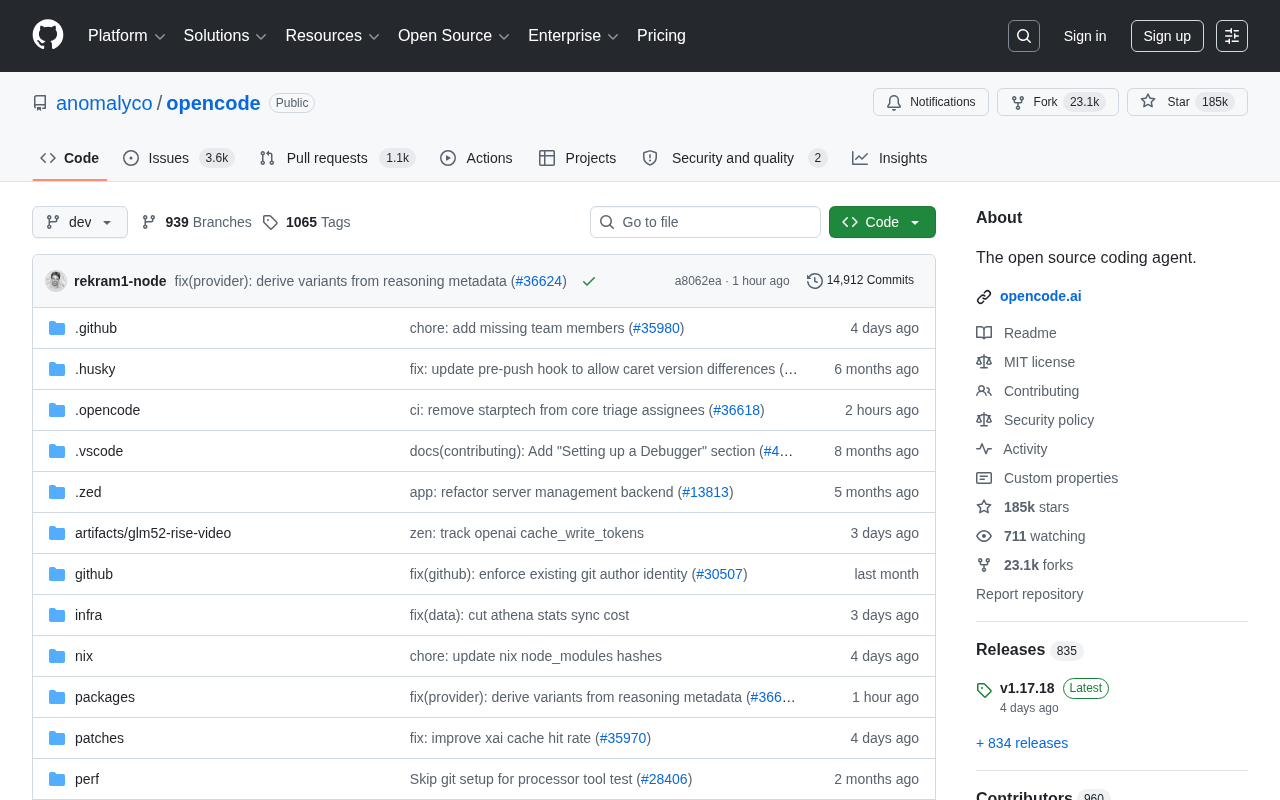
OpenCode: The Open-Source Coding Agent That Hit 150K GitHub Stars
OpenCode is an open-source TypeScript coding agent with 150K+ GitHub stars. Learn about its features, advantages, and use cases for AI-powered development.
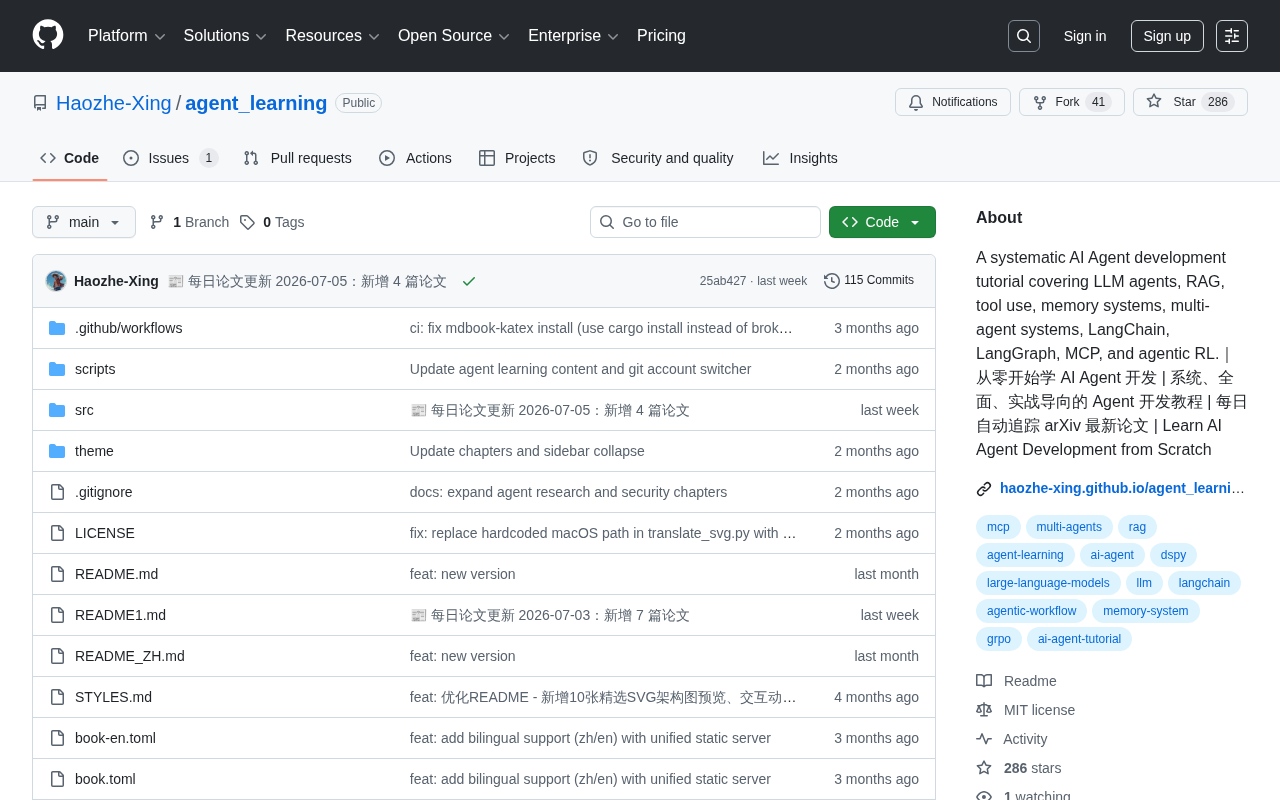
Learning AI Agent Development from Scratch: An Open-Source Tutorial Worth Bookmarking
Haozhe-Xing/agent_learning is a systematic, hands-on open-source tutorial for learning AI Agent development from scratch, with daily arXiv paper tracking built in.