#Llama license
138 related articles

·4 min
G.I.A.ac: An AI Architect That Generates Working Apps from a Single Sentence
G.I.A.ac (General Intelligence Architect) is an AI architect tool that generates runnable apps from a single sentence. Deep dive into its positioning, competitive landscape, target users, and core challenges.
Read more →

·2 min
Behind the Open-Source Model Frenzy: Who Will Provide Cheap Inference Services?
Open-source LLM weights don't equal low-cost access for developers. This article analyzes the inference service gap in open-source AI and how providers like Together AI and Groq are addressing it.
Read more →

·2 min
Behind the Open-Source Model Frenzy: Who Will Provide Cheap Inference Services?
Open-source LLM weights don't mean developers can use them cheaply. This article examines the inference service gap in open-source AI and how providers like Together AI and Groq are addressing it.
Read more →

·3 min
SpecJudge: A Locally-Run AI Model Selection CLI Tool
SpecJudge is a fully local CLI tool that reads project spec documents to automatically recommend the best-fit AI model, avoiding costly overuse of frontier models. Supports Ollama, MIT licensed.
Read more →

·3 min
What Are AI Model Weights, Really? The Deep Learning Truth Revealed by a Meme
Starting from a viral Reddit meme, we dive deep into AI neural network weights — what they are, why they can't be read visually, and how open weights drive technological democratization.
Read more →

·4 min
Project Rai-chan Technical Breakdown: A Complete Guide to Building a Fully Local AI Companion
Deep dive into Project Rai-chan's tech stack: Ollama+Gemma local LLM, Unity rendering, VOICEVOX speech synthesis, and more — exploring the technical path for local AI companions.
Read more →

·3 min
Kimi K3 Open-Source Release: 2.8 Trillion Parameters Tops Global Programming Leaderboard
Moonshot AI's Kimi K3 launches with 2.8 trillion parameters, tops LMArena frontend coding leaderboard as world #1, completing tasks at one-third competitors' cost. Fully open-source for commercial use.
Read more →
·3 min
Deep Dive into Inkling: The First Frontier Open-Source Multimodal LLM from the West
Thinking Machines releases Inkling, an open-source multimodal LLM with near-trillion MoE parameters, 1M token context, Apache 2.0 license. Deep dive into architecture, benchmarks, and pricing.
Read more →

·3 min
Apple Silicon LLM Inference Speed Benchmarks: A Complete Guide to Local Large Model Performance on Mac
In-depth analysis of Apple Silicon local LLM inference speed benchmarks covering M-series memory bandwidth, model quantization, MLX framework optimization, and Mac configuration guidance.
Read more →
·3 min
The Open-Weights Model Debate: Balancing Safety and Openness
An in-depth analysis of the open-weights model debate: public release brings transparency and innovation, but raises safety and misuse risks. Exploring tiered release, red-teaming, and governance challenges.
Read more →
·3 min
The Open-Weights Model Debate: Balancing Safety and Openness
An in-depth analysis of the open-weights model debate: publicly releasing model weights enables transparency and innovation but raises safety risks. Explores tiered release, red-teaming, and the industry dynamics behind open AI governance.
Read more →

·4 min
Jensen Huang Joins 50 Silicon Valley Giants to Champion Open-Source Models: How Capital Logic Overrides Political Correctness
Jensen Huang's first-ever tweet backs open-weight AI. 50 Silicon Valley giants oppose banning Chinese open-source models. Deep analysis of the interests behind closed vs. open AI ecosystems.
Read more →
·3 min
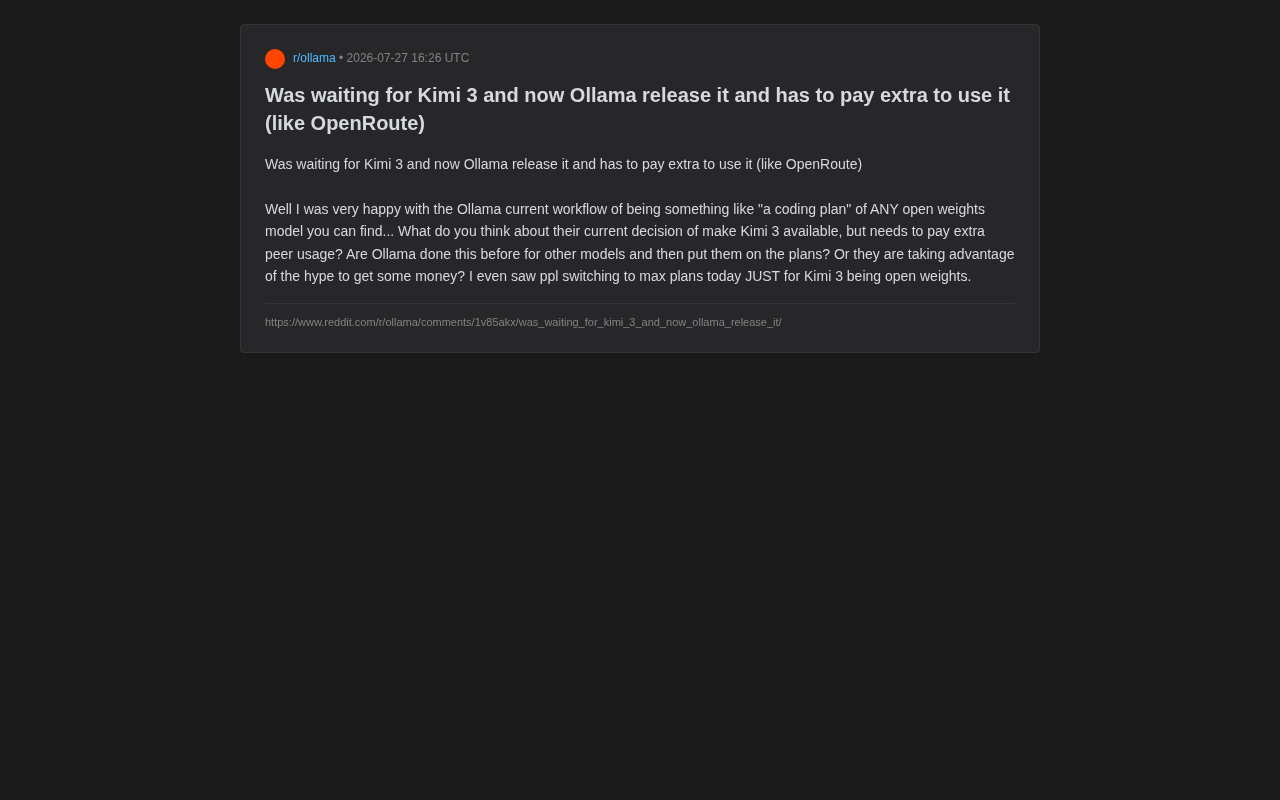
Ollama's Extra Charges for Kimi 3 Spark Community Controversy: Should Open-Source Models Be Free to Use?
Ollama lists Kimi 3 with extra pay-per-use fees, breaking subscription expectations and sparking debate over open-weight models and AI service pricing tiers.
Read more →

·4 min
30+ Free Classic AI/ML Books Recommended: All Collected in One GitHub Repository
An open-source GitHub repo curates 30+ legally free AI/ML classic books covering deep learning, RL, NLP, computer vision & more, with automated link checking.
Read more →
·2 min
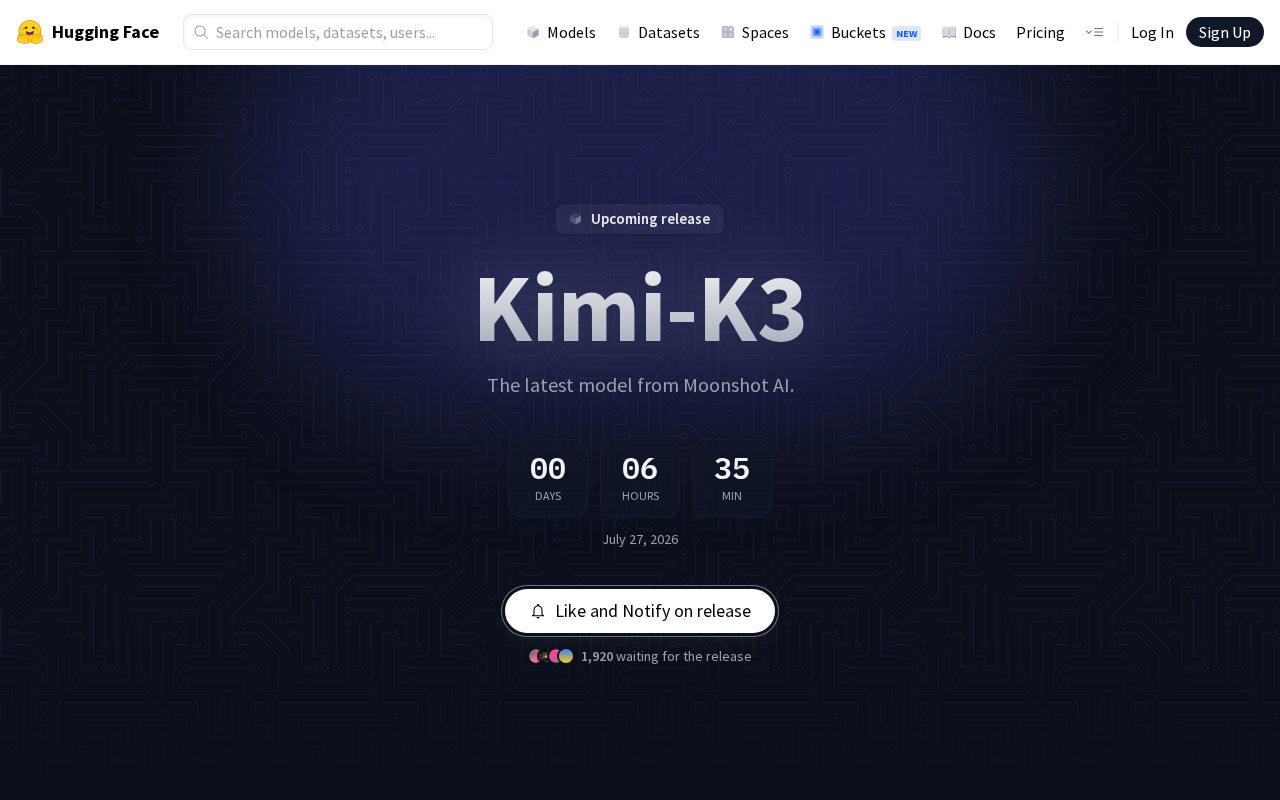
Kimi-K3 Lands on HuggingFace: A Full Breakdown of Moonshot AI's Open-Source Strategy
Moonshot AI's Kimi-K3 model is set to launch on HuggingFace. A deep dive into its architecture, licensing, community reactions, and strategic implications for the global open-source AI landscape.
Read more →

·3 min
Kimi K3 Local Deployment Guide: Storage Requirements for q4 and q8 Quantization Explained
Detailed analysis of Kimi K3 quantization deployment options, comparing q4 vs q8 storage requirements, precision trade-offs, and hardware configurations for local self-hosting.
Read more →
·7 min
DIY Companion Robot: Building Your AI Desktop Buddy with Jetson Orin
A maker builds a DIY companion robot with NVIDIA Jetson Orin and 4S LiPo battery. Explore the full development journey from first power-up to AI interaction, including edge computing, power design, and companion robot trends.
Read more →

·3 min
GLM 5.2 Hands-On: An Open-Source, Low-Cost Model That Rivals Opus
In-depth hands-on review of GLM 5.2: a 753B-parameter open-source model with a 1M-token context, rivaling Opus 4.8 at about one-tenth the price. Full setup guide for Claude Code and Cursor.
Read more →

·2 min
Getting Started with Dify: A Complete Guide to the Open-Source Enterprise AI Application Platform
A complete guide to Dify, the open-source AI application platform: its core positioning, key differences from Coze, workflow-building capabilities, and enterprise private deployment advantages.
Read more →

·3 min
Laguna S 2.1: The Open-Source Coding Model That's 14x Smaller Yet Stronger
Poolside releases Laguna S 2.1, an open-source agentic coding model: 118B total params with only 8B active, scoring 40.4% on DeepSWE — ~4.5x DeepSeek V4 Pro Max. Supports 1M-token context, deployable on a single workstation.
Read more →