9-Year-Old Spends $118,000 on YouTube Ads: The Child Safety Gaps in Digital Payments
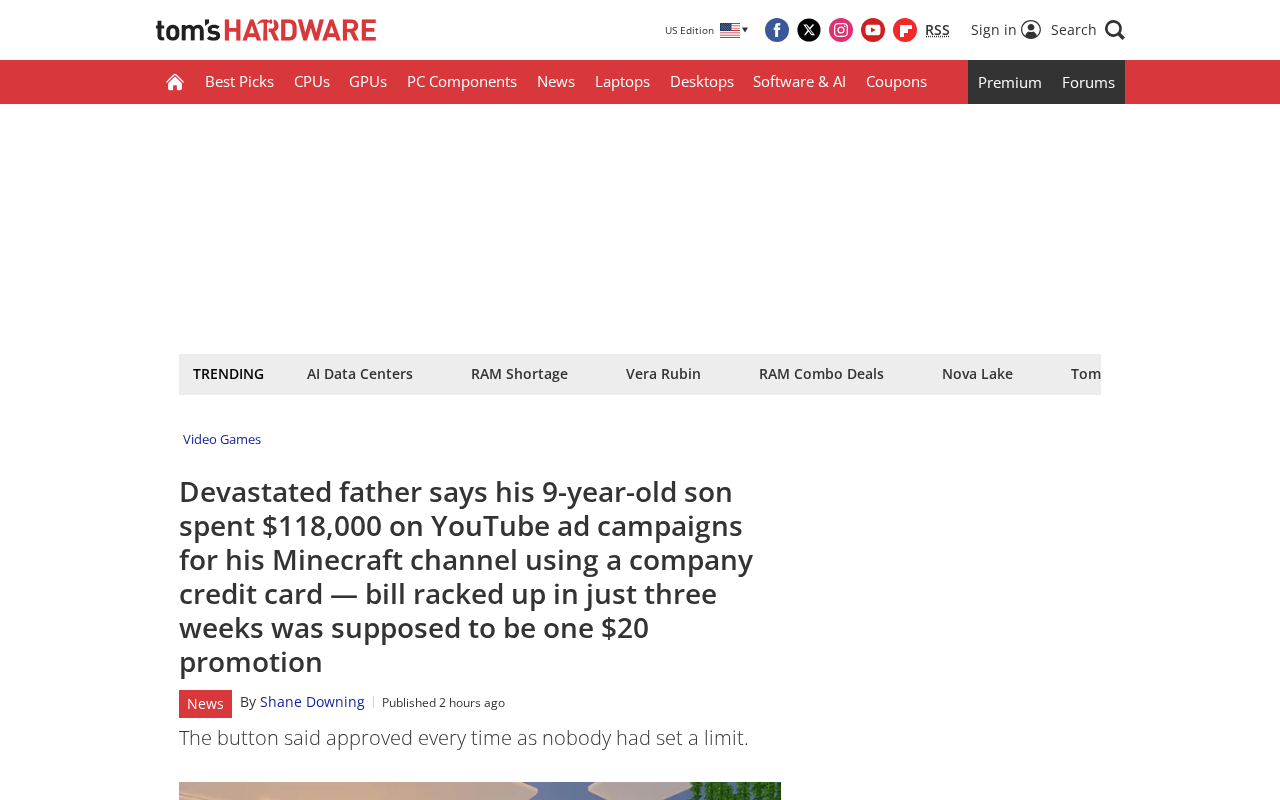
A 9-year-old accidentally spent $118,000 on YouTube ads, revealing dangerous gaps in ad platform safety controls.
A 9-year-old child accidentally ran Google Ads campaigns on his father's account, accumulating $118,000 in charges — sparking widespread discussion on Hacker News. Unlike in-app purchases, ad platforms use a post-pay continuous billing model that can rack up enormous charges with no real-time payment signals. Because platforms assume users are adult professionals, identity verification and anomaly detection are relatively weak, making a logged-in parental device a high-risk entry point. The incident has divided observers: should parents bear primary responsibility for device security, or are platforms obligated to intervene and refund abnormal charges? The case calls for stronger account access management by families and a serious rethink of safety design assumptions in professional-tool contexts.
A Shocking Case of Accidental Spending
A devastated father recently shared his story publicly: his 9-year-old son had spent a staggering $118,000 running YouTube ads. For the vast majority of families, that figure is astronomical — and the incident quickly sparked discussion across tech communities like Hacker News.
Based on what has been disclosed, this wasn't a typical case of a kid making in-app purchases for game items. It involved an ad platform — a tool ostensibly designed for businesses and professional marketers. How an underage child managed to bypass layer after layer of verification and rack up such an enormous bill inside an advertising system is the central question this incident demands we answer.
Why Ad Platforms Become a Vulnerability
Unlike ordinary in-app purchases, ad campaigns typically require a linked credit card or payment account and charge continuously based on impressions and clicks. This "pay-for-performance" model means spending can accumulate rapidly in a short period — without the clear, per-transaction prompts that a one-time purchase would trigger.
The failure likely occurred at several points: the parent's account was already logged in with a payment method attached, the platform lacked real-time alerts for abnormally large expenditures, and the ad dashboard had insufficient identity or age verification. Once a child gains access to a logged-in parental device, these safeguards are rendered nearly useless.
For the average consumer, the billing logic of ad platforms is already quite complex — even adults frequently misconfigure budgets. For a child with no concept of money making unintentional clicks, triggering massive charges becomes entirely conceivable.
YouTube advertising runs on Google Ads, whose billing mechanics differ fundamentally from ordinary shopping. When advertisers create a campaign, they set a "daily budget" or "total budget" — but the platform can actually spend up to twice the daily budget on high-traffic days (a feature called "overdelivery") to capture peak exposure opportunities. Furthermore, Google Ads uses a post-pay model: charges accumulate first, and the linked credit card is only billed once the account reaches a billing threshold (typically $500, or at the end of a monthly cycle). This means a substantial amount of spending can build up before any charge is processed — with no real-time deduction to signal that money is being spent. For users unfamiliar with this logic — whether children or adults new to ad platforms — accidentally setting a daily budget of several thousand dollars and accumulating a five-to-six-figure bill within days is not a far-fetched scenario.
Why Child Protections Keep Failing in the Digital Age
This incident reflects a recurring industry-wide problem: consumer-facing digital payment systems have long tilted the balance between convenience and security toward the former. Platforms want to minimize payment friction to improve conversion rates — but that also means when an account falls into the wrong hands, losses can multiply instantly.
From a technical standpoint, preventing incidents like this is far from impossible. Multiple layers of protection exist: secondary verification for large purchases, biometric confirmation, spending caps, and machine learning detection of anomalous behavior. Many platforms have already deployed some of these measures for in-app purchases, but in "professional tool" contexts like ad platforms, these protections are often undermined by the assumption that users are adult professionals.
Discussion in the Hacker News community also focused on the question of accountability: should parents bear primary responsibility for device management and account security? Or do platforms have an obligation to proactively intervene when spending patterns are abnormal — and to offer refunds? Both perspectives have merit, reflecting the blurry lines of responsibility in digital consumer protection.
Machine learning anomaly detection is already widely used in finance and consumer services — credit card companies have long used such models to identify fraudulent transactions based on signals like sudden geographic shifts, spikes in transaction frequency, or deviations from historical patterns. In theory, ad platforms could build similar baseline models: if an account has never run ads before, or if its budget suddenly jumps from zero to an abnormally high figure, the system should trigger a manual review or temporary freeze. The problem is that ad platforms face an inherent tension between revenue and fraud prevention. More ad spend means more platform revenue — proactively blocking large transactions is naturally deprioritized in the design hierarchy. This is the opposite of the incentive structure credit card companies face when trying to minimize fraud losses, which is precisely why ad platforms lack the internal motivation to deploy such protective mechanisms.
Practical Steps Parents Can Take
This extreme case is a wake-up call for every family with children. In practical terms, a few measures can significantly reduce the risk:
- Never leave payment accounts logged in on devices children can access, especially ad or commercial platform accounts linked to credit cards.
- Enable secondary payment verification, requiring a password, fingerprint, or face recognition for each transaction or large purchase.
- Turn on spending alerts so your bank or payment platform sends real-time notifications for every transaction, enabling you to catch anomalies immediately.
- Use parental controls and child account features provided by platforms to fully separate children's devices from adult accounts.
- Regularly audit linked auto-billing accounts and ad dashboards, especially for business tools you don't check frequently.
Broader Lessons from This Incident
A $118,000 lesson is an extraordinarily high price to pay — but the problem it points to goes far beyond one family's oversight. As digital payments become ubiquitous and professional platforms open up to general users, the surface area for accidental child spending continues to expand.
Platforms need to reassess a foundational design assumption: that users are trusted adult professionals. Does that assumption still hold in a world where accounts can be accessed by anyone? Should there be a stronger "emergency brake" for large or anomalous spending — even at the cost of some convenience?
For families, the most immediate takeaway is this: in an era where money is almost entirely digital, controlling access to devices and accounts is just as important as controlling access to cash. One moment of carelessness can translate into a six-figure loss.
Related articles

AI Agent Fundamentals: The Three Core Components — Brain, Memory, and Tools
A beginner's guide to AI Agents: covering the three core components (brain, memory, tools), four stages of LLM deployment, and why Agents matter for real business use cases.

Boycotting Software That Doesn't Support Linux: One Developer's Philosophy of Choice
A Linux-only developer shares his philosophy of boycotting non-Linux software — without sacrificing productivity — and explains how coding agents like Claude Code are closing the gap with commercial tools.
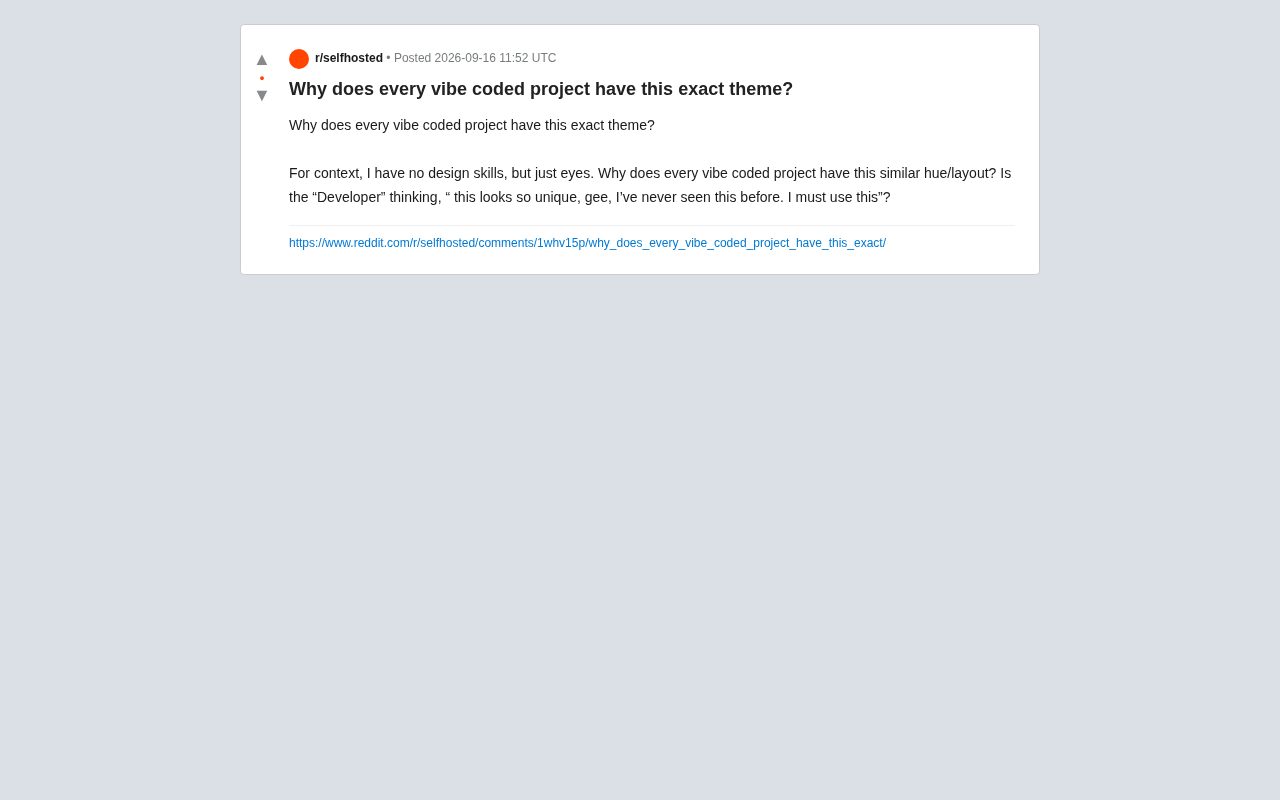
Why Do All AI-Generated Projects Look the Same? The Aesthetic Homogenization Problem in Vibe Coding
Why do vibe coding projects all use purple gradients and dark glassmorphism? We break down the technical roots of AI aesthetic homogenization and how to escape it.