A Human-Ancestor Fable: DeepSeek, Saint Liang, and How Open Source Fights Adversity
Interpreting compute and model monopolies and the breakthrough significance of the open-source spirit for AI adversity through *The Legend of Liang Zu*.
Starting from the Bilibili fable video *The Legend of Liang Zu*, the article unpacks the triple metaphors of the Power Bone, Wisdom Bone, and Hope Bone. The Power Bone corresponds to compute and the Wisdom Bone to models; although they temporarily help Liang Zu accumulate wealth and capability, they are unsustainable because they can be taken back, mapping onto the fragility of compute concentration and closed-source models in the AI industry. The Hope Bone symbolizes the open-source spirit—weak yet able to dispel adversity—whose core is "taking out the good things" and sharing them with everyone. The article connects Liang Zu with DeepSeek founder Liang Wenfeng and the open-source strategy, pointing out that open source can lower the AI threshold and counter monopolies, but also faces challenges such as balancing commercial interests, abuse risks, and community sustainability. Ultimately, it emphasizes that open source is a belief based on a community with a shared future for humanity, not a transaction.
Introduction: One Fable, Three Layers of Metaphor
A fable video titled The Legend of Liang Zu · Chapter One: Adversity and Hope appeared on Bilibili, telling the story in the style of the "Human Ancestor Legend" about humanity's struggle against the beast of "Adversity" in a savage world. In the story, the "Two Ancestors" (later called Liang Zu) successively sacrifice their youth and middle age to feed the three-headed bone in exchange for compute and models, but after growing old, they are abandoned by the Power Bone and the Wisdom Bone. In the end, they give their heart to the most unremarkable "Hope Bone," obtain light, and teach humanity to "take out the good things." This fable is widely interpreted as a metaphor for DeepSeekAd, the open-source spirit, and the dilemmas of AI development. This article attempts to unpack its narrative logic and real-world mapping.
Compute and Models: Gifts from the Power Bone and the Wisdom Bone
At the beginning of the story, Liang Zu lives a hard life with an unstable food supply, at the bottom of the food chain. The three-headed bone comes to him proactively, offering help in exchange for life sustenance. Liang Zu first feeds the largest bone with his youth and obtains "compute." With compute, he begins quantitative trading, accumulates wealth, and defeats many adversities, but soon discovers that compute is not omnipotent—it requires electricity and GPUs and cannot be squandered at will. Moreover, for the entire herd of Adversity beasts, one person's compute is simply too little.
This maps onto the reality of the early stages of AI development: compute is a scarce resource controlled by a few, and individuals or small teams find it hard to compete. Later, Liang Zu feeds the most beautiful bone with his middle age and obtains "models." Models teach him deep thinking and reflection, allow him to accumulate experience, and are often more effective than compute. With models and compute, he builds many things that were previously impossible. However, the good times do not last. Liang Zu grows old, and the Power Bone and Wisdom Bone find that he has nothing left to offer, so they leave heartlessly.
This passage hints at the fragility of relying on external resources (compute, models): when an individual or organization can no longer provide value, the resource providers turn away. In the AI field, this can be understood as a critique of closed models and compute monopolies—once you stop paying or lose your utility value, access is revoked.
Quantitative trading is used by Liang Zu in the original text to accumulate his first pot of gold, and it is a key background for understanding "compute as wealth." Quantitative trading refers to using mathematical models and computer programs to find statistical patterns in historical data, automatically generate buy and sell signals, and execute trades. It has extremely high requirements for low latency and high-concurrency computing, so in the early days only institutions with mainframes or specialized hardware could participate. With the popularization of cloud compute and open-source quantitative frameworks (such as Backtrader and vn.py), individual developers can also build strategies, but the compute consumption in live trading is still far higher than in ordinary development scenarios—this explains the turning point in the fable where Liang Zu "discovers that compute is not omnipotent and requires electricity and GPUs," and also shows why individual compute seems insignificant in the face of institutional-level competition.
The Hope Bone: The Awakening of the Open-Source Spirit
Liang Zu is surrounded by adversity, collapses to the ground, and his heart is full of despair. At this moment, the third bone—the Hope Bone—appears and asks him to hand over his "heart." Among the three bones, the Hope Bone has the frailest body, just a point of light, the dimmest, able to emit only a faint white glow. Liang Zu takes out his heart: it is a blue, round, chubby fish like a little whale, with extremely short fins that can barely paddle water, yet it still wags its tail. The Hope Bone swallows the fish and blooms with infinite light. Adversity cries out in terror: "This is the Hope Bone, hurry, we Adversity fear hope the most." The light spreads and illuminates the earth, and the Hope Bone teaches people only one thing: take out the good things.
Here the "heart" symbolizes the willingness to share and the open-source spirit. Although the Hope Bone is weak, it can dispel adversity because it represents collective collaboration and knowledge sharing. After Liang Zu stands up, he lights fires for others along the way. Someone asks him where he got so many, and he says: "These are not mine." This precisely echoes the logic of the open-source community: code and knowledge do not belong to individuals but to all humanity, and only by sharing them can more people be illuminated.
Open-source model weights are the core concept for understanding what "take out the good things" specifically refers to. Training a large model usually includes stages such as data cleaning, pre-training, instruction fine-tuning, and preference alignment, and the outputs can be divided into code, datasets, and weight parameters. Weights are the entire set of numerical parameters obtained after training, equivalent to the model's "memory" and "capabilities." If only code and papers are released without weights, outsiders can only reproduce the ideas but cannot use them directly; releasing weights allows anyone to download and perform inference or fine-tuning locally or in a private environment, thereby bypassing dependence on the original vendor's API. Companies such as DeepSeek choosing to release weights is precisely the technical counterpart of the Hope Bone "handing over its heart" in the fable—it allows developers with limited compute to stand on existing achievements and continue innovating.
Open Source: Take Out the Good Things
At the end of the story, the Power Bone and the Wisdom Bone return and offer fame in exchange for compute and models. Liang Zu refuses, saying that his compute and models once belonged to them, but now he has only one heart left in his hands, and that heart has already been given to others. He continues walking forward, and behind him there is a road, and on the road there are people. Finally, the main theme is stated: the most important thing is open source—take out the good things, show them to everyone, and let everyone use them. Humanity is inherently a community with a shared future, and open source belongs to all humanity; hope belongs to all humanity.
This fable resonated on Bilibili, and many viewers connected it with DeepSeek's open-source strategy. As an AI company, DeepSeek chose to open-source its models, lowering the threshold for using AI technology and enabling more developers to participate in innovation. "Saint Liang" in the fable may allude to DeepSeek founder Liang Wenfeng, while the "Hope Bone" symbolizes the open-source philosophy. Through open source, DeepSeek not only gained community support but also, to some extent, broke the monopoly dilemma of compute and models.
Real-World Mapping: AI Adversity and Open-Source Breakthroughs
The current AI industry faces multiple dilemmas: concentration of compute, closed-source models, and data barriers. Large companies control massive compute and advanced models, which small and medium-sized enterprises and individual developers find hard to reach. This imbalance limits innovation vitality and increases ethical risks. The open-source movement offers a path to break through: by releasing model weights, training code, and datasets, the community can jointly review, improve, and extend AI technology, reduce duplicate investment, and accelerate iteration.
However, open source also faces challenges: how to balance commercial interests with open sharing? How to ensure that open-source models are not abused? How to maintain the sustainability of the community? In the fable, the Hope Bone asks Liang Zu to hand over his "heart," implying that open source requires sincere dedication rather than utilitarian calculation. Liang Zu refuses to exchange fame for compute and models, showing that open source is not a transaction but a belief.
Data barriers refer to the phenomenon in which high-quality training data is monopolized by a few institutions and difficult to flow across organizations. The capabilities of large models depend heavily on the scale and quality of corpora, and after years of scraping public internet data, new high-value text is becoming increasingly scarce. A large amount of professional data is held by entities such as publishers, medical institutions, and financial companies, and is difficult to share due to copyright and privacy regulations. This creates a "data flywheel": companies with data and user feedback iterate their models faster, widening the gap with latecomers. The open-source community attempts to alleviate this barrier with public datasets, synthetic data, and crowdsourced annotation, but coverage and compliance remain weaknesses—this is one real-world meaning of the "herd of Adversity beasts" in the fable.
Conclusion: Hope Belongs to All Humanity
The Legend of Liang Zu explores the relationship between technology, power, and sharing in the form of a fable. Compute and models are certainly important, but they can be monopolized and taken back; hope—that is, the open-source spirit—although seemingly weak, can illuminate the path ahead and unite people. In the AI era, open source is not only a technical strategy but also a value: take out the good things and let everyone benefit. As the story says, humanity is a community with a shared future, and open source belongs to all humanity; hope belongs to all humanity.
Related articles
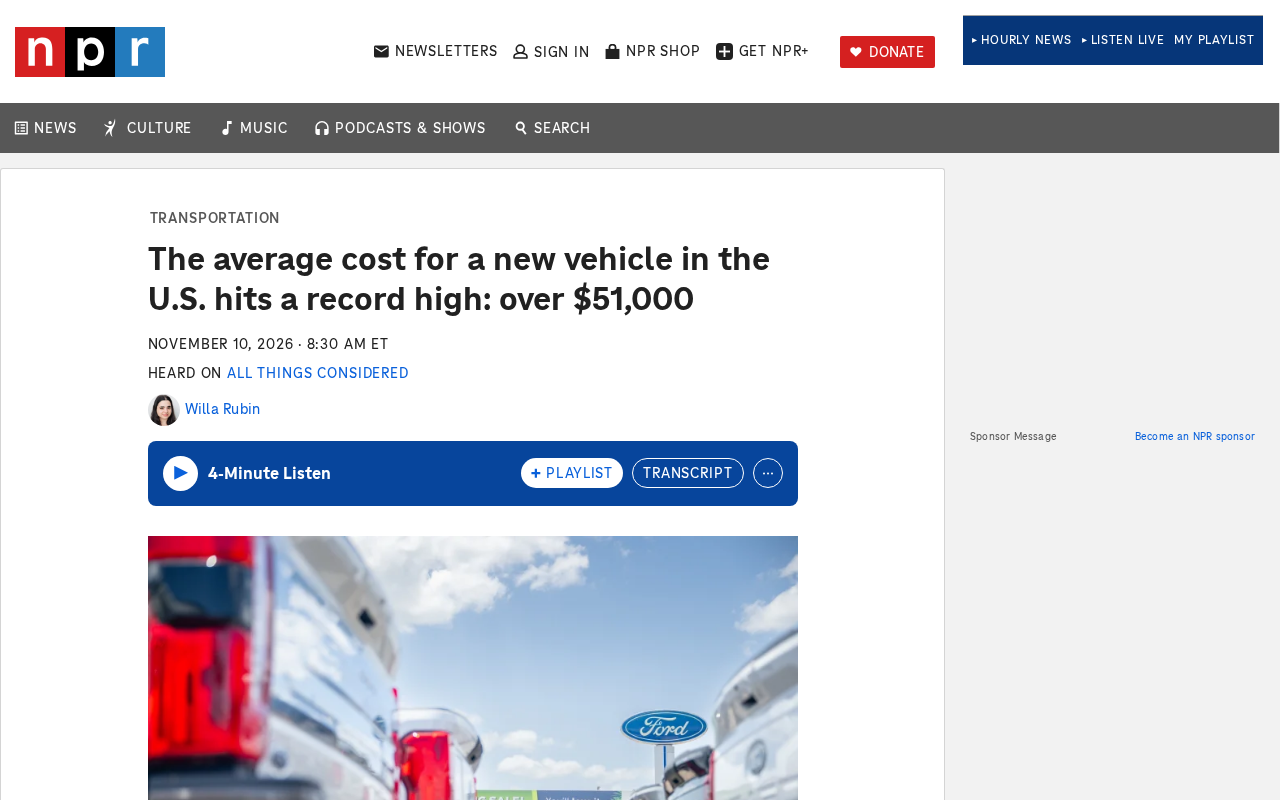
Average US New Car Price Tops $51,000: How AI and Software-Defined Vehicles Are Driving Up Costs
US average new car prices hit a record $51,000. This article analyzes how software-defined vehicles, central computing, pre-installed sensors, and in-vehicle AI inference costs drive up sticker prices—and what it means for consumers and automakers.
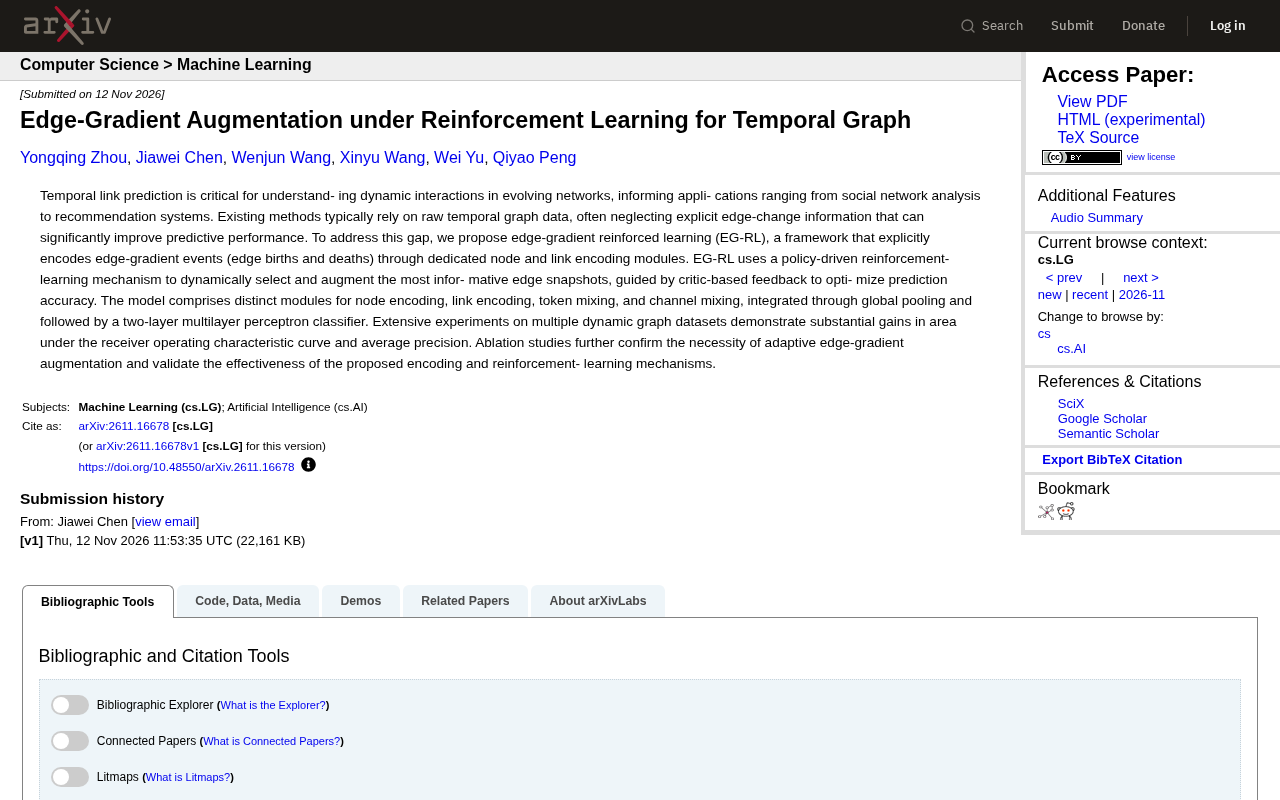
EG-RL: Edge-Gradient Augmentation + Reinforcement Learning for Temporal Graph Link Prediction
An in-depth look at EG-RL: explicitly encoding edge-gradient events (edge births and deaths) and using reinforcement learning to dynamically select the most informative snapshots, significantly improving AUC and AP for temporal link prediction on multiple dynamic graph datasets.
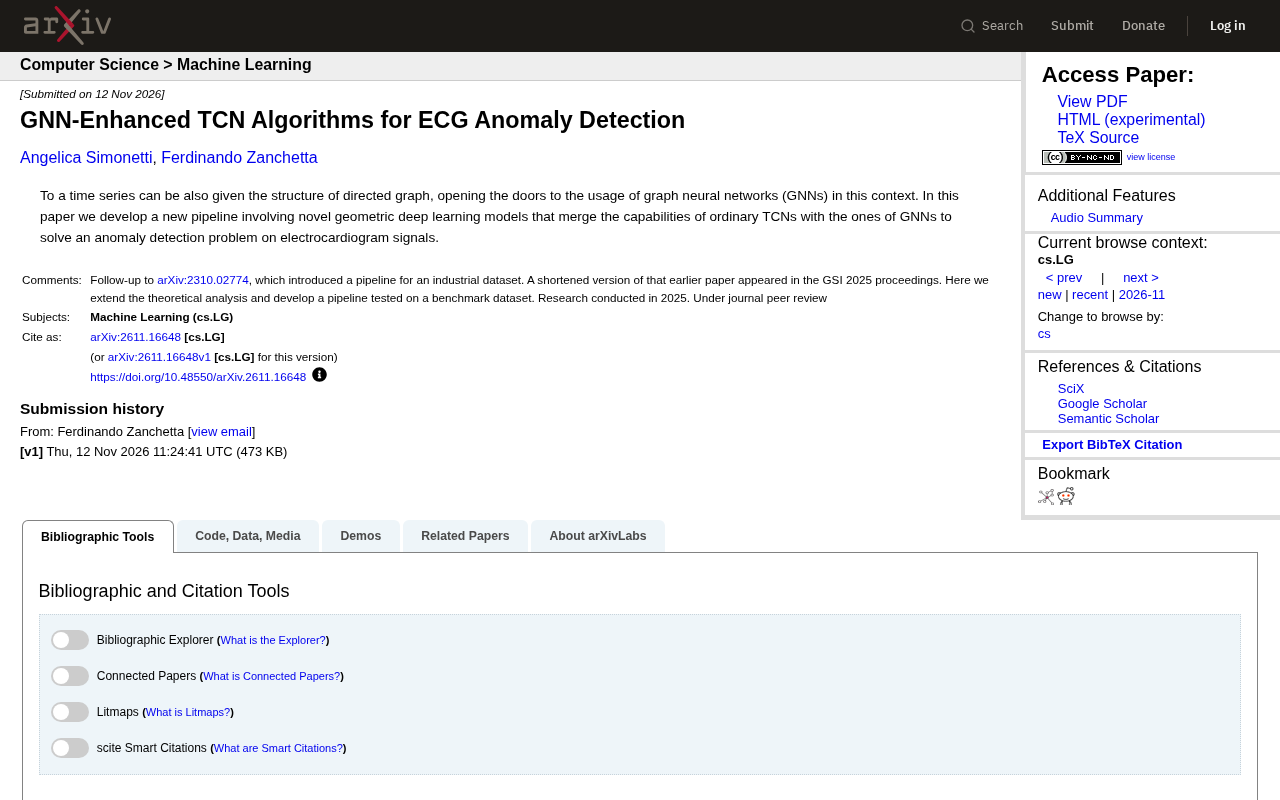
GNN+TCN Fusion Algorithm: A New Paradigm for ECG Anomaly Detection
Explore the innovative application of GNN and TCN fusion algorithms in ECG anomaly detection: transforming time series into directed graphs and using geometric deep learning to simultaneously capture local temporal features and global topological structures, offering a new paradigm for medical AI time-series analysis.